A Sweet Surprise: The Overlooked Pawpaw Trees of Georgia
Written by Connor Hurt, Trees Atlanta Social Media Intern
What is a Pawpaw?
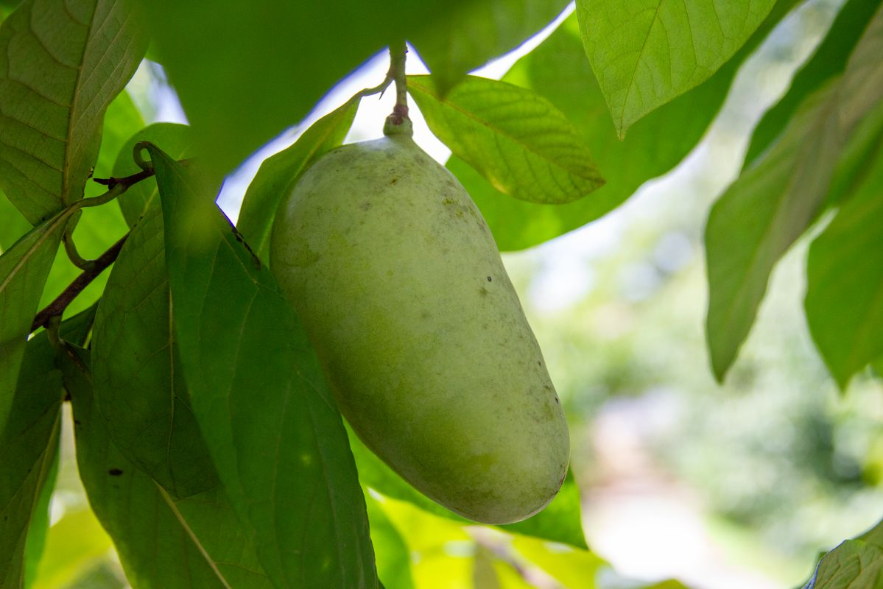
The Common Pawpaw (Asimina triloba) is a smaller tree that only grows 10 to 40 feet tall, but holds the record for producing the largest edible fruit native to North America. The Pawpaw is part of a primarily tropical family of plants called Annonaceae or the Custard-Apple family, containing other well-known tropical fruits like the Annona, Custard-apple, Sugar-apple, and Soursop.
While the pawpaw produces a delicious fruit often described as tasting similar to a banana or mango, these fruits are difficult to store and ship. They ripen within three to five days of plucking which causes them to become squishy, brown, and hard to handle. However, some specialty orchards still grow pawpaws and ship them quickly to farmers markets for sale.
The most popular way to prepare pawpaw fruit is to rinse it, cut it in half, remove the seeds, and consume the pulp. However, Pawpaws can also add a welcome sweetness to treats like ice cream, no-bake cheesecake, and even oatmeal bars. Check out Purdue Extension’s FoodLink website for tips!
If you’re searching for pawpaw fruit and can’t find any, it may be because pawpaws are self-incompatible, which means that they require cross pollination from a genetically different tree to produce fruit. While it may look like there are multiple pawpaw trees in one area capable of pollinating each other, they are often clonal or genetically identical and part of the same plant system connected underground.
What is their place in Atlanta, GA?
The Georgia Native Plant Society (GNPS) Plant of the Year for 2026 is the pawpaw. Native American populations including the Lenape, Iroquois, Algonquin, and Cherokee harvested pawpaw for food as well as other health and structural functions. The pawpaw grows widely across the eastern U.S. all the way up the coast and as far south as middle Georgia and even as west as parts of Texas.
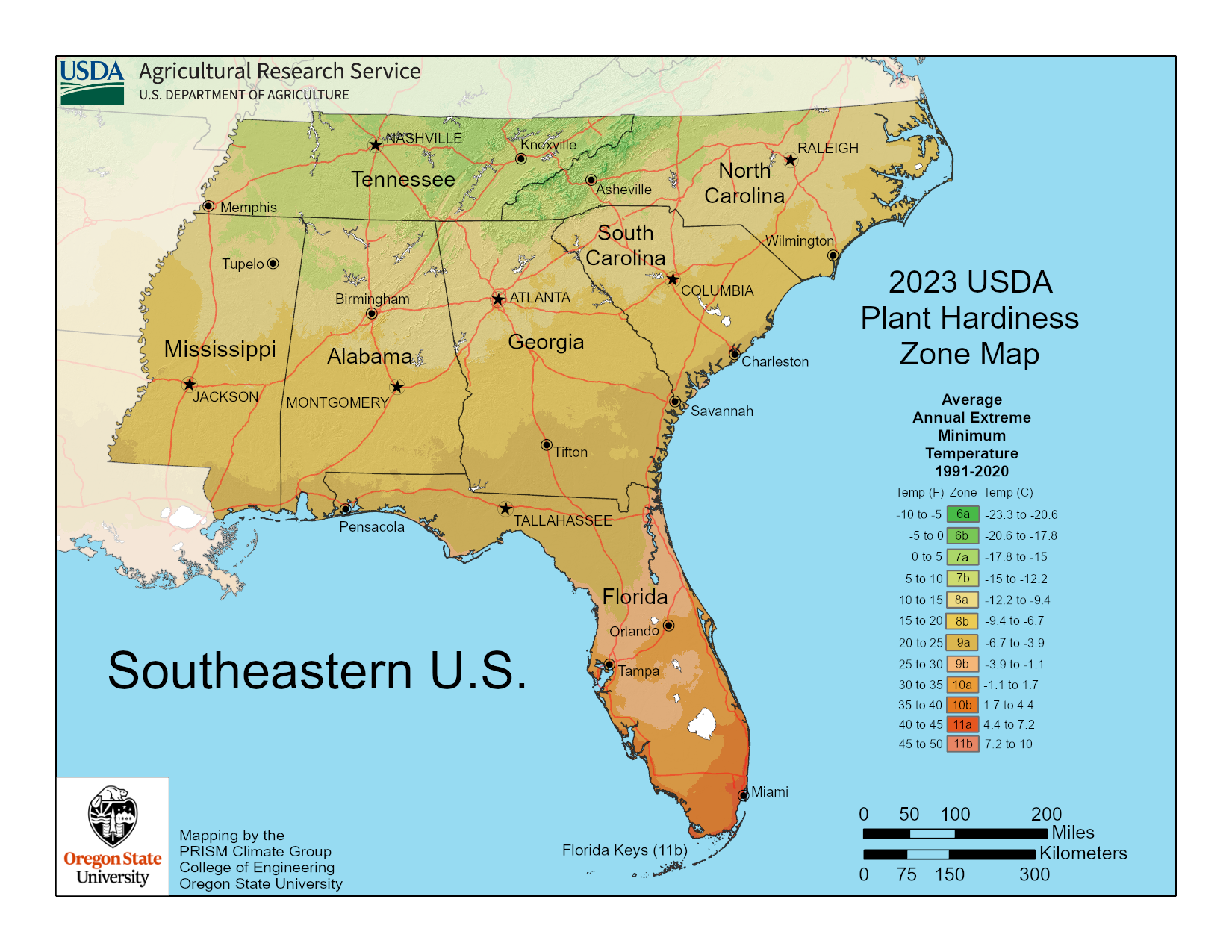 Photo: Pawpaw trees grow well in USDA plant hardiness zones 5a through 9b.
Despite the fruit’s short shelf life and subsequent underutilization in the U.S. market, there have been several efforts in Georgia to bring it back. The University of Georgia states that Master Gardener Extension Volunteer Mike Fillon recently proposed that the pawpaw become the official fruit tree of Tucker, Georgia due to its local prevalence.
Where can people find Pawpaw trees on the Beltline and on Our Campus?
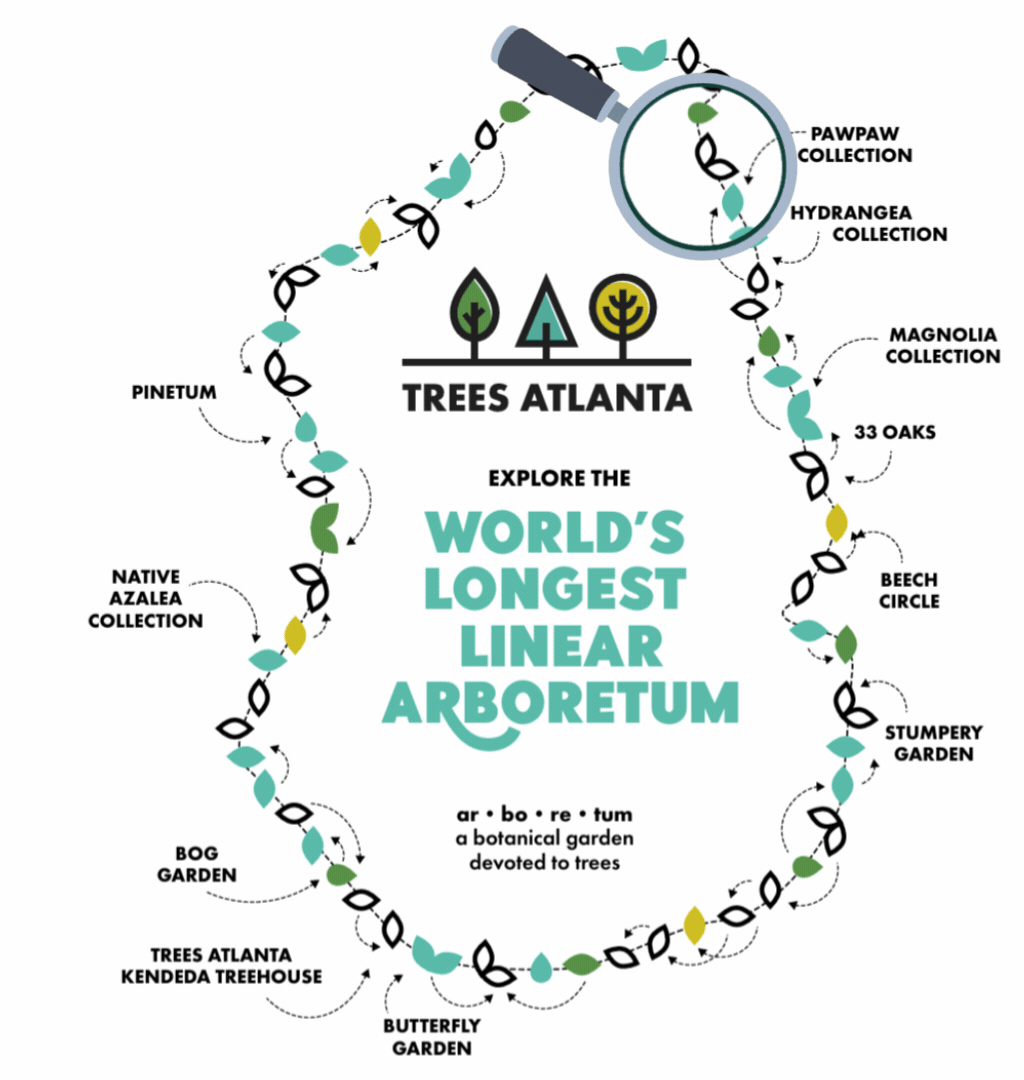
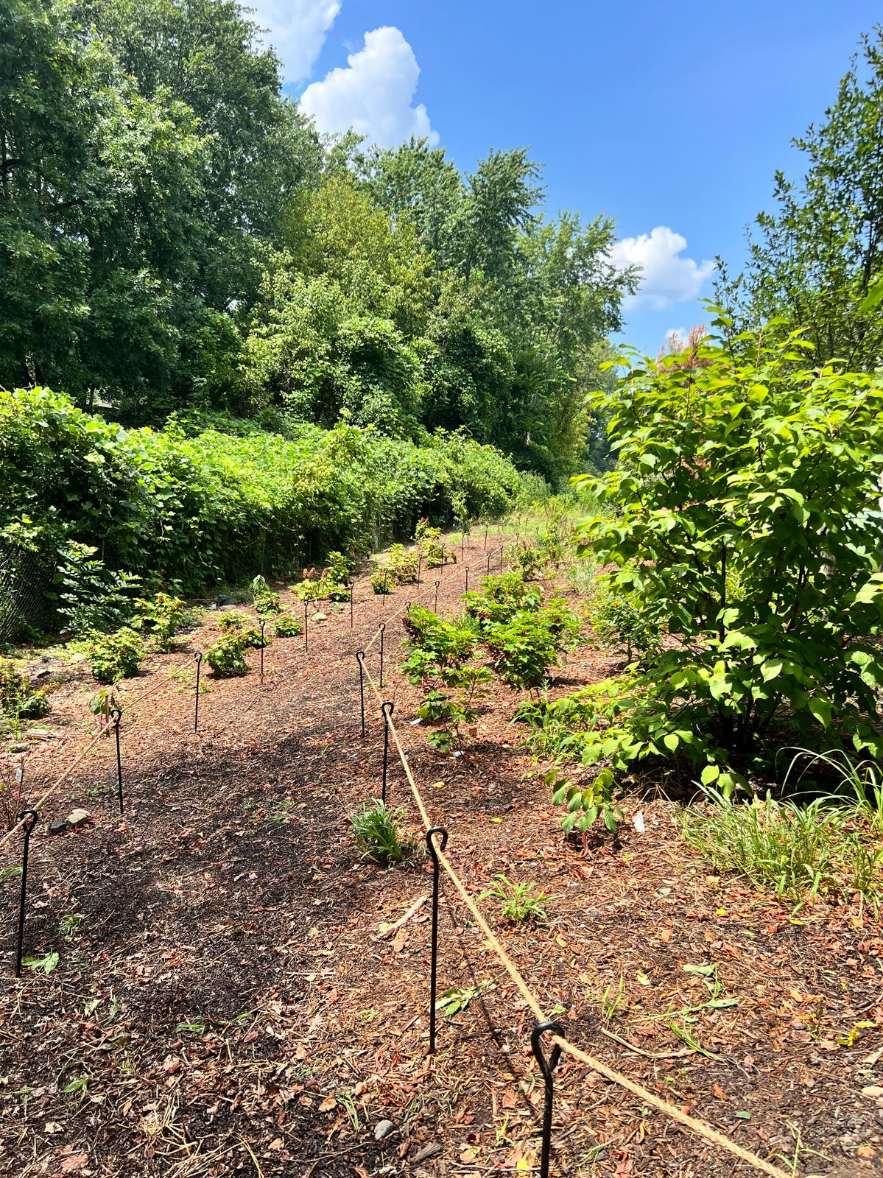
Pawpaw trees can be found along the Atlanta Beltline Arboretum on the Westside Trail in Washington Park as well as on the lot of Trees Atlanta’s Kendeda TreeHouse which also sits along the Beltline’s Westside Trail.
What is Trees Atlanta doing to propagate and preserve the Pawpaw population?
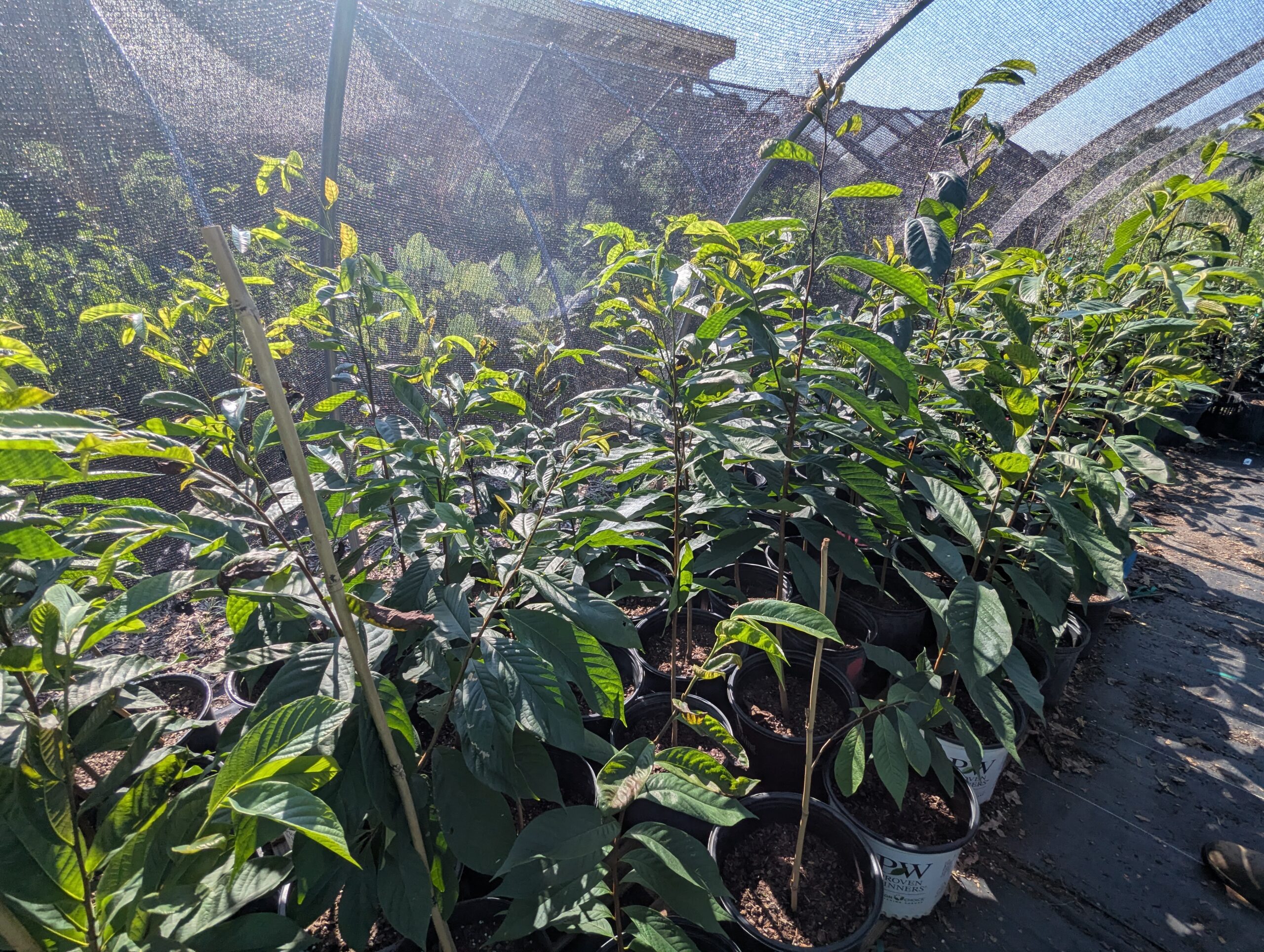 Trees Atlanta’s Nursery Manager Cate Hughes has been propagating pawpaws from seeds since last fall in Trees Atlanta’s very own plant nursery. Most of the trees that are growing in the nursery will be distributed at tree giveaway events and our upcoming Annual Tree Sale, which is open online from September 11 – 28 and in-person on October 10 at the Carter from 8am – 1pm.
If you can’t get your hands on one of our saplings, pawpaws are easy to propagate from seed. Wash the seeds, plant them in the fall, and they’ll spout in the spring. It’s also possible to plant pawpaw seeds in the spring as well even after keeping them in the fridge.
Photo: Nursery Manager Cate Hughes’s propagated Pawpaws
The Future of the Pawpaw
Overall, pawpaws have been somewhat forgotten as one of North America’s native fruit tree species. While it might be a finicky fruit to store, the pawpaw holds a great amount of value in the local ecosystem of Georgia as well as across the east coast, so consider planting one of these important native species in your very own garden. Happy planting!
 About the Author

Connor Hurt is Trees Atlanta’s Social Media Intern. He started working with Trees Atlanta earlier this month after graduating from the University of Georgia. Connor has previous experience creating social media content for nonprofits in the Atlanta area and has a passion for using visual storytelling to advocate for his local community.
References:
Boss, Valerie. “2026 GNPS Plant of the Year: Pawpaw.” Georgia Native Plant Society https://gnps.org/2026-gnps-plant-of-the-year-pawpaw/ . Accessed 27 August 2026.
Lady Bird Johnson Wildflower Center. “Asimina triloba.” The University of Texas at Austin. https://www.wildflower.org/plants/result.php?id_plant=astr . Accessed 27 August 2026.
Matthews, Elizabeth. “Pawpaw: Small Tree, Big Impact.” National Park Service https://www.nps.gov/articles/pawpaw.htm . Accessed 27 August 2026.
Mehalek, Cameron. “Supporting Native Landscapes with America’s Forgotten Fruit.” UGA Cooperative Extension https://site.extension.uga.edu/dekalb/2025/06/supporting-native-landscapes-with-americas-forgotten-fruit/ . Accessed 27 August 2026.
Purdue Extension FoodLink. “Pawpaw.” Purdue University Extension https://extension.purdue.edu/foodlink/food.php?food=pawpaw . Accessed 27 August 2026.
Reavis, Makenna. “Did you know you can grow: Pawpaw.” UGA College of Agricultural & Environmental Sciences https://fieldreport.caes.uga.edu/features/did-you-know-you-can-grow-pawpaw/ . Accessed 27 August 2026.
Ryssdal and Leeson. “Why you’ll have a hard time buying the ‘most American fruit.” Marketplace https://www.marketplace.org/story/2024/01/19/why-youll-have-a-hard-time-buying-the-most-american-fruit . Accessed 27 August 2026.


