Bollards! Guardian Acorns and the Timeless Significance of Atlanta’s Mighty Trees
Have you noticed some unusually large acorns this season? Each acorn is more than 2 feet wide! Giant squirrels may be elated. They are definitely delightful to humans who pass by.
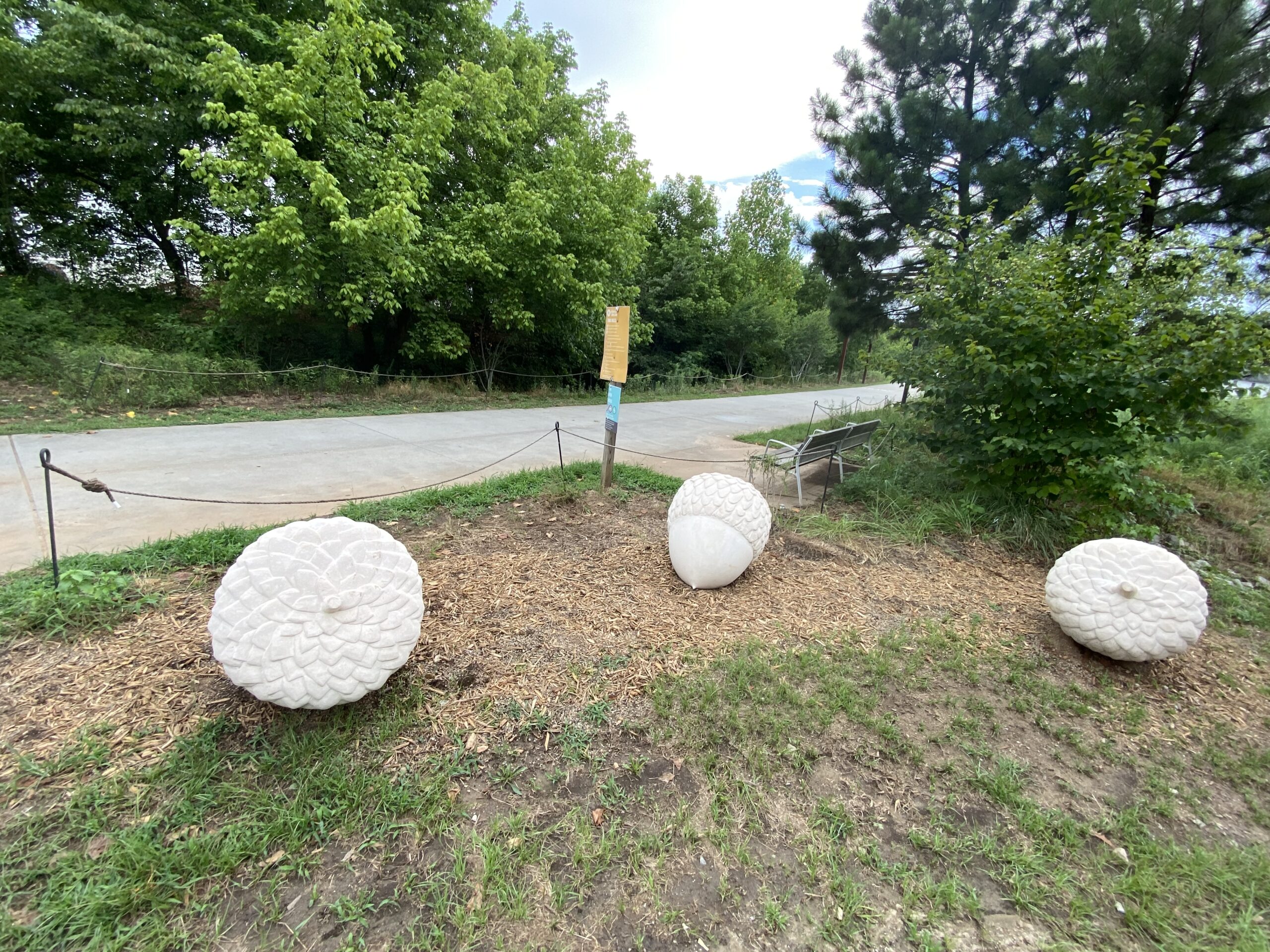
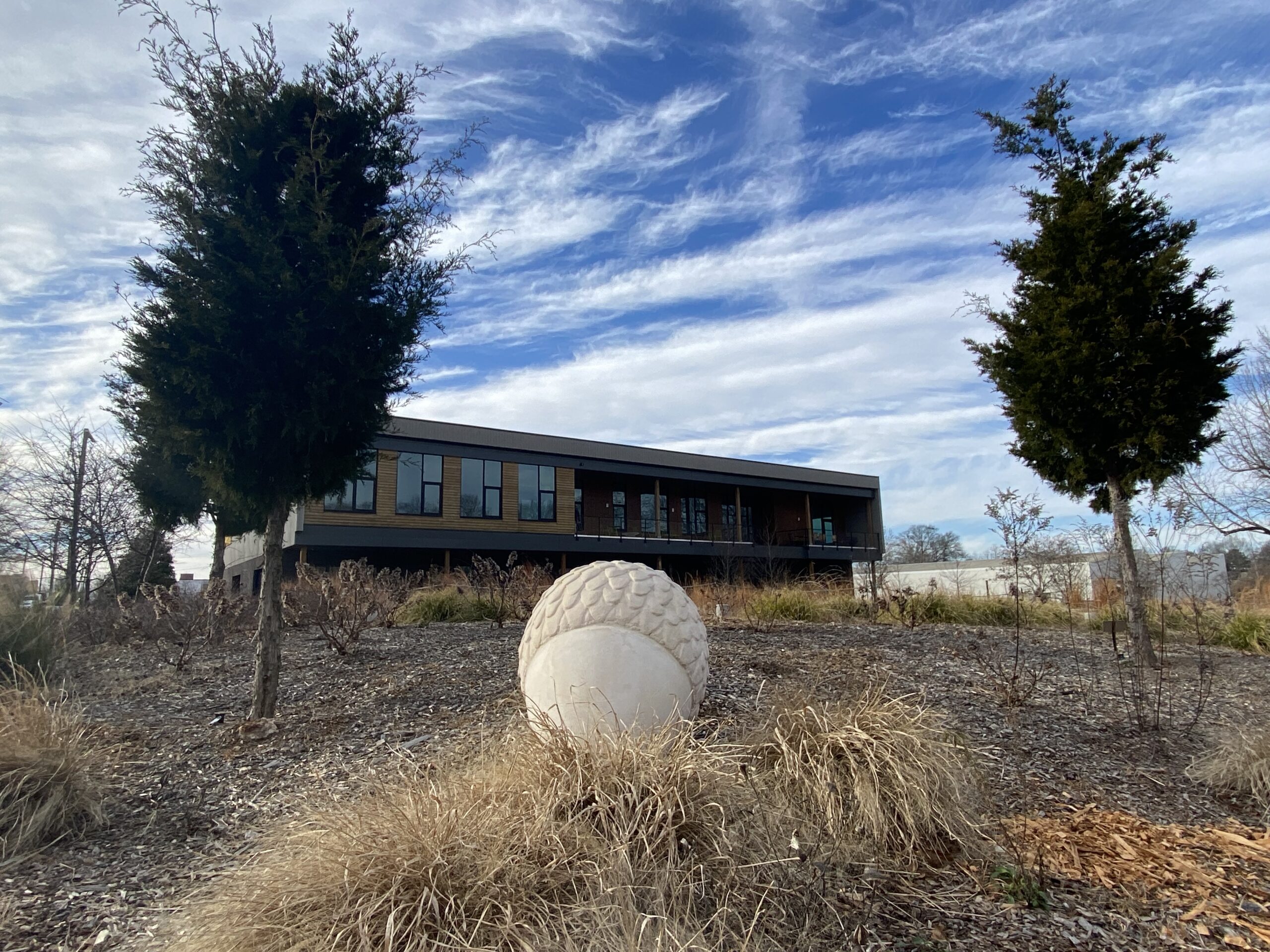
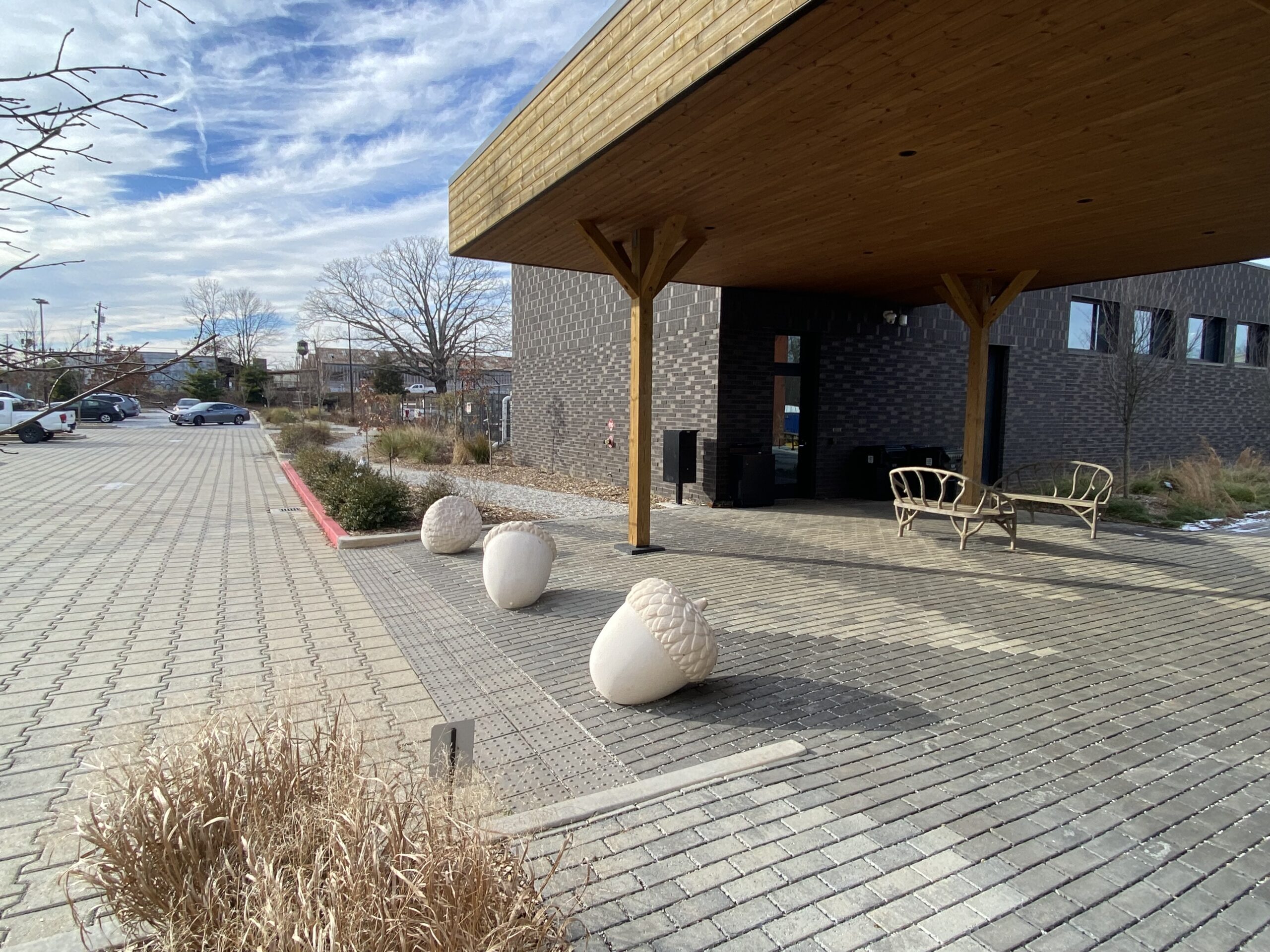
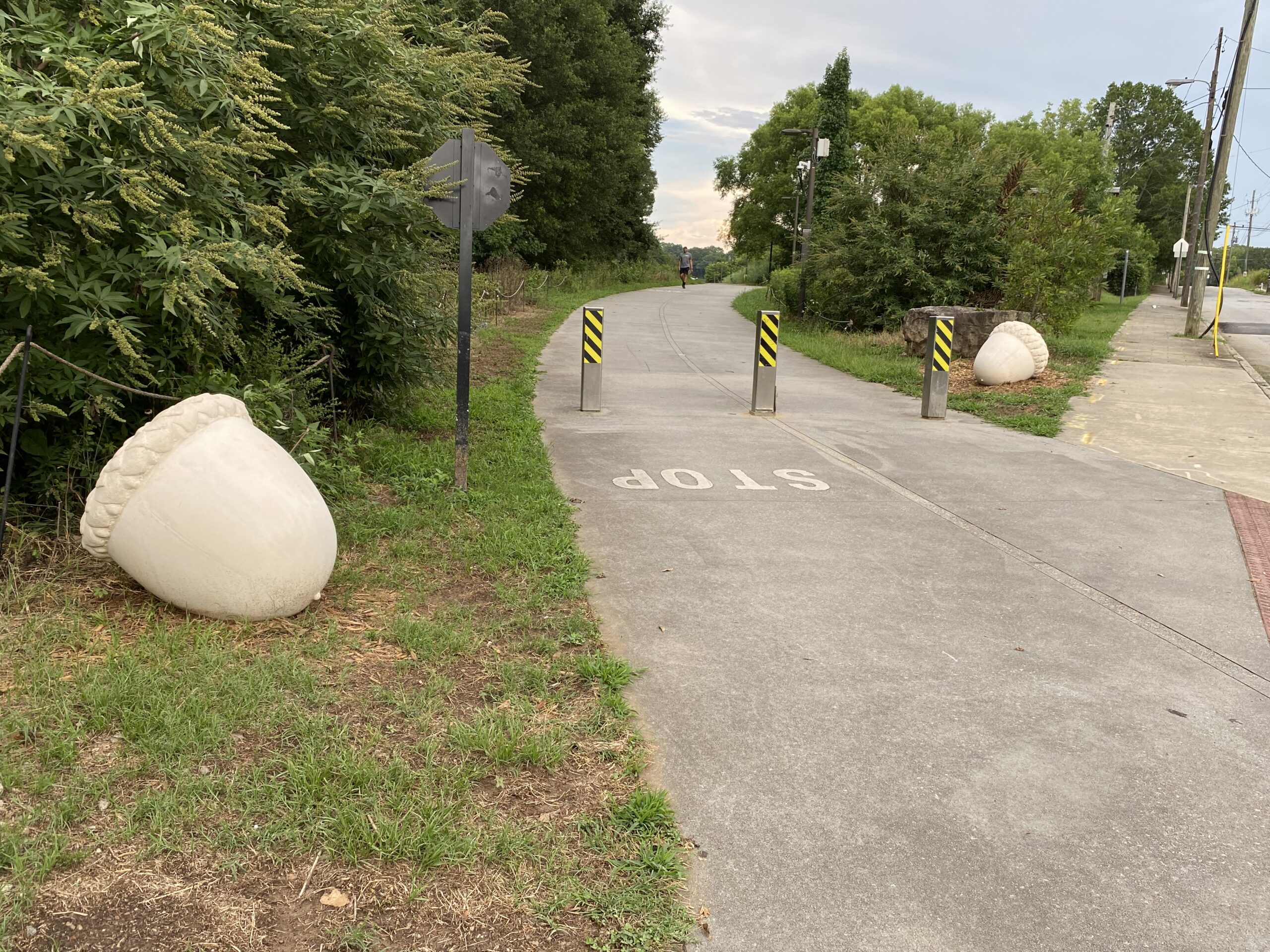
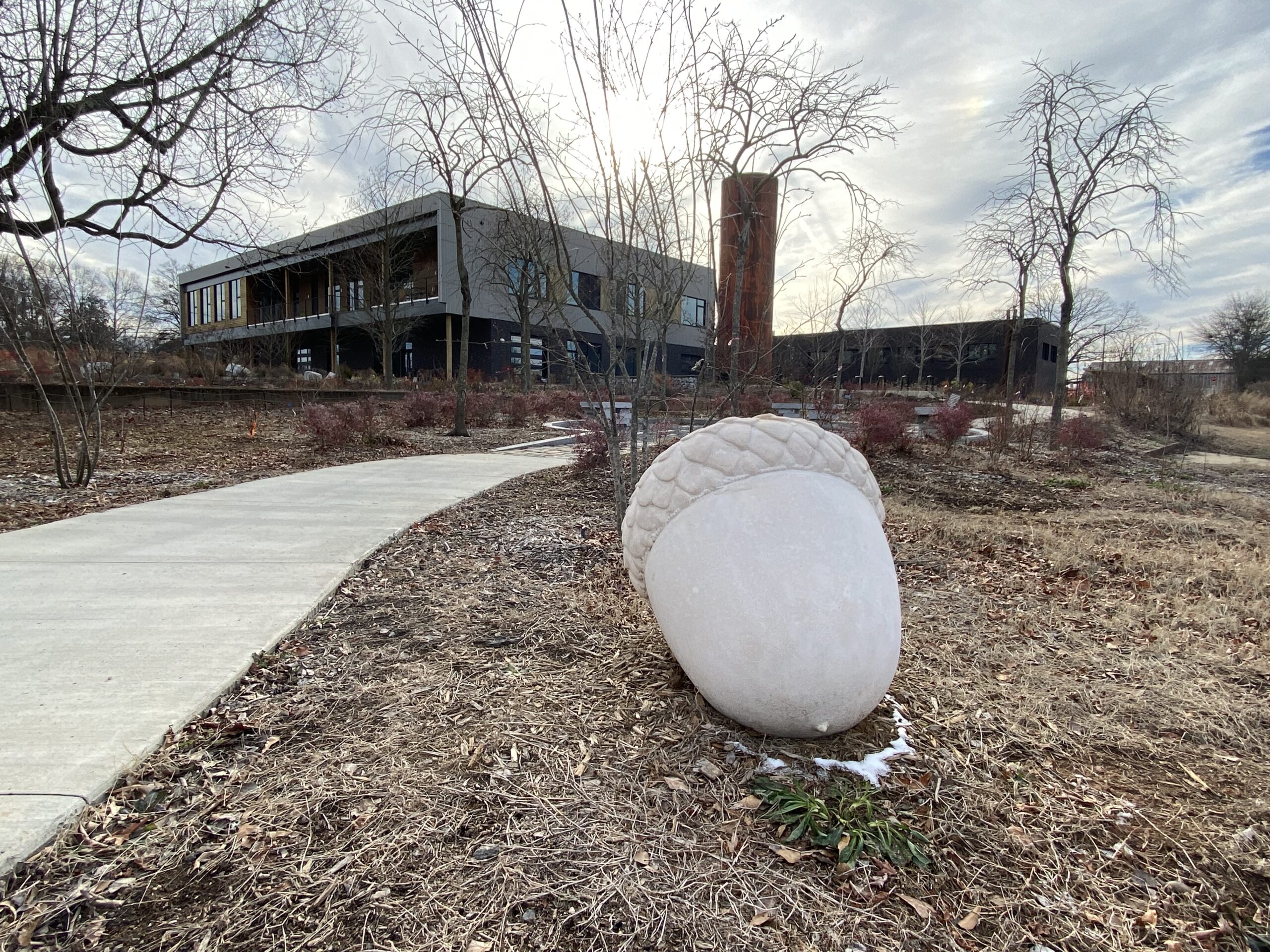
Large concrete acorns are artfully placed at strategic locations along the Allene Avenue access point of the Atlanta Beltline Southwest Trail. These functional artworks are part of the Atlanta Beltline Arboretum, and several more are found on campus at the Trees Atlanta Kendeda TreeHouse.
The Acorner
The acorns are functional bollards that protect and define an area. The acorn bollards protect the crosswalk where the Beltline trail meets an active road. Frequently, bollards are just plain metal posts, but we wanted to make this an opportunity to also educate visitors about trees while adding art and whimsy to the space.
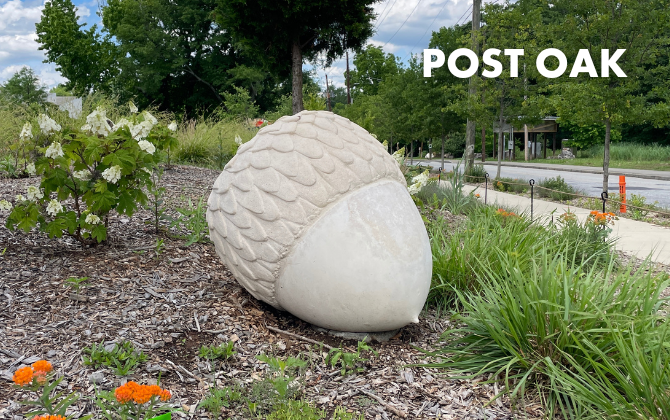
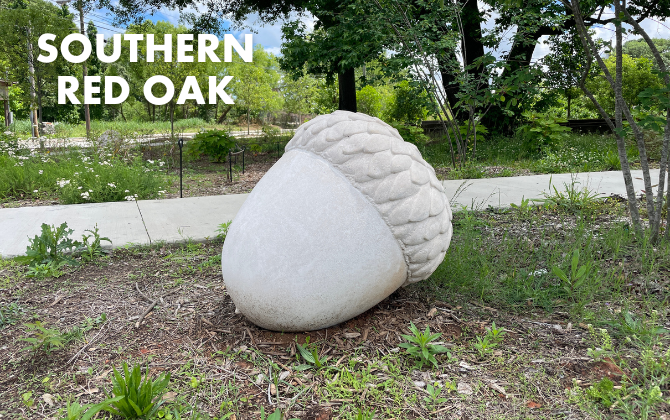
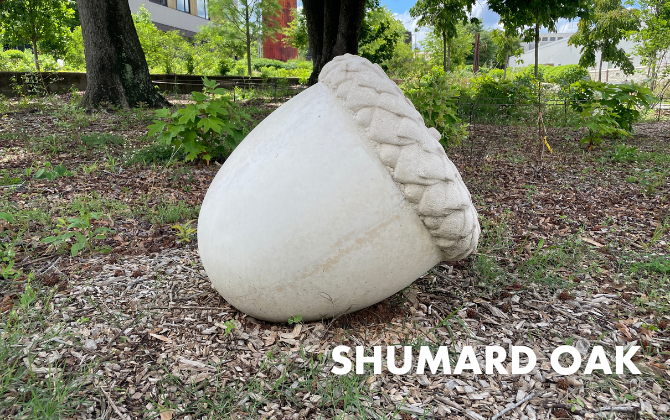
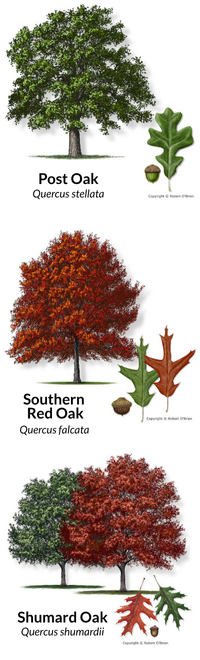
As people walk by, The Acorner provides an opportunity to learn about acorns across oak species and the growth cycle of oak trees, from acorn to overstory. There are three acorn shapes in the collection, and all three oak (Quercus) species represented are native to the southeast: post oak, southern red oak, and Shumard oak.
Post Oak
The post oak (Quercus stellata) produces small acorns about half an inch long. These acorns have thick, chunky caps that cover one-thirds to half of the nut. Historically, the post oak earned its name for its highly durable wood, which was once used to make fence posts. Today, its strength and beauty make it a popular choice for high-quality cabinetry and flooring.
Southern Red Oak
Also known as the Spanish oak (Quercus falcata), the southern red oak acorns are slightly larger, ranging from half an inch to one inch. They have thin, fringed caps that lend a delicate appearance. These acorns are essential in feeding local wildlife, from squirrels to deer.
Shumard Oak
The Shumard oak (Quercus schumardii) acorns are the largest, measuring between 3/4 to 1 1/4 inches long, with rough, scaly caps. Shumard oaks are known for their brilliant fall colors and impressive lifespan, often exceeding 200 years. This species contributes not only to the beauty of the landscape but also to the sustainability of local ecosystems.
Resilience, History, and Sustainability
We hope encountering these acorn sculptures spark curiosity, not only about their practical purpose, but about the acorns and the oaks. Oak trees are important to our local environment, history, and wildlife. Oak trees are more than just a natural element in Atlanta’s landscape. They symbolize resilience, history, and sustainability. Oaks are vital in supporting wildlife, stabilizing the environment, and even contributing to human use throughout history.
Acorns are more than just seeds; they are a vital food source for a variety of urban wildlife. Deer, squirrels, birds, and even insects rely on acorns during the fall and winter when other food sources are scarce. For humans, acorns were historically a vital resource. The Muscogee people, who originally inhabited this area, likely used acorns as a food staple. Acorns can be processed into flour, providing a nutrient-rich source of carbohydrates.
Oak trees are known for their “boom and bust” acorn production cycles. In some years, oaks produce a bumper crop of acorns (known as “mast years”); in others, their output is much lower. This fluctuation can be influenced by weather patterns, tree health, and even the presence of pollinators. A boom year ensures enough acorns survive animal predation to germinate and grow into new oak trees, helping sustain the next generation of oaks.
The journey from acorn to fully grown oak tree is a slow process that takes decades. While some oaks can start producing acorns as early as 20 years old, many species, like the Shumard oak, take much longer. A mature oak tree, which can live for centuries, provides shade, oxygen, and a habitat for countless creatures.
Oaks are integral to both the local environment and human life. Not only do they provide food and shelter for wildlife, they also stabilize the soil and contribute to the health of forest ecosystems. Their hardwood is highly valued for construction, furniture-making, and flooring. Additionally, oak trees sequester carbon, playing a role in mitigating climate change.
The next time you walk through the Beltline or visit the Trees Atlanta campus, take a moment to appreciate the significance of the acorns underfoot and the mighty oaks they represent—whether as a food source, a building material, or a crucial part of our world.
Species Illustration Credit: Texas A&M Forest Service
Get Involved
Trees Atlanta plants oak trees throughout Atlanta, including in front yards at no cost to homeowners. For those who want to get involved, Trees Atlanta offers various planting events and volunteer opportunities. You may also take a docent tour along the Atlanta Beltline Arboretum on the Southwest or Eastside Trails to view the many oaks planted, these acorn bollards, or the 33 Oaks art installation. Visit Trees Atlanta’s Calendar of Events to find upcoming tours, speaker series, and volunteer projects and join the mission to make Atlanta a greener, healthier city.
About the Author
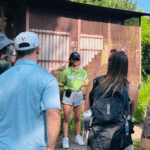 Olivia Wang has volunteered with Trees Atlanta for four years. Her journey started as a Junior TreeKeeper Camp participant while in grade school, where she discovered her love for tree conservation and environmental education. Since then, she has participated in tree planting, pruning, and forest restoration projects, contributing to preserving Atlanta’s urban forests. Olivia is now in the 8th grade, and she is a Trees Atlanta Certified Volunteer as a docent and tree pruner. As a docent, Olivia leads educational tours of the Atlanta Beltline Arboretum and shares insights about tree ecology and the importance of protecting our environment. For the past two years, she has volunteered as a Junior Intern with Trees Atlanta Junior TreeKeeper Camp, assisting with programs that promote environmental awareness and sustainability. Her experiences have strengthened her commitment to preserving Atlanta’s green spaces and inspired her to continue positively impacting the environment.
Published: May 14, 2025


