Tiny Forest: Miyawaki Method in the Atlanta Beltline Arboretum
What is a Tiny Forest?
A novel method of afforestation called the “Miyawaki Method,” named for Japanese botanist Dr. Akira Miyawaki, creates a tiny forest or mini forest. This method involves planting native species at ultra-high densities and mimics natural forests in a miniature footprint.
Tiny forests could be more effective than traditional afforestation in urban landscapes where green spaces are isolated and limited to small plots. The diverse, high-density planting create conditions where trees and shrubs grow faster and resemble a 100-year-old forest in a fraction of the time.
In cities, like Atlanta, where tree loss and competition for land accelerates, tiny forests could repair compact spaces into thriving ecosystems with some of the benefits of much older forests.
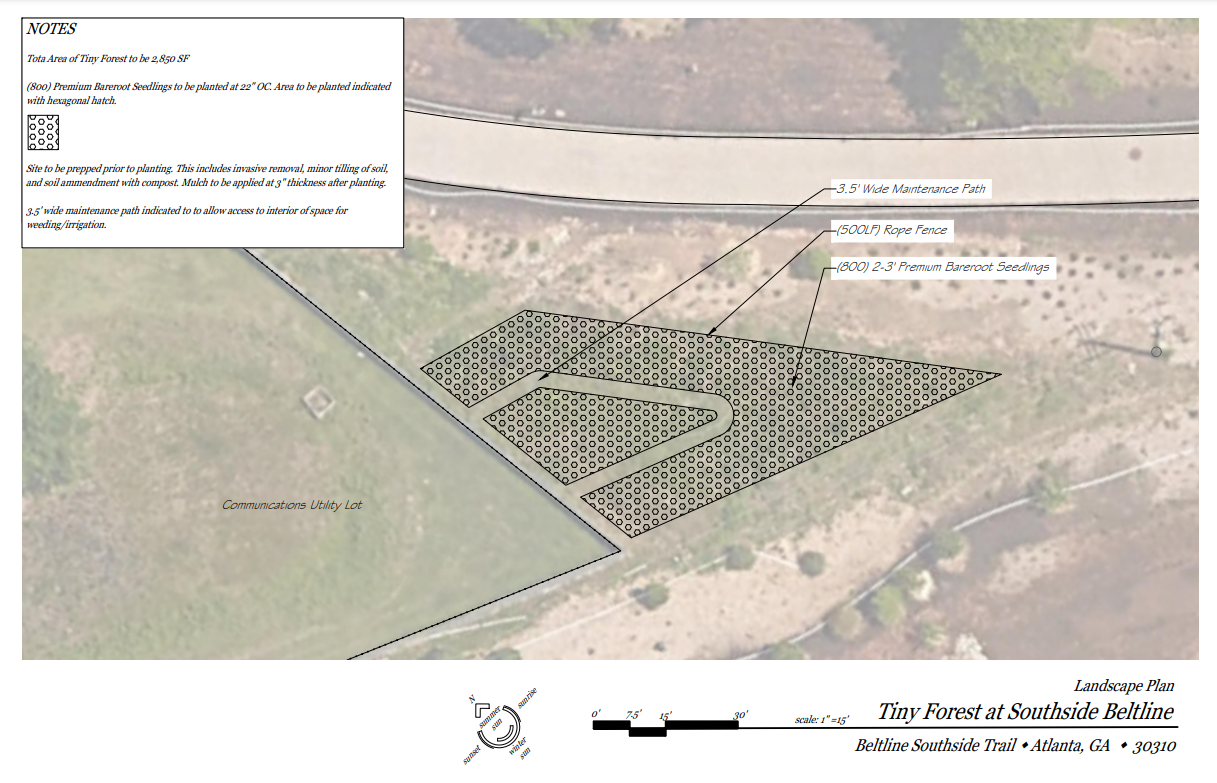
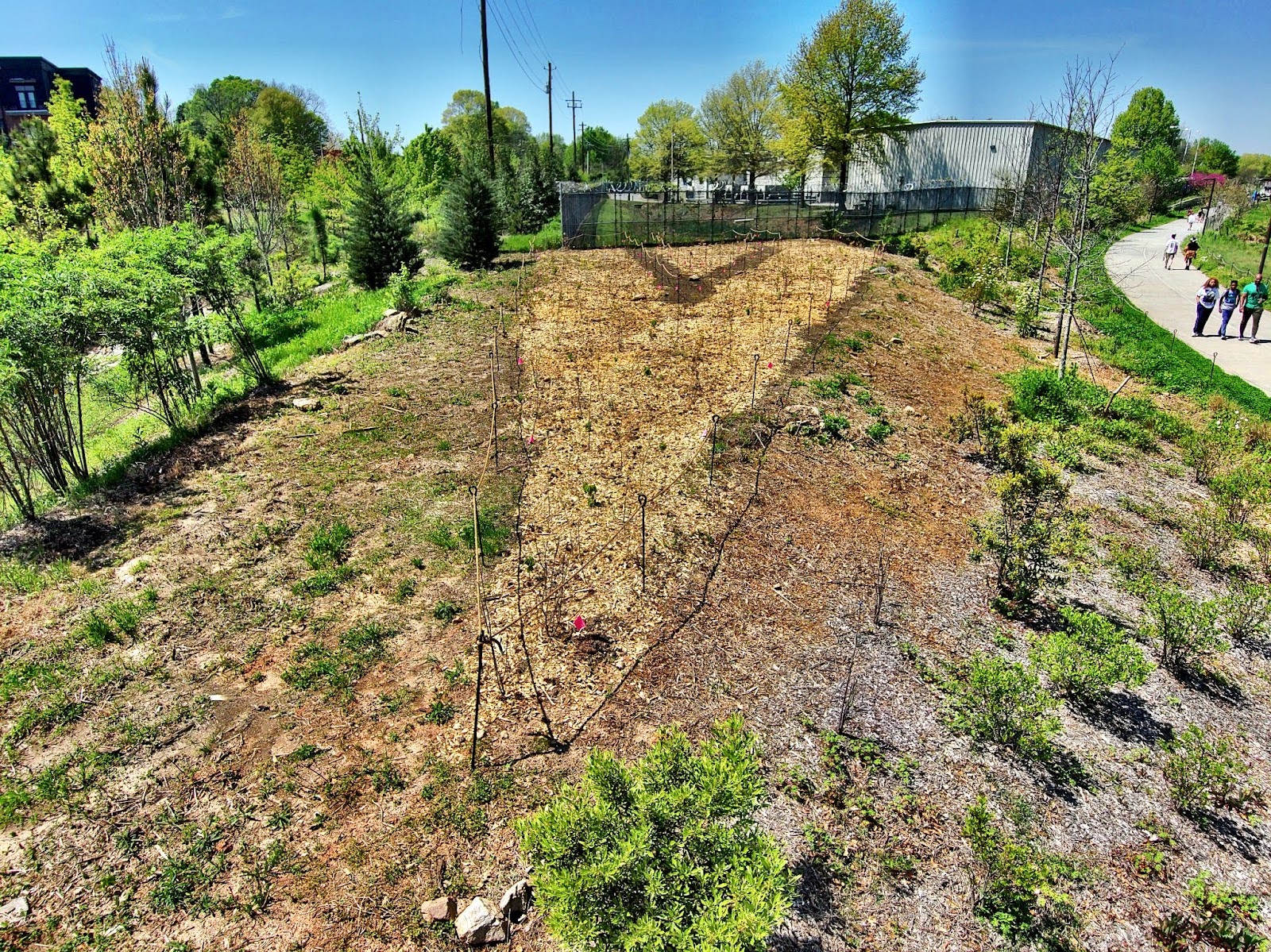
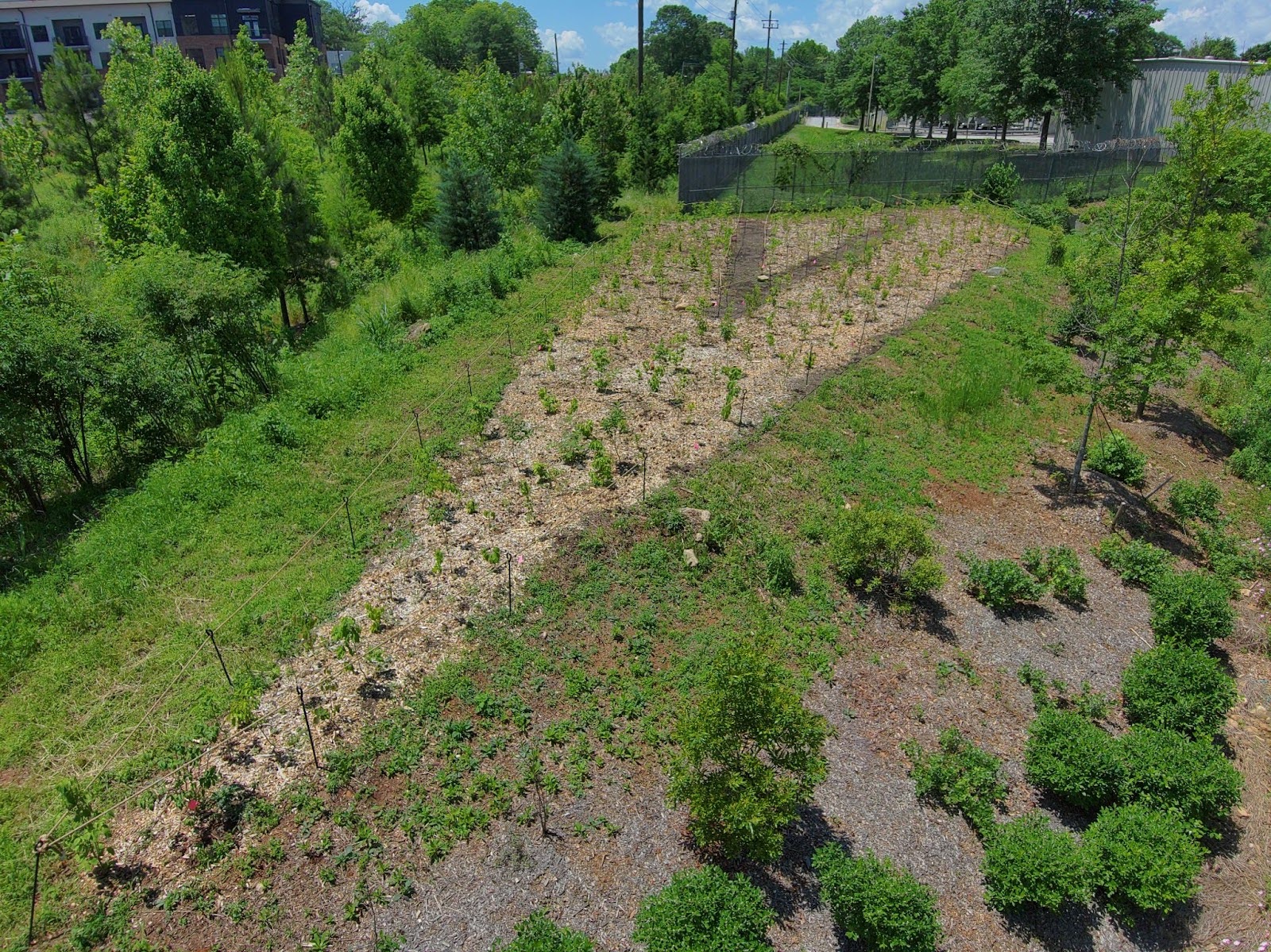
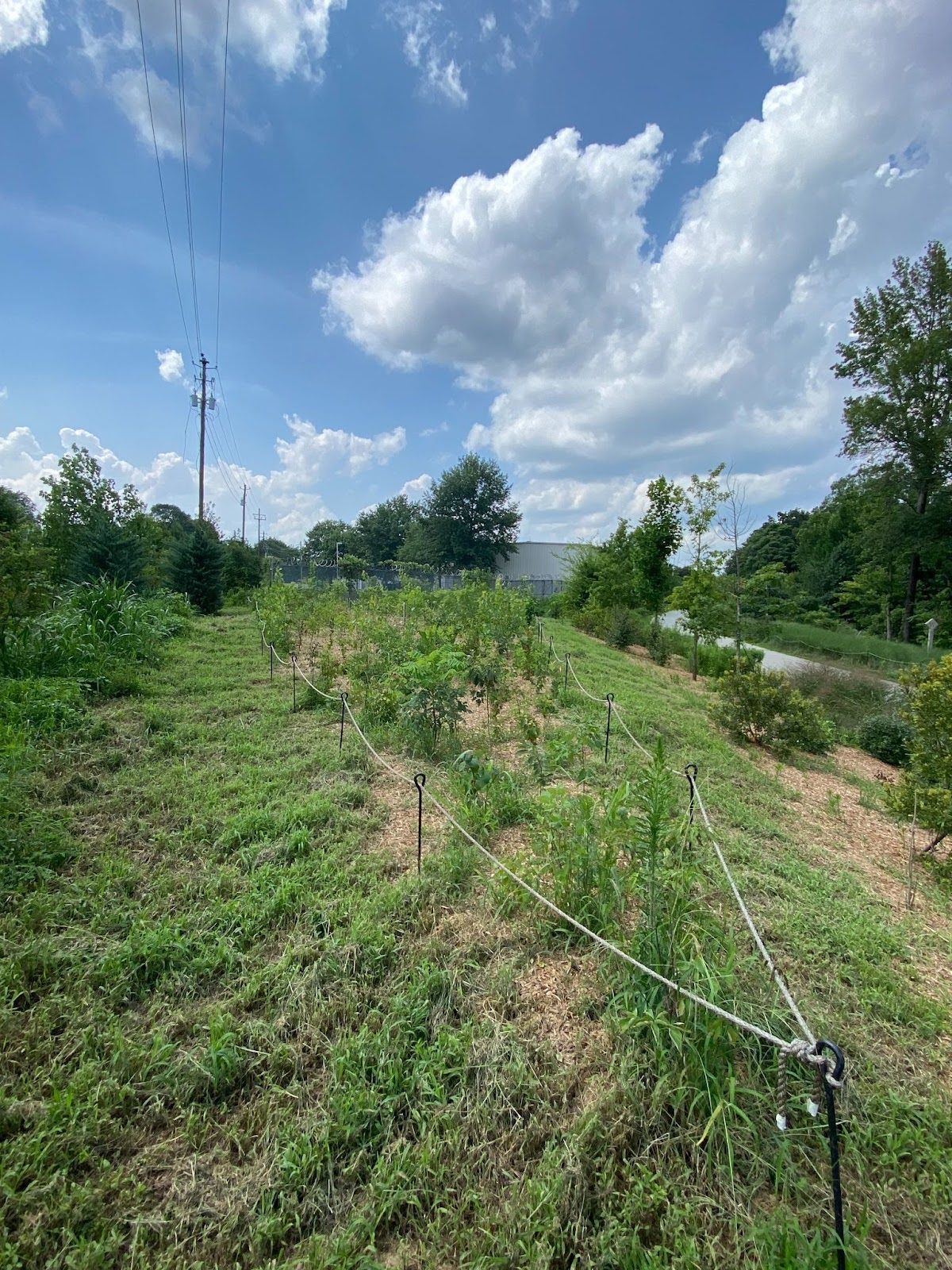
Photos above Trees Atlanta (L-R): The planted area of the tiny forest is comprised of 2,850 square feet (i.e., less than 1/15th of an acre); the area is covered in mulch immediately after planting over 800 bareroot trees in March 2024; green leaves emerge through the summer; the tiny forest continues to leaf out, April 2025.
Planting a Tiny Forest on the Atlanta Beltline
A small triangular plot in Atlanta Beltline Arboretum provided a perfect spot for Trees Atlanta to experiment with our own interpretation of a tiny forest. The area is less than a quarter acre on the Beltline Southwest Trail near the Allene Avenue access point. It had long been a dumping ground for garbage, including a small mountain of tires, and was plagued with a variety of invasive species like Tree of Heaven (Ailanthus altissima) and Johnsongrass (Sorghum halepense). We had the opportunity to convert an eyesore into a demonstration garden for education and ecological repair, as well as visual interest.
To remove the invasive plants, a variety of invasive management methods were used. The cut-and-treat method was used on most of the Tree of Heaven, but due to their aggressive rhizomes (underground stems that grow horizontally and produce new shoots), we also used a small skid-steer to remove the stumps and rhizomes and lightly grade the site.
Once the area was cleared of debris, soil tests were performed. The soil lacked a number of essential elements: phosphorus, potassium, magnesium, and nitrogen were all less than optimal. The health of the soil is critical for the success of any plantings. Two inches of soil amendment was added to the area where the tiny forest would be planted.
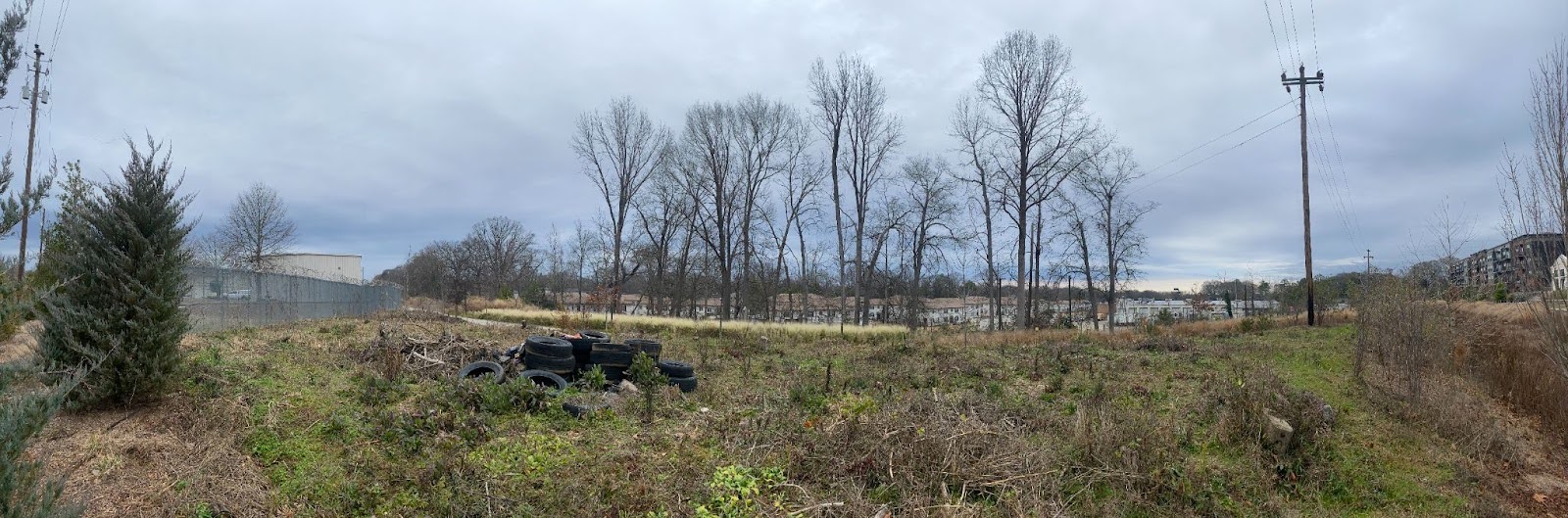
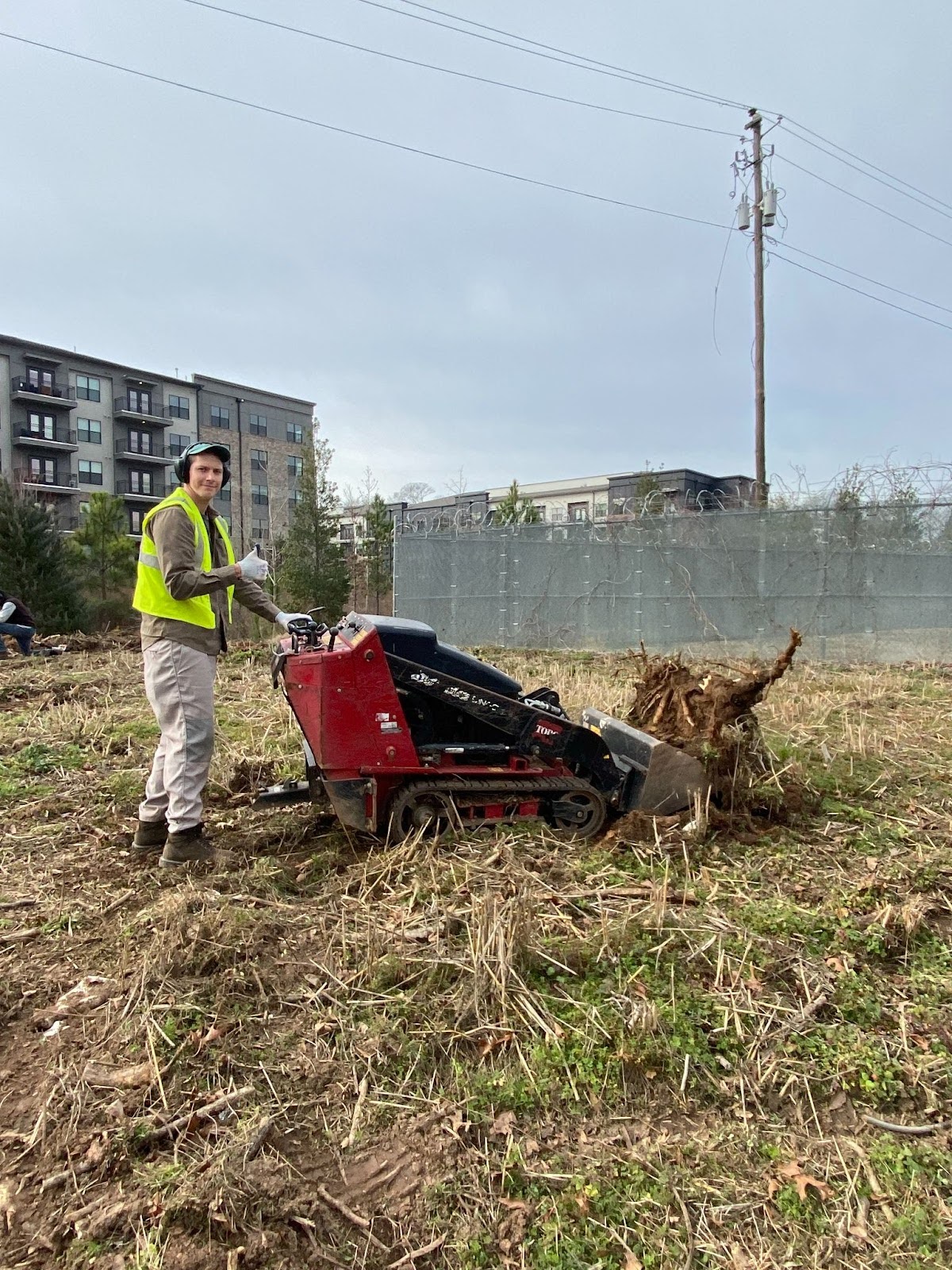
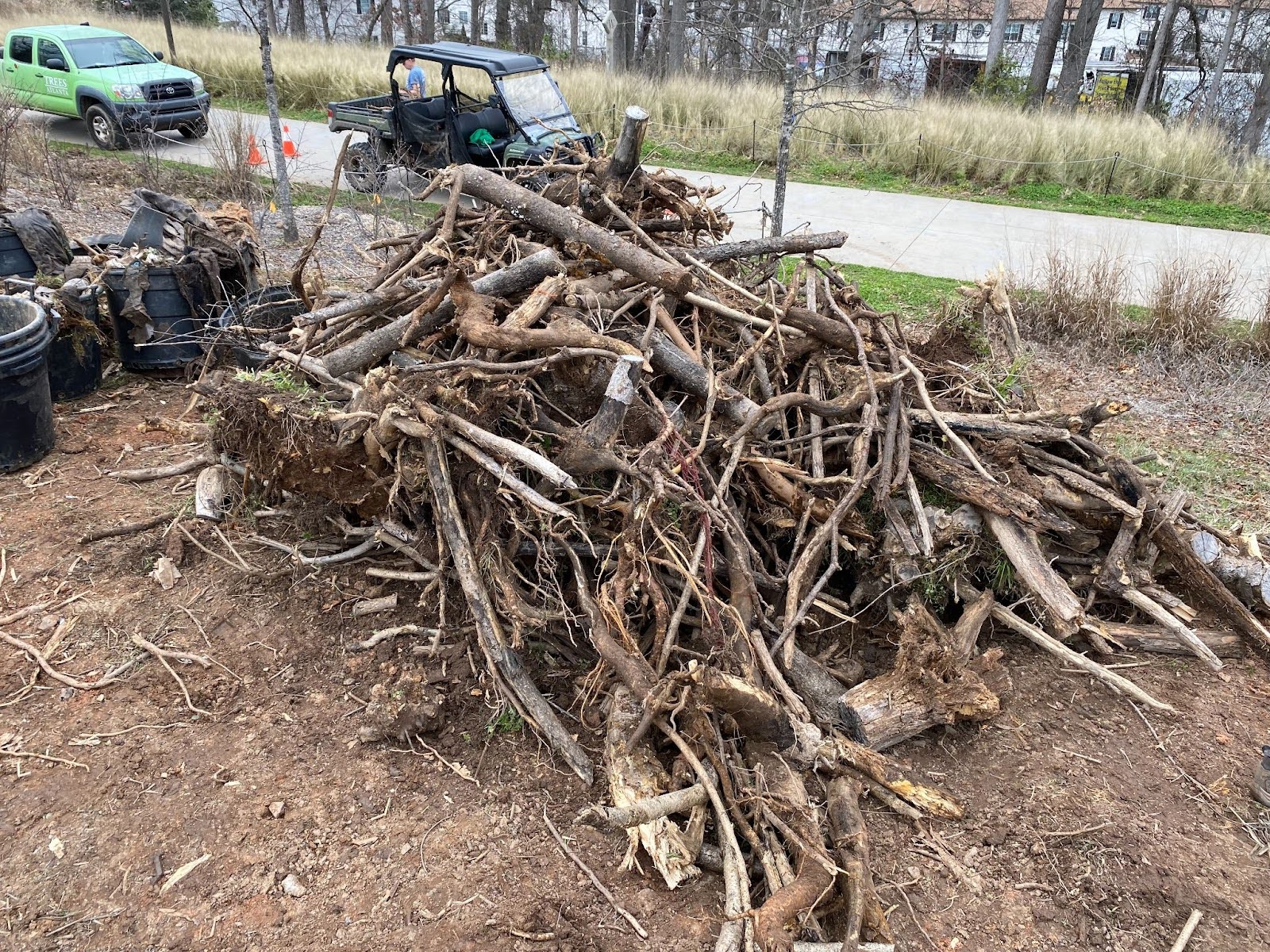
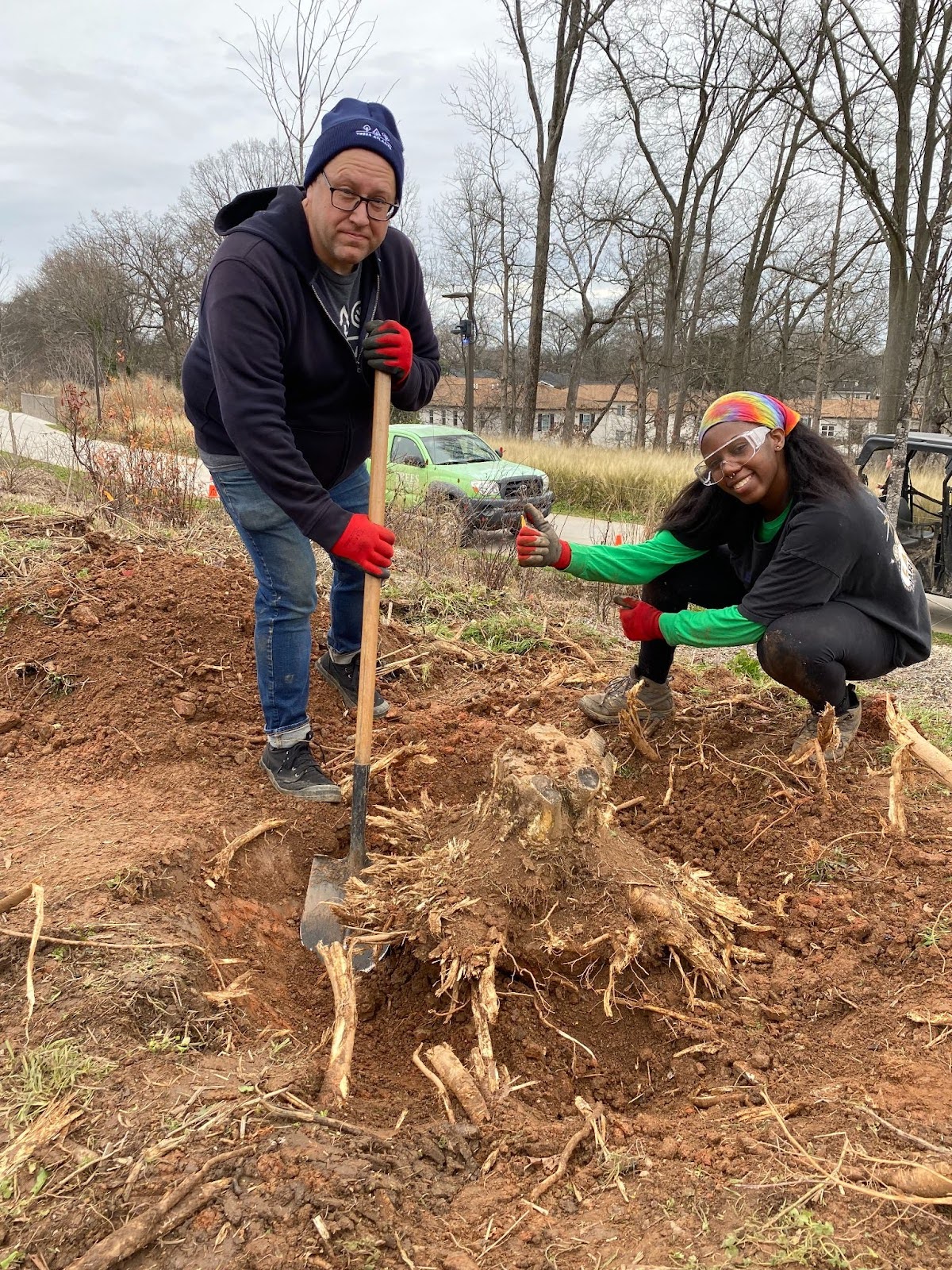
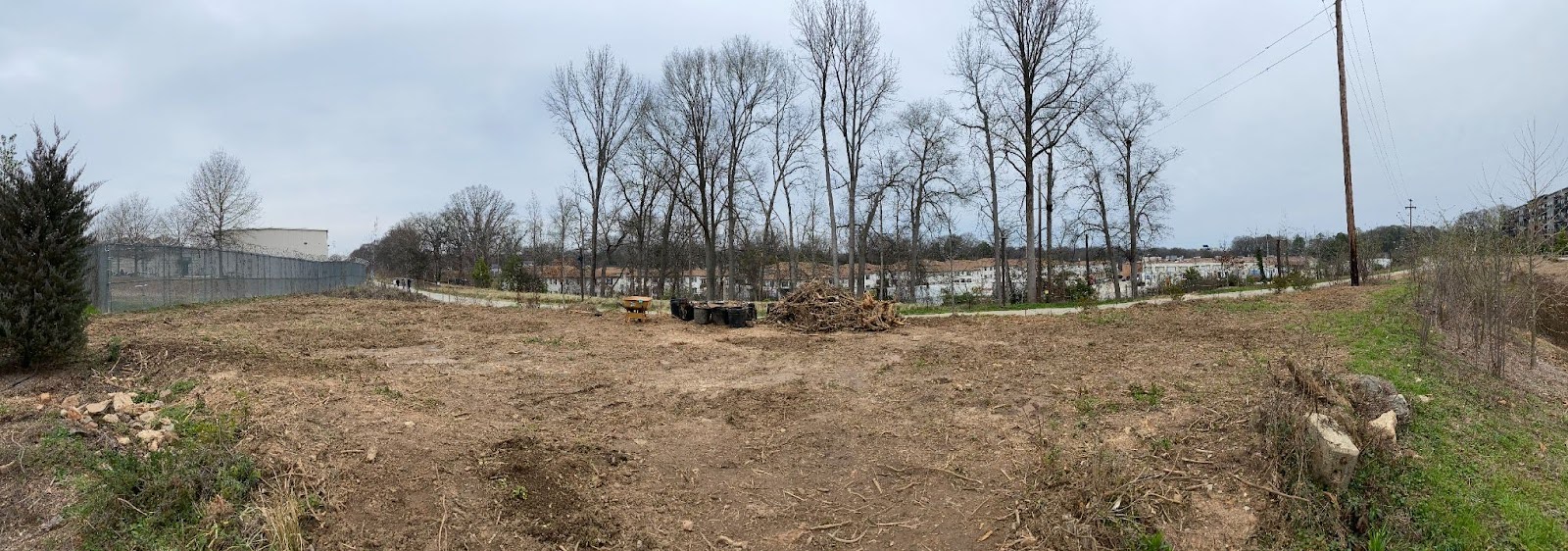
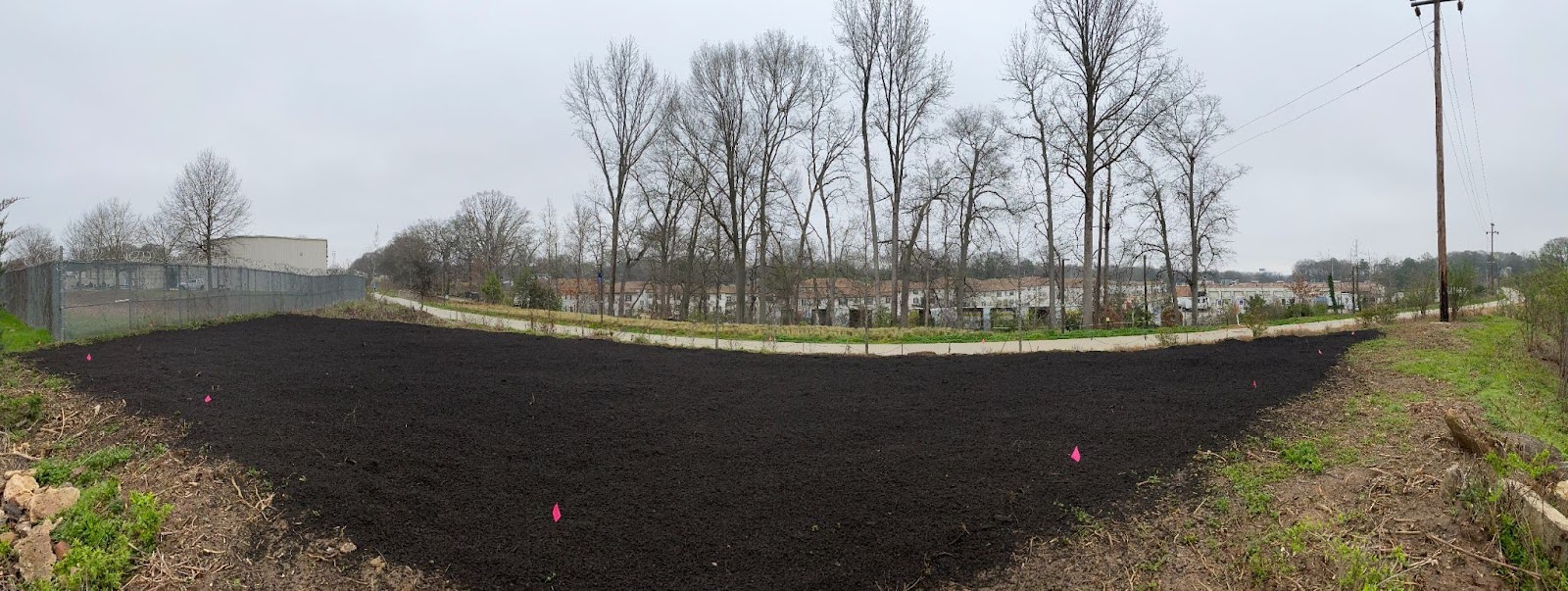
Photos above Trees Atlanta (L-R): The site prior to work, taken January 2024; Brennan Wall using the dingo to uproot tree of Heaven; Pile of tree of Heaven removed; Atlanta Beltline Arboretum staff Chad Radford and Kerri Simmons removing tree of Heaven; The site after invasive plant and debris removal, taken February 16th, 2024; The site after being dressed with compost at 2″ thick, taken March 5th 2024.
800 Trees in 1/15th Acre
The palette of species incorporates a wide variety of native shrubs and trees that represent the canopy layers of a forest (i.e., shrubs, understory, midstory, and overstory) and includes both early succession and old-growth species.
Based on the square footage of the site and a plan to space the trees at 22″ on-center, the quantities and species of trees were determined. A mix of over 30 different species were included in the planting palette (see chart). This palette was developed in collaboration with Trees Atlanta Forest Restoration team, Conservation Director Brian Williams, and Jon Calabria, professor at the University of Georgia College of Environment & Design. It was important to create a palette that was representative of our native forests, and was relatively easy to source from nurseries.
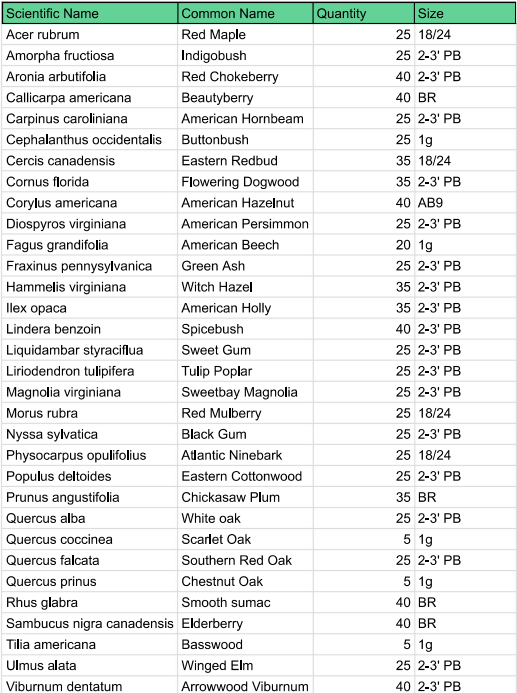 Most of the plants were sourced as bare root seedlings. This is practical for this type of afforestation project because bare root seedlings are easier to source in larger quantities and far more cost effective than containerized plants. Bare root plants are also typically straight species, as opposed to being a cultivar, meaning they are more typical of what grows naturally in local ecosystems.
It’s helpful that planting young bare root plants is easier than planting container plants–an important consideration since there were over 800 trees to plant by community volunteers. A quick planting tutorial was all that was needed before our volunteers got to work. The volunteers skillfully finished the planting in one morning. The following week, the site was dressed with mulch by another volunteer group to protect these baby trees and shrubs. The seedlings were regularly watered through the spring and summer. The seedlings began to leaf out with green buds!
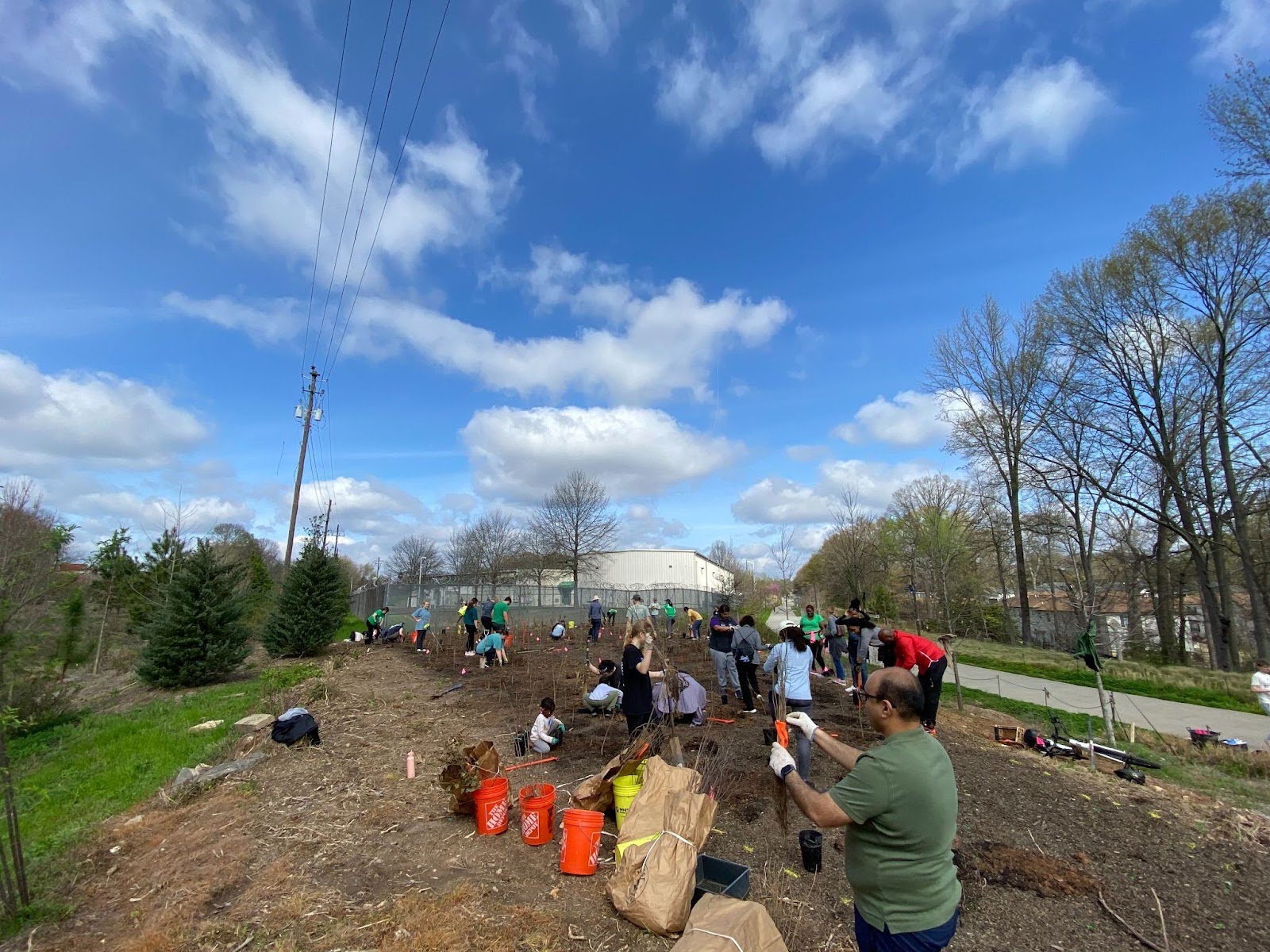
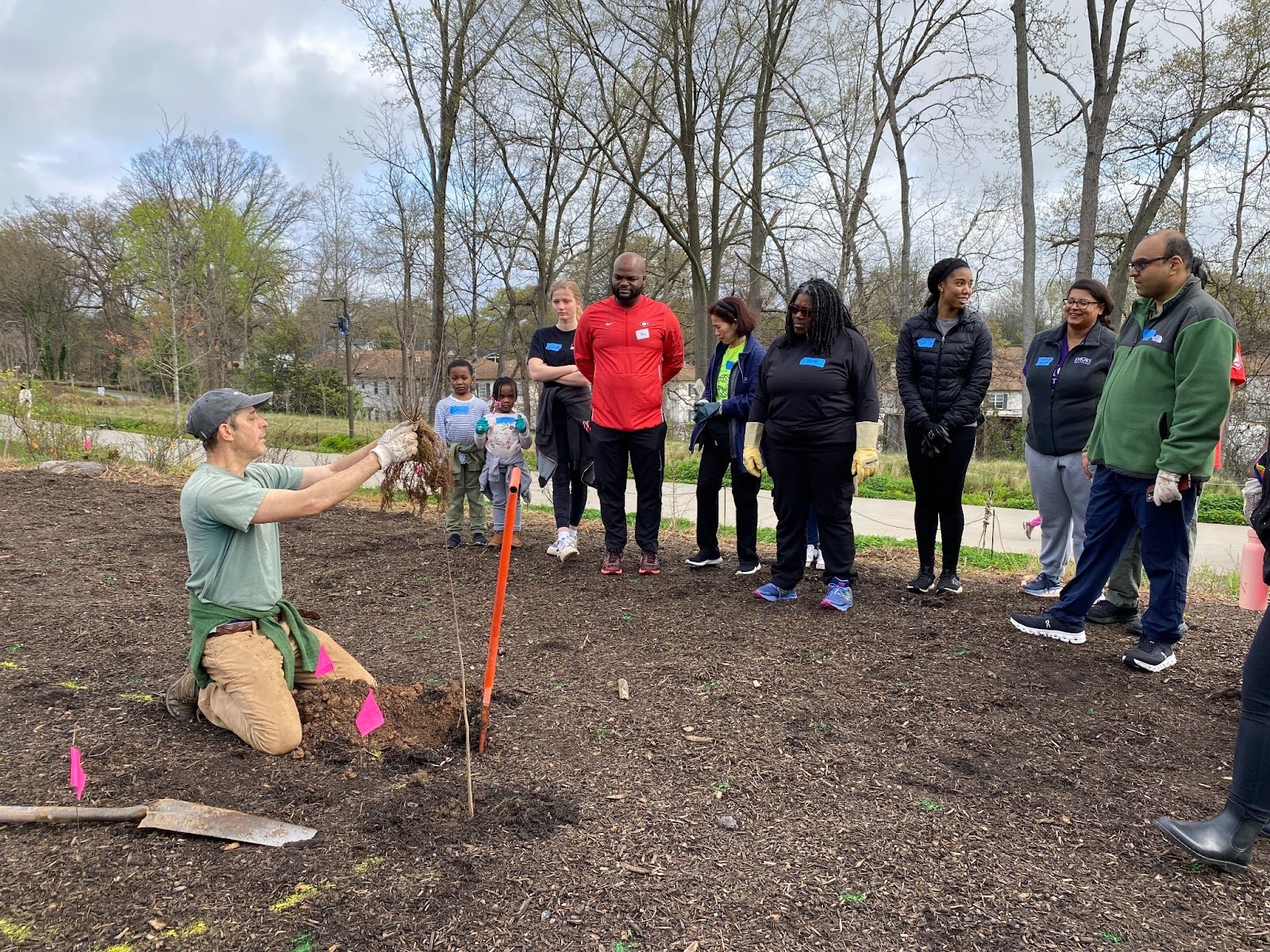
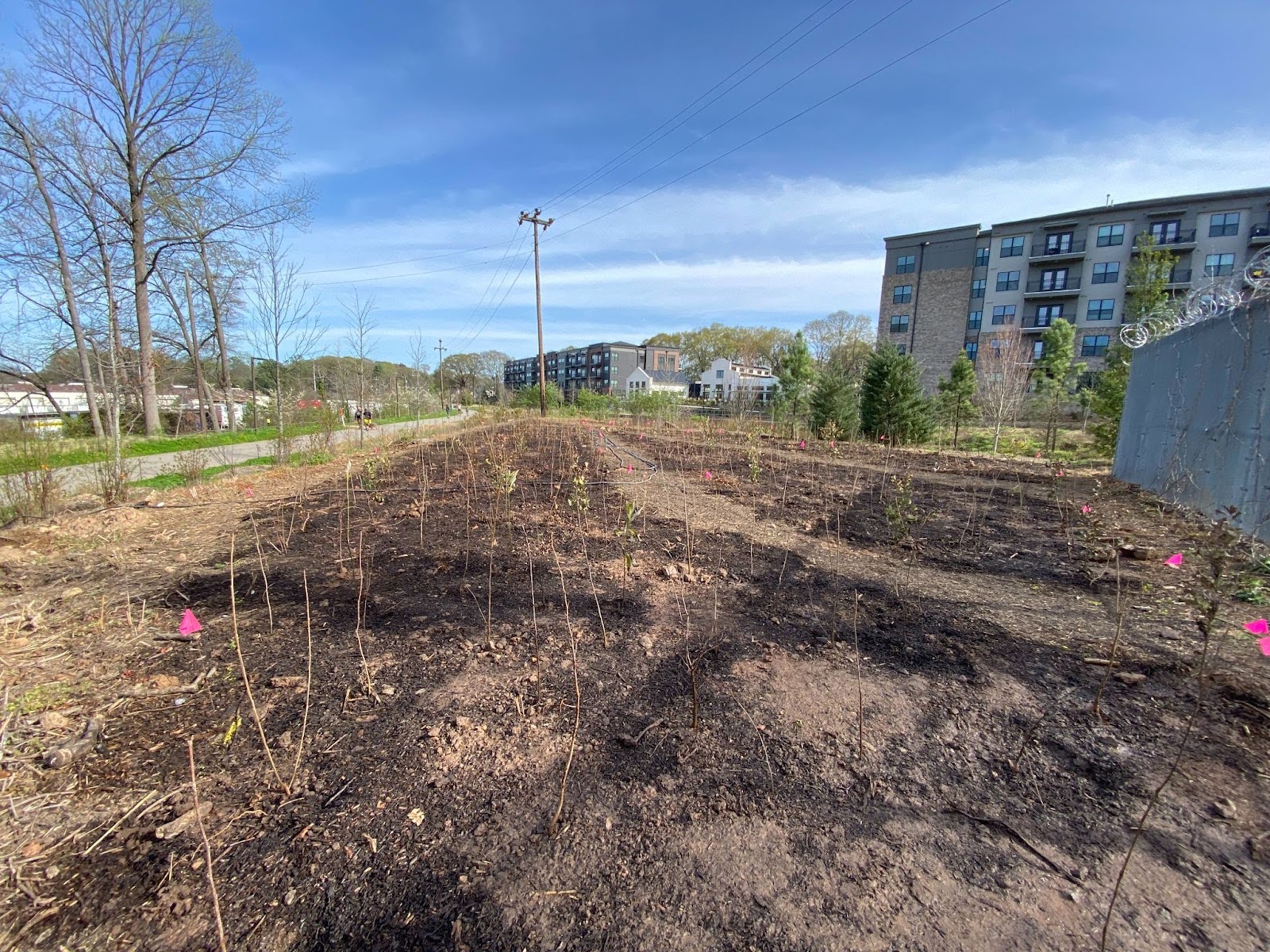
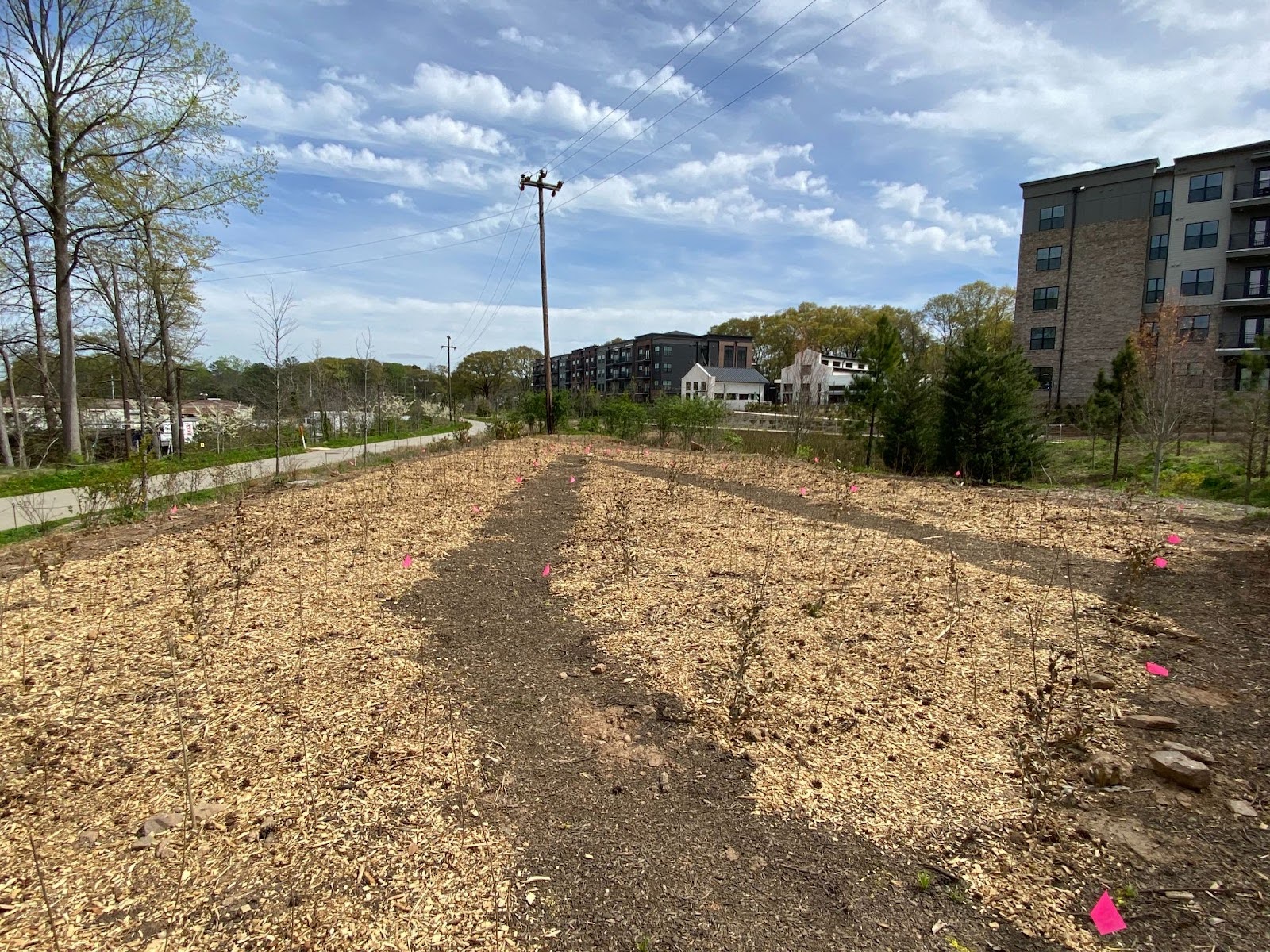
Photos above Trees Atlanta (L-R): Volunteers hard at work planting hundreds of seedlings; Greg Levine gives a demonstration on how to plant bareroot seedlings; The site post planting after a fresh drink of water; The site after a mulching project.
Learning As We Grow
To the untrained eye, the site immediately after planting might have appeared like a bunch of sticks. It’s remarkable how quickly nature has returned to the area in just over a year.
Trees Atlanta will maintain and monitor the tiny forest as these plants continue to grow. We hope to better understand what works well (or not so well) in our small tree experiment. It’s expected that there will be competition for light and water and some natural selection as time passes. As the tiny forest grows, the composition of the space will evolve: which plants will thrive? Which will struggle? Which plants will grow quicker than others, and can we tell why?
About The Author
Brennan Wall is the Landscape Design Manager at Trees Atlanta and has been with the non-profit since 2021. Brennan currently designs and installs arboretum spaces along the Atlanta Beltline (including the Kendeda TreeHouse campus landscape) and manages the City Forest Certification Program. Previously, he worked in the Urban Trees program, planting trees along the Atlanta Beltline Southside Trail. Brennan graduated from Georgia Tech and has a B.S. in Environmental Engineering. Outside of work, Brennan enjoys playing disc golf.
Posted on May 19, 2025
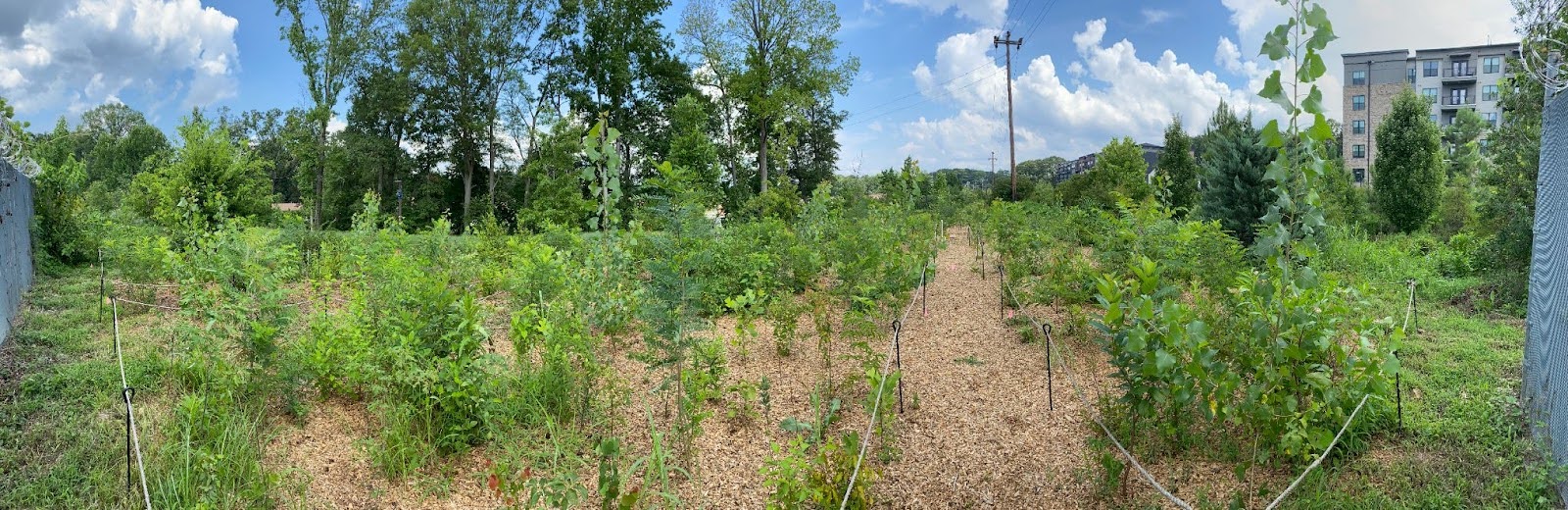
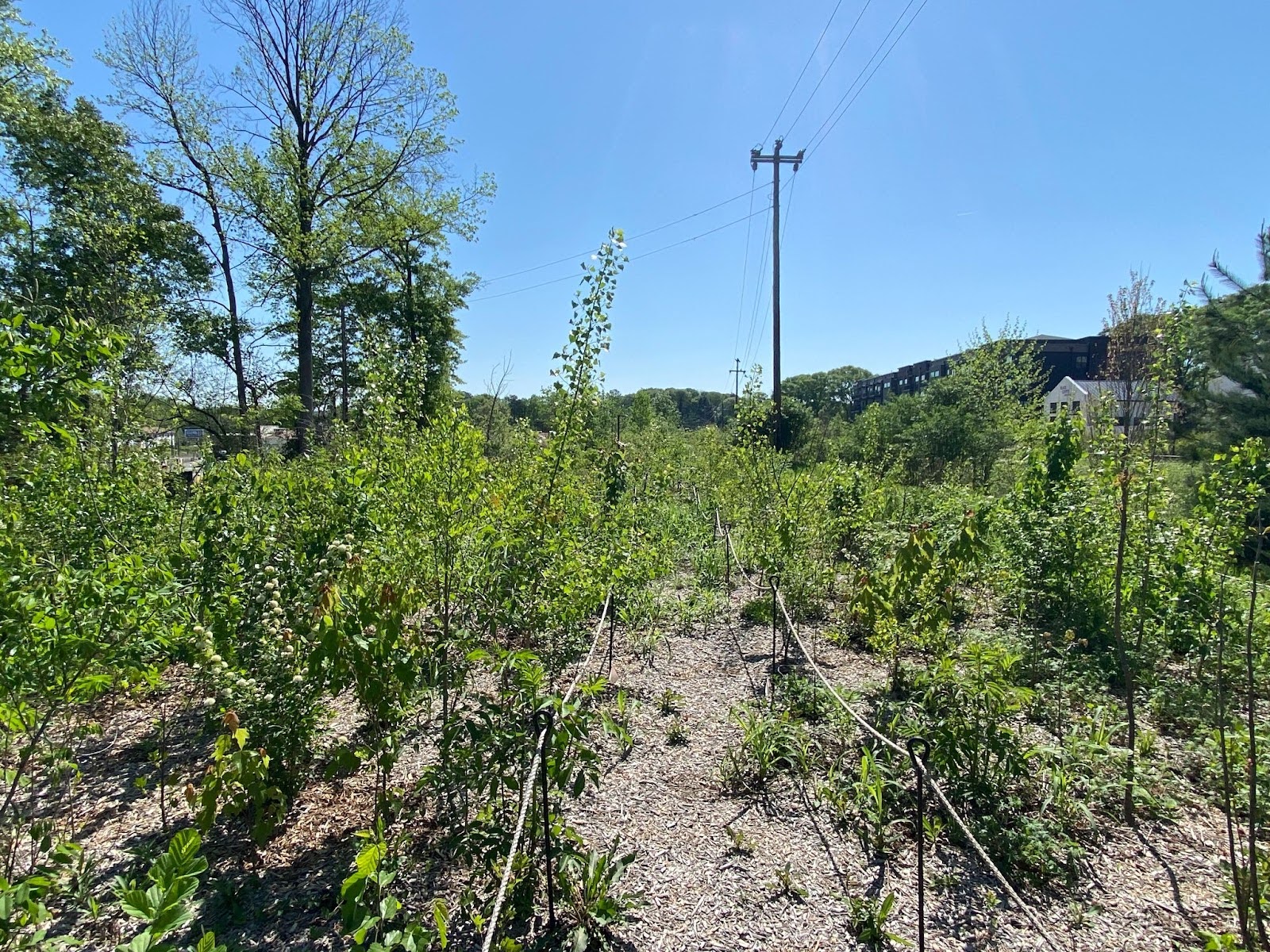
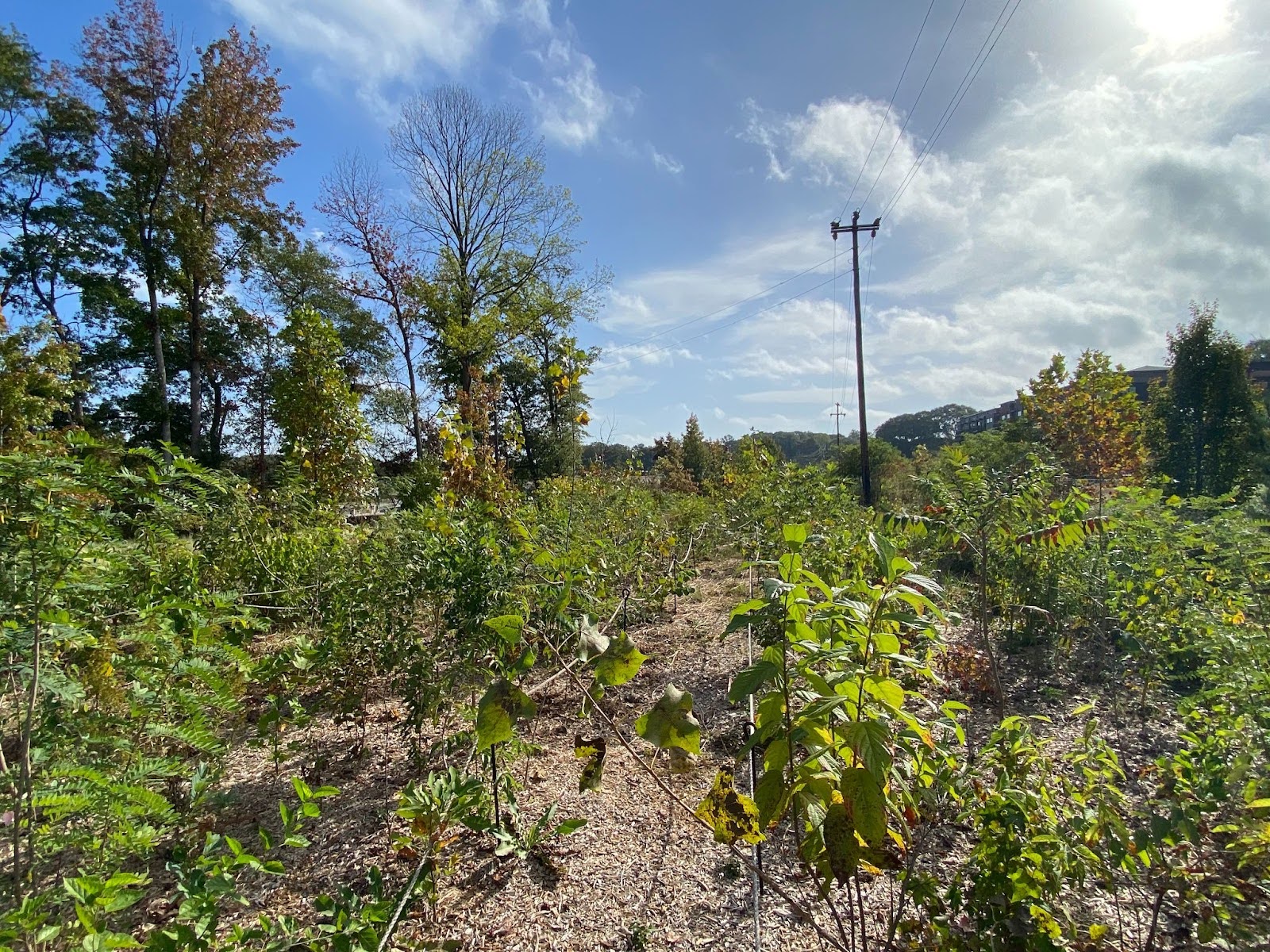
Photos above Trees Atlanta (L-R): Tiny Forest photographed May 2024 (wide angle); Tiny Forest photographed May 2025 (from above); Tiny Forest photographed October 2024


