What Our Campus Trees Do For Us: Ecosystem Services at the Kendeda TreeHouse
Written by Jo Noble, Trees Atlanta Education Intern
Ecosystem services are benefits that humans receive from nature, including trees. Ecosystems with abundant trees help people stay healthy and safe. Examples of ecosystem services include food, reduced soil erosion, and improved water quality. Trees are great providers of ecosystem services. The trees in and around Atlanta provide shade, remove air pollution, store carbon, produce oxygen, and help prevent soil runoff and erosion. Compared to other large U.S. cities, Atlanta has the highest percentage of tree cover and number of trees per square mile, making it truly the “city in the forest.”
Tree Diversity at the Kendeda TreeHouse
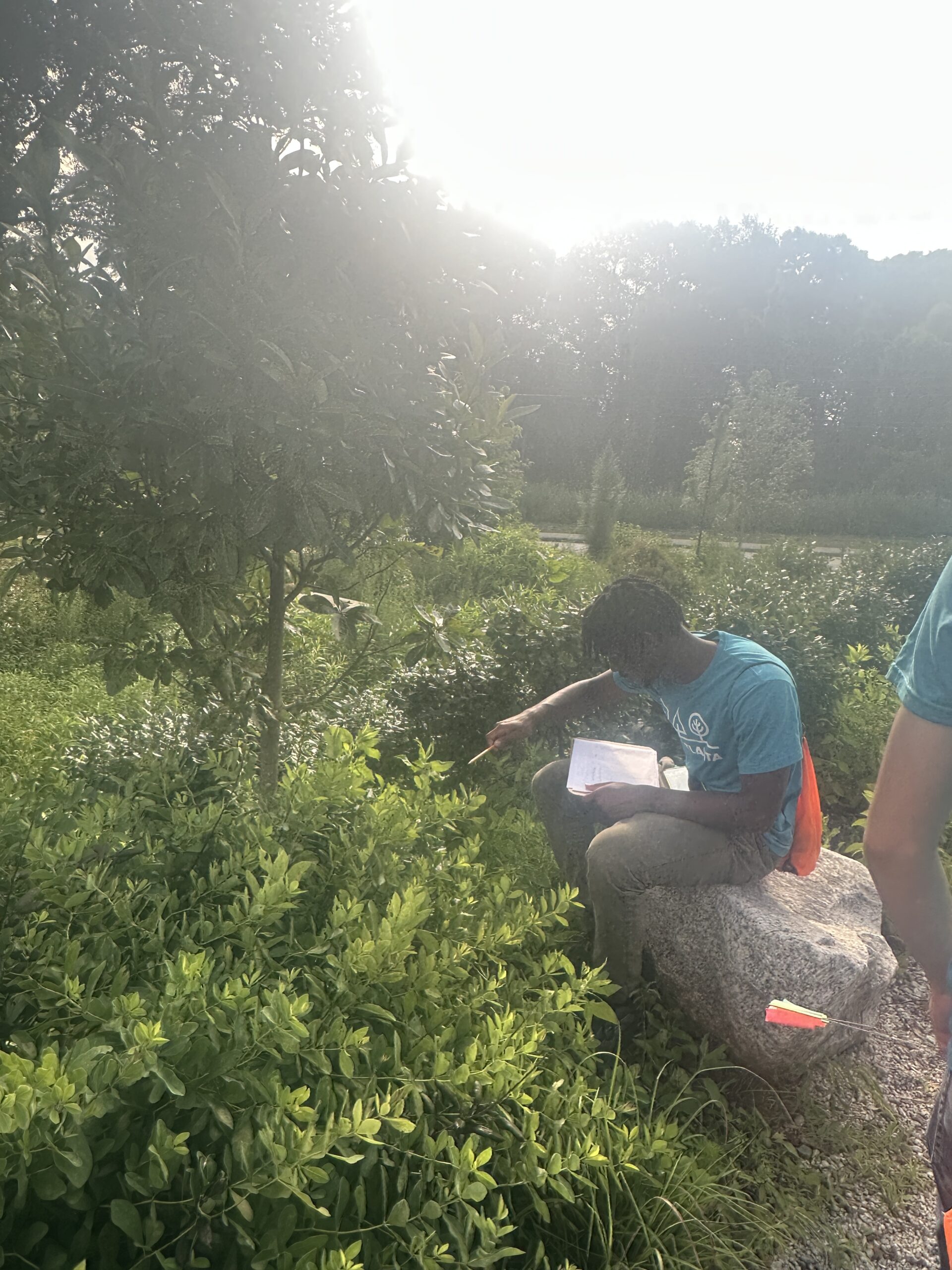
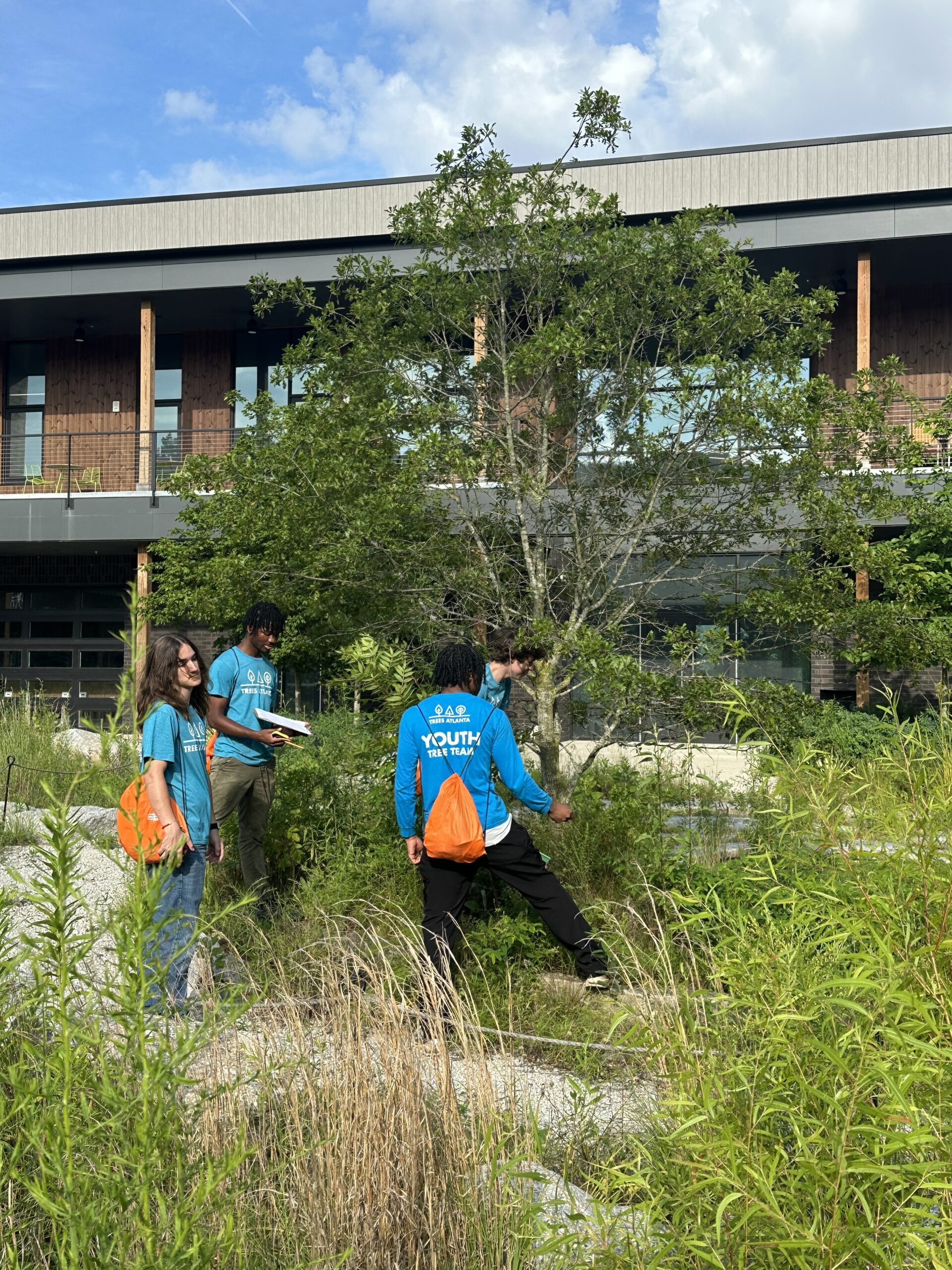
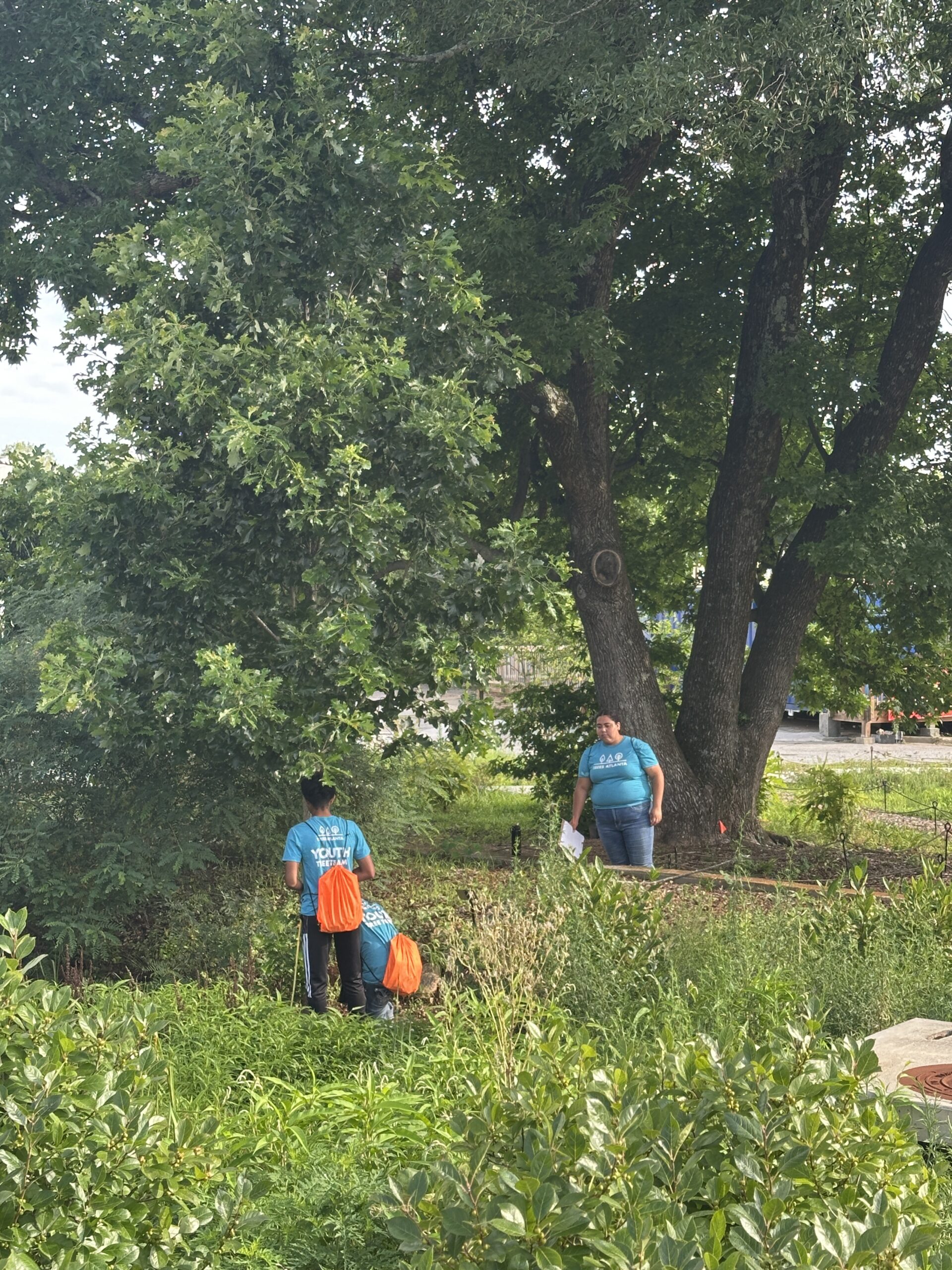
The trees growing on campus at the Trees Atlanta Kendeda TreesHouse were studied by our summer 2025 Youth Tree Team (YTT) as part of Project ACER (Atlanta Canopy Education and Research), an inquiry-based learning program that examines Atlanta’s urban forest through data collection and analysis. The data they collected quantifies the 48 tree species growing on campus, including notable species such as the Georgia oak and American beech. Overall, YTT measured 181 individual trees of many different species that totaled an overall campus-wide tree cover of 7%, which will increase in the future as these trees continue to grow.
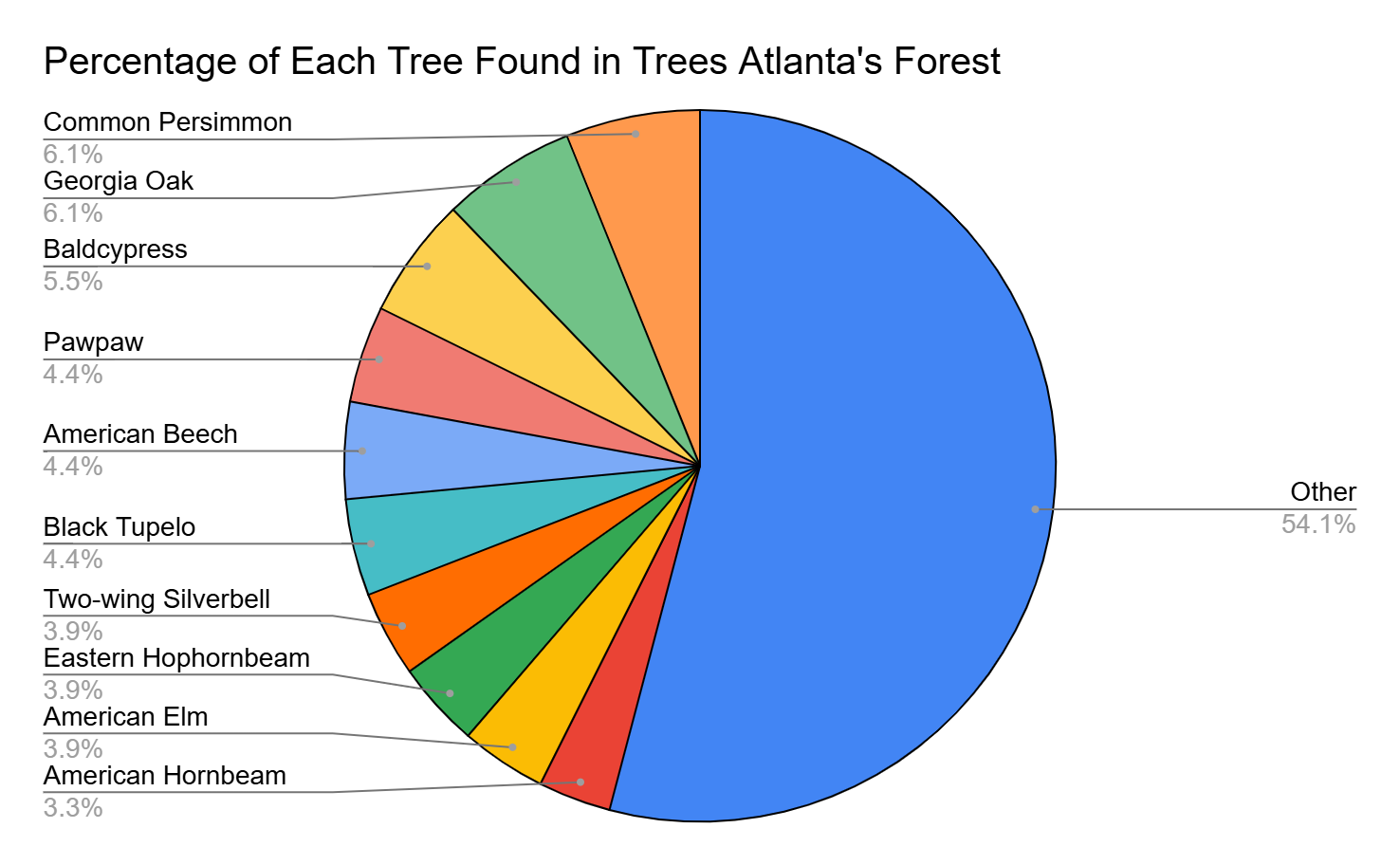
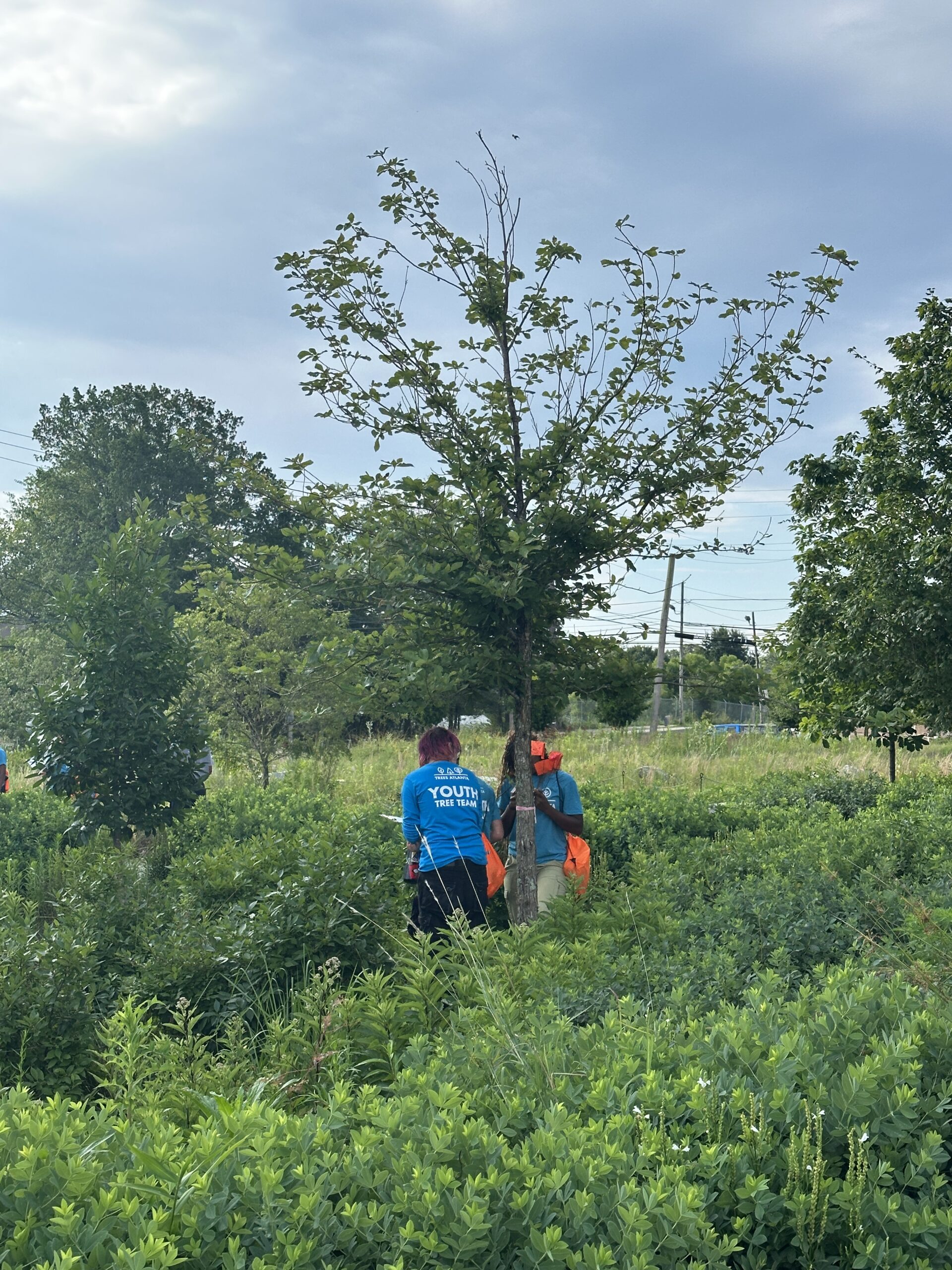
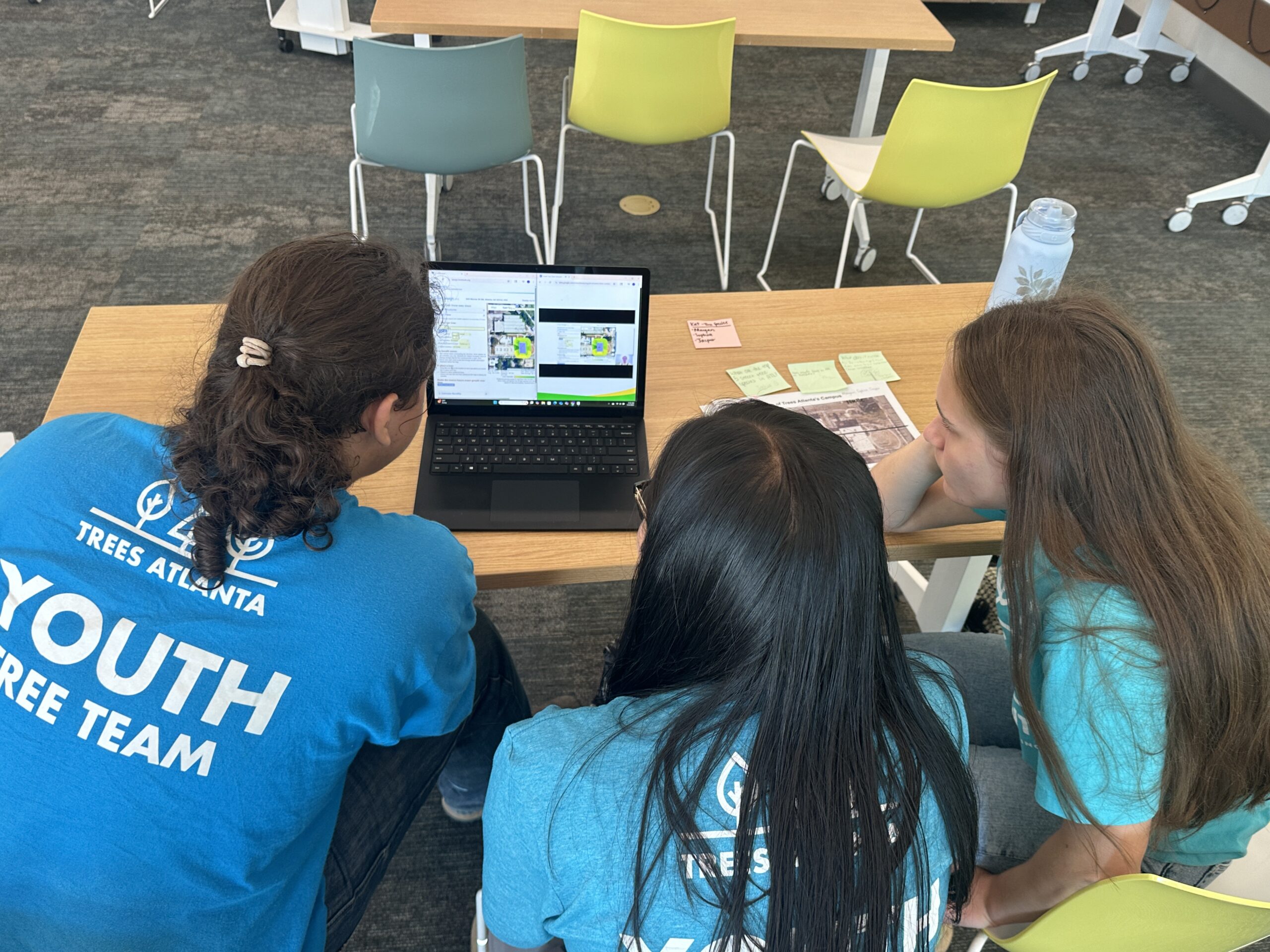
The goal of this project is to quantify the ecosystem services that the trees on the Kendeda TreeHouse campus provide. To calculate these benefits, students first collected tree data: species, trunk circumference, distance and direction to building, sun exposure, and tree condition. These data were entered into the i-Tree Eco program and analyzed using a series of existing datasets, equations, and algorithms for local tree cover, pollution, and air quality, among other factors.
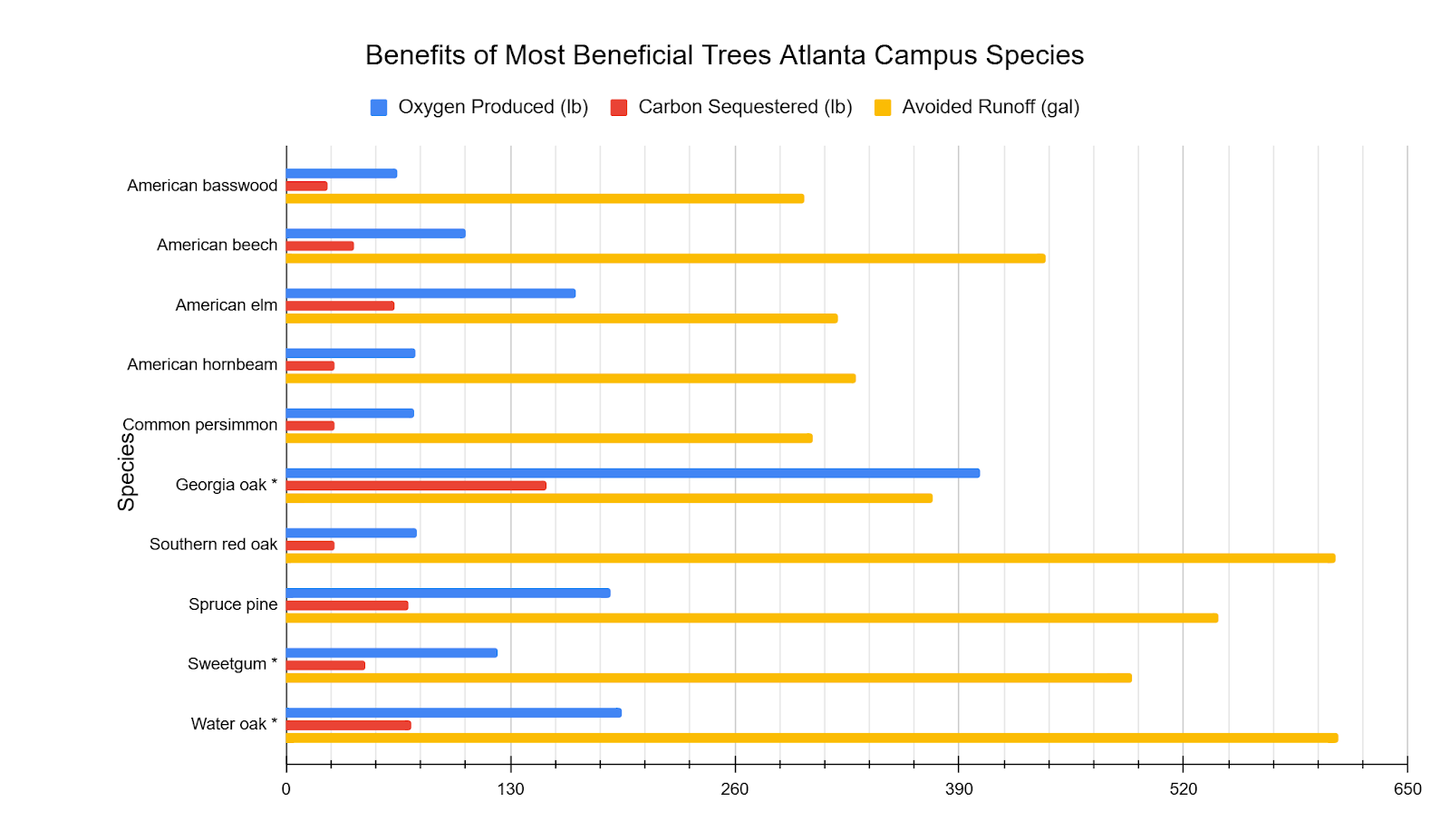
This graph shows some of the most beneficial tree species on campus based on the ecosystem services they provide. *Southern red oak, water oak, and sweetgum represent “legacy trees,” which refers to trees preserved as the Kendeda TreeHouse was built. These three trees are mature with large canopies and root systems, which is why they provide more benefits than other species on this graph. Trees of other species on this graph were planted by Trees Atlanta within the past three years, and as a result, are younger and currently provide fewer benefits than the mature legacy trees.
Oxygen Produced
Trees Atlanta’s three-acre campus may be small, but it has more than 200 trees! YTT found that the 181 campus trees they measured produce about 2,987 pounds of oxygen per year.
This occurs through the natural process of respiration and photosynthesis- taking in carbon dioxide and letting out oxygen, a complement to us breathing in oxygen and letting out carbon dioxide. Though this adds very little oxygen overall in the atmosphere, it still helps improve air quality in local neighborhoods. This helps to improve the overall air quality in the greater Atlanta area, which often has some of the worst air quality in the southeast.
Carbon Sequestration
The Youth Trees Team study reports that the campus trees store about 1,120 pounds of carbon dioxide annually.
This amount is the equivalent of removing air pollution caused by burning 56 gallons of gas, which is about 3 to 4 full tanks of gas in an average sedan car. As these trees grow, their ability to store carbon dioxide and offset carbon emissions will increase. Trees act as carbon sinks, meaning they absorb more carbon dioxide from the atmosphere than they release; therefore, planting more trees can offset some aspects of climate change in the long term.
Avoided Runoff
On the Trees Atlanta Kendeda TreeHouse campus, this year, the trees prevented 5,723 gallons from runoff- that’s about 115 bathtubs filled with water diverted from flowing onto the street and sewers.
It’s estimated that this saved about $51 in maintenance costs. Runoff occurs when impervious surfaces, such as concrete and asphalt, cannot absorb precipitation and water flows into nearby watersheds, carrying soil and pollutants with it. Trees, shrubs, and pervious surfaces, like greenspaces, absorb and process water through roots and soil. The absorption of rainwater by plants reduces flooding, removes pollutants that may otherwise end up in waterways, and prevents erosion of valuable topsoil. Preventing runoff is important as it means money saved on water treatment, flood mitigation, and erosion control.
Overall Benefits and How You Can Be A Part of YTT
These benefits make it clear that trees care incredibly valuable. In addition to quantifying the value of the ecosystem services described above, another way to measure their monetary value is their overall replacement value. In other words, how much it would cost to replace the trees if they were removed.
The replacement value of a tree includes two components. The first component is the “value based on the trees themselves (e.g., the cost of having to replace a tree with a similar tree).” The second component is the functional value “based on the function the trees perform.” Both of these values typically increase as an area has more and larger trees. By ensuring our trees stay healthy, we can expect to see an increase in the replacement value of the Kendeda TreeHouse trees over time.
Trees are very helpful to our physical health and help reduce campus building costs, like cooling and drainage. The three “legacy trees” — which we estimate to be over 50 years old — provides a lot of this value.
As part of their summer workforce development program, the students collected and analyzed the campus tree data while also watering, mulching, and caring for 1,000 trees throughout the city and removing many acres of invasive plants. Their curriculum includes a broad range of career and financial management skills, along with gaining hands-on tree care experience. Students interested in joining the Youth Tree Team for summer 2026 must apply before February 2, 2026.
Learn more on our website and apply now.
About The Author
 Josephine Noble is the current Education Intern and is excited to help more people learn about Atlanta’s large and wondrous urban forest! Jo is interested in plants and environmental education, and likes helping others become interested in conservation and sustainability. Through working at Trees Atlanta, she hopes to learn more about Atlanta’s community focused environmental programs. She is a current senior at Emory University, double majoring in Environmental Science and Biology. She is from New Jersey, though she spent summers in Atlanta as a kid as her dad and paternal grandparents are from here. In her free time, she enjoys biking around Atlanta, crocheting, gardening, and playing three-hour-long Uno games with her college friends (mostly at Rebel Teahouse in Decatur).
Posted on January 27, 2026


