ALERT! Spotted Lanternfly In Atlanta: What You Need to Know and How to Protect Atlanta’s Forests
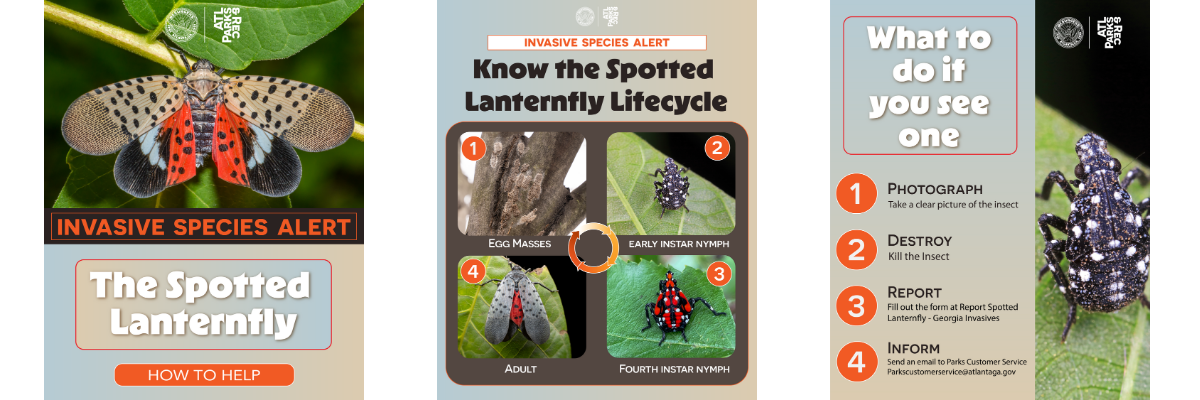
A highly invasive pest, the spotted lanternfly (Lycorma delicatula), has made its way to the City of Atlanta. It was recently spotted in Atlanta marking a concerning development for our urban forest, as well as Georgia’s agricultural industry. We have official confirmation of their presence, and we need your help to monitor, report, and reduce its spread.
Why Atlanta Should Be Concerned
Spotted lanternflies feed on over 70 different plant species, including maples, oaks, walnuts, pines, fruit trees, and grapevines, and can devastate our native trees. We value our tree canopy and there are large investments in urban agriculture that are at risk. This pest threatens more than just individual trees, it could severely damage crops, nursery stock, and our collective environmental health.
The spotted lanternfly has a strong connection to another invasive plant species: Tree of Heaven (Ailanthus altissima). Tree of Heaven is a fast-growing, non-native tree that is widespread throughout Atlanta’s urban forest and is the preferred host plant for SLF. This means that areas with an abundant amount of Tree of Heaven are at greater risk of infestation and are more likely to become breeding grounds for the pest.
Controlling the spread of this destructive invasive insect also requires the control (or elimination) of the invasive host tree.
What Is the Spotted Lanternfly?
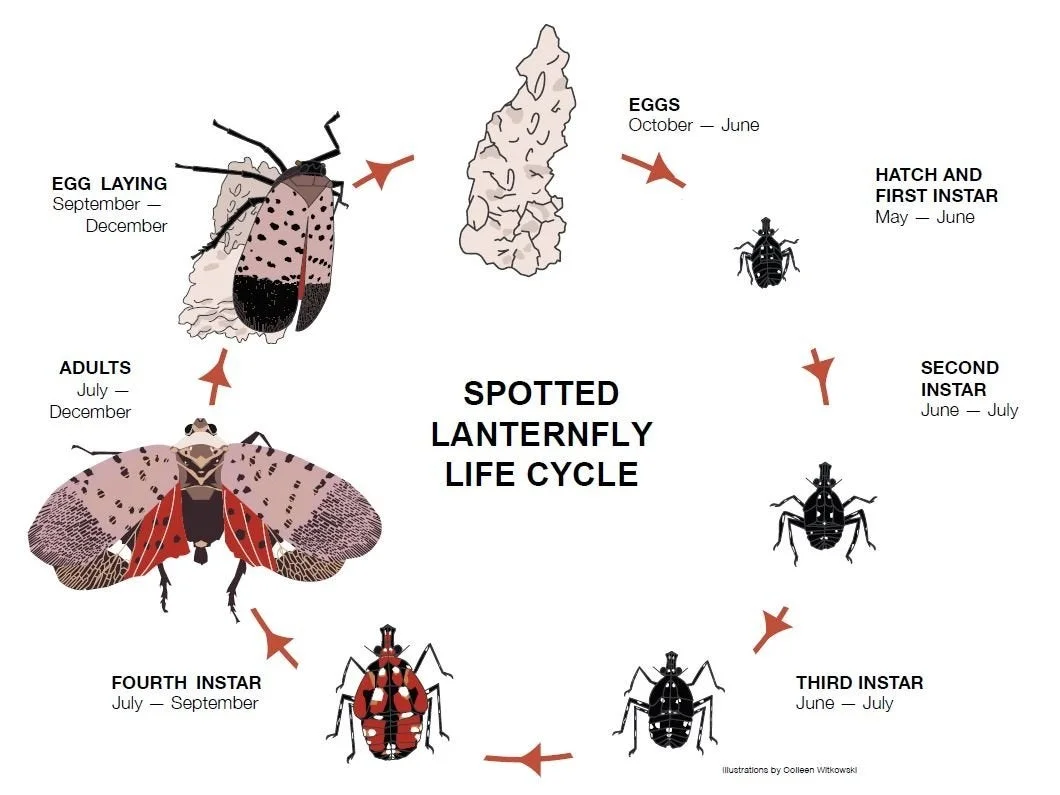
The spotted lanternfly (SLF) is a sap-feeding insect native to Asia. Since its introduction to the United States in 2014, SLF has become a fast-spreading and destructive invasive species. It poses a serious threat to trees, crops, and landscapes, particularly vineyards, orchards, and native hardwood trees. Its feeding habits weaken plants, making them more susceptible to disease and environmental stress.
Although small, the lanternfly is not subtle. Even in its nymph stage, it can be spotted crawling or hopping onto plants and hard surfaces. Adults are more recognizable due to their distinctive spotted wings and vibrant red undersides, but it’s during this nymph stage that early detection is key.
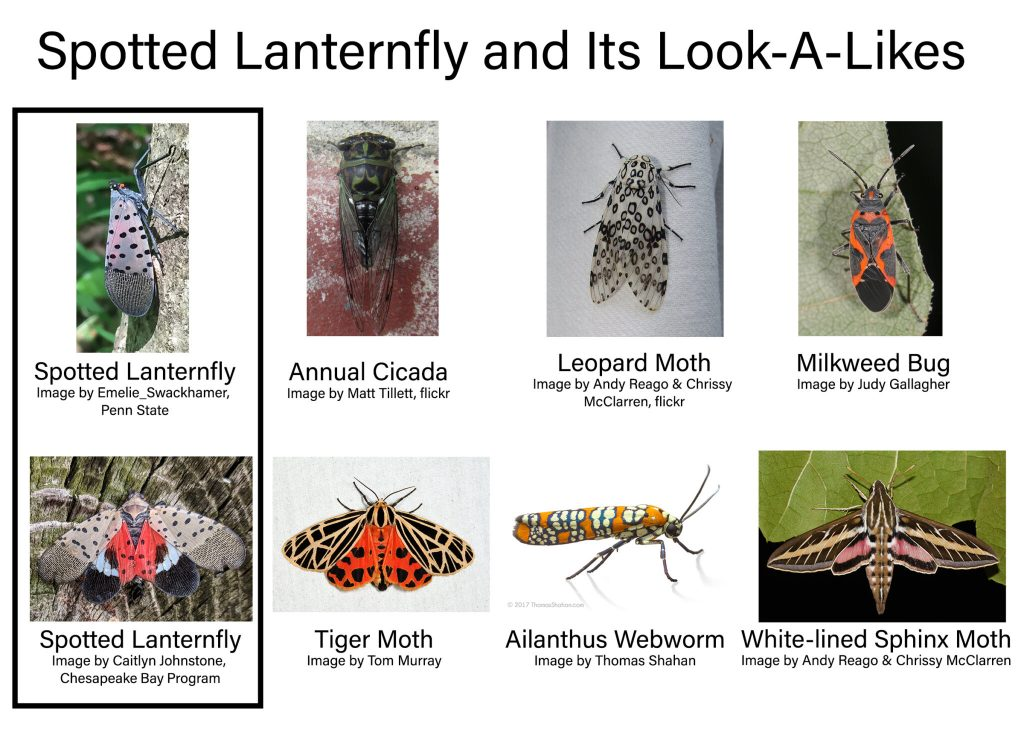
Make sure you look closely and properly identify the insect before taking action. The spotted lanternfly can be mistaken for other insects at different stages of its life cycle, like the Tiger Moth, Leopard Moth, and Milkweed Bug.
Use this guide from the USDA to properly identify a suspected SLF.
What You Can Do
We ask you to be aware, watch, and report sightings of SLF. We strongly recommend removing Tree of Heaven in your landscape or encourage others to do so.
- Monitor for the Pest: In the summer, we are past the egg-laying stage. Be on the lookout for SLF in its nymph stage. Nymphs present themselves as small black insects with white spots, which later develop red coloration before reaching adulthood. If you have Tree of Heaven on your property, this is where you should be checking most closely. (Not sure how to identify this invasive tree? Here’s a quick guide.)
- Report Sightings of SLF: Tracking local sightings helps researchers and officials monitor the spread and respond quickly. If you think you’ve found a spotted lanternfly:
- Take a photo for documentation
- Destroy the insect, if possible
- Report the sighting with details (date, location, photo) to both:
- www.gainvasives.org/SLF/report
- City of Atlanta Department of Parks and Recreation (Email parkscustomerservice@atlantaga.gov)
- Remove Tree of Heaven: This invasive species plays a major role in the SLF lifecycle. Removing Tree of Heaven from your yard or property helps reduce habitat and makes it harder for SLF to establish locally. Check out our removal guide.
- Be a Mindful Traveler: SLF spreads not just through natural movement but also by hitchhiking on vehicles, outdoor equipment, and shipping materials, particularly along railroad tracks and highways. If you’ve traveled to or through areas with a known SLF infestation, thoroughly inspect your vehicle, gear, and luggage before returning home. Check out this infestation map.
Learn More About SLF
Watch a recording of our virtual Lunch & Learn with UGA Extension and Natural Resource Agent Gabrielle LaTora on the invasive spotted lanternfly. The USDA confirmed the first detection of the invasive planthopper in Fulton County, GA in the fall of 2024. Watch the video here.
A Bigger Picture: Why Native Plants Matter
The rise of SLF highlights a bigger issue: the way invasive plants and insects work hand-in-hand to disrupt our ecosystems. The Tree of Heaven is just one example of how invasive species can set the stage for larger environmental problems. By removing invasive species and replacing them with native trees and plants, we help rebuild a healthier, more resilient urban forest.
Posted on: June 25, 2025


