City Forest Certification: Nurturing Our Backyard Forests
Written by Collin Clayton, Trees Atlanta Education Senior Lead
The City Forest Certification program is heading into its 5th year at Trees Atlanta, and one neighborhood that has felt its impact more than any other is Lake Claire.
There is so much to love about Lake Claire. It boasts ease of access to verdant parks and lush green spaces. It’s home to a slice of Atlanta’s original woodland, the Frazer Forest, and to several of Atlanta’s Champion Trees— the biggest and oldest in all the city, known to provide the greatest value in ecosystem services.
But, perhaps, what’s most special about Lake Claire is its residents — the very folks who make it a priority to protect these beautiful spaces and distinguished old trees. Many Lake Claire community members demonstrate an extraordinary level of care and commitment to the health of our urban tree canopy. It’s a labor of love that often brings in their very own backyards.
That spirit of stewardship is exactly what the Trees Atlanta City Forest Certification program celebrates. The program recognizes residents who help strengthen Atlanta’s urban forest ecosystem at home, pairing expert volunteers with homeowners and renters to help them set achievable goals that promote healthier trees, thriving native plants, and wildlife-friendly yards.
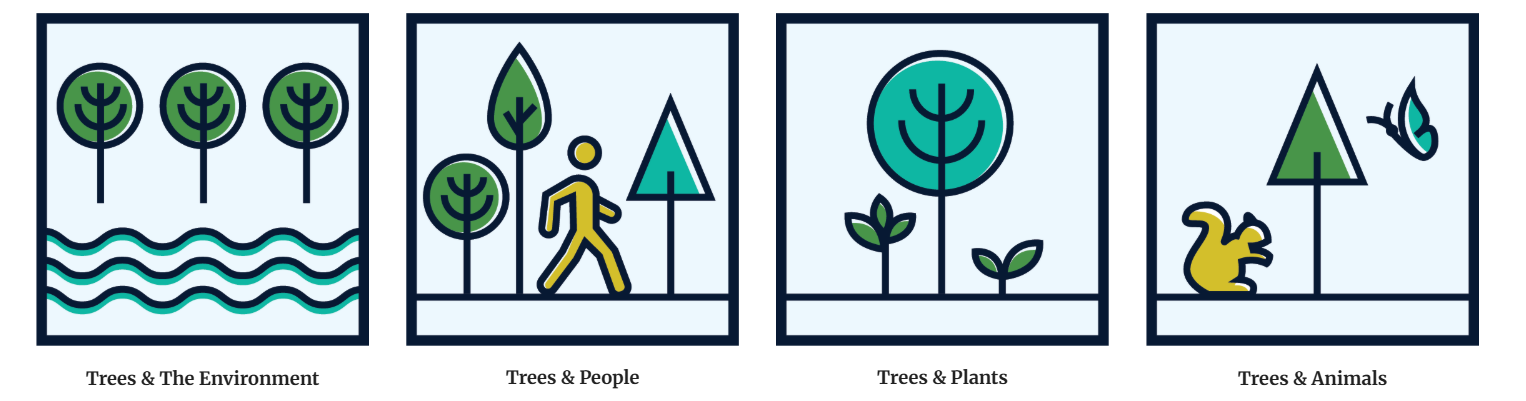
Participants earn acorns, or points, for completing sustainability goals in their yards and gardens. Residents who collect a total of 16 acorns, with at least one in each category below, become officially certified by Trees Atlanta.
Since the launch of the program in 2023, Lake Claire community members have earned a total of 367 acorns across 12 individual properties, including one of the neighborhood’s most iconic public greenspaces: the Lake Claire Community Land Trust. Most of our city’s trees grow on private property, meaning homeowners and renters play an essential role in shaping the health of our urban tree canopy.
Neighbors Leading The Way
Lake Claire resident Joe Follman received City Forest Certification in January 2024 with a total of 20 acorns for nurturing a charming slice of the urban forest in his own front yard. Joe systematically removed invasive nandina (Nandina domestica), which can be fatally toxic to birds, and replaced it with native sweetspire (Itea virginica), a plant whose blooms provide vital nectar to bees, butterflies, and other essential pollinators. He routinely cares for the burly, old oak tree that anchors his front lawn, providing shelter to countless wildlife and shading his entire lot. Along his front walkway, he’s dedicated space that would otherwise be occupied by non-native turfgrass to beds for flowering native species.
“Our yard hosts uncounted thousands of birds, insects, and mammals every year, either as residents or pass-through migrants,” Joe said. “The City Forest Certification program helps us be more intentional about making our yard a welcoming and supportive habitat… Our volunteer was very helpful and offered ideas and encouragement to help us achieve certification.”
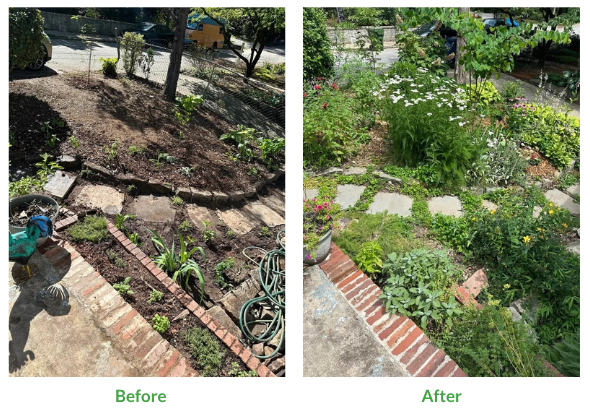
Rob Pyecha was recently certified and shared what the visit was like with the City Forest Certification volunteers and Trees Atlanta Senior Lead, Collin Clayton. “A fellow Lake Clairian and Collin walked our small property for about 1 hour and 30 minutes. They made us feel accomplished for the hard work that we’ve put in over the last three years to make our plot as ecologically friendly as possible, while giving some actionable tips for continued stewardship.” Check out Rob’s before and after photos
Why Native (and Productive) Plants Matter
It’s important to remember that the urban forest isn’t just for us humans— it also provides critical habitat for native wildlife. Research shows that native plants support a greater number of beneficial insects than non-native ornamentals, and these insects form the base of a food web that provides essential nutrition for wildlife. Scientists are also finding that some native plants are more useful to insect populations than others. These are called productive native plants. In fact, 5% of our native plants generate 75% of the food that drives local food webs.
Ecologist and author Doug Tallamy shares that: “we need to think more about a plant’s productivity, not just whether it’s native.” Oak trees are one of the major productive natives we can plant to make an outsized difference.
Like Joe, participants might choose to replace their lawn with native meadow space or plant a shade tree to earn acorns towards certification. They can remove invasive plant species or reduce pesticide use to create thriving, diverse ecosystems in their own backyard. Other options include installing a birdhouse or batbox, adding a shallow water source for wildlife, or creating habitat features like brush piles, snags, or stumperies. These small additional mimic natural forest conditions and make our furry and feathered friends feel more at home.
“Each acorn you earn truly has a ripple effect. Trees Atlanta’s CFC team could not thank you enough!” —Elizabeth Beak, Adult Education Coordinator
You Don’t Need a Yard to Participate
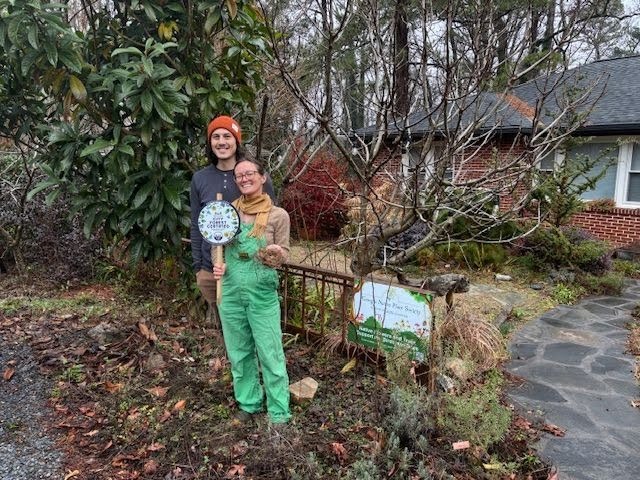 The City Forest Certification program is accessible to all — you don’t need a yard to take part. Whether you live in a house, apartment, or shared space, you can support the health of our urban ecosystem through awareness, activism, and engagement. Earn acorns by hosting a plant swap, attending a talk, or volunteering with Trees Atlanta.
Over time, these spaces create a daisy chain of habitats that reconnect fragmented ecosystems across the city. Neighbor by neighbor and block by block, individual actions weave a growing network of habitats, big and small. City Forest Certification helps transform private yards, balconies, and community gardens into pieces of a larger ecological puzzle.
Next time you’re out for a stroll, keep an eye out for the City Forest Certification garden plaques sprouting up in yards across the Lake Claire neighborhood. Each one represents a resident helping to grow a healthier forest for all.
Ready to get certified?
About the Author
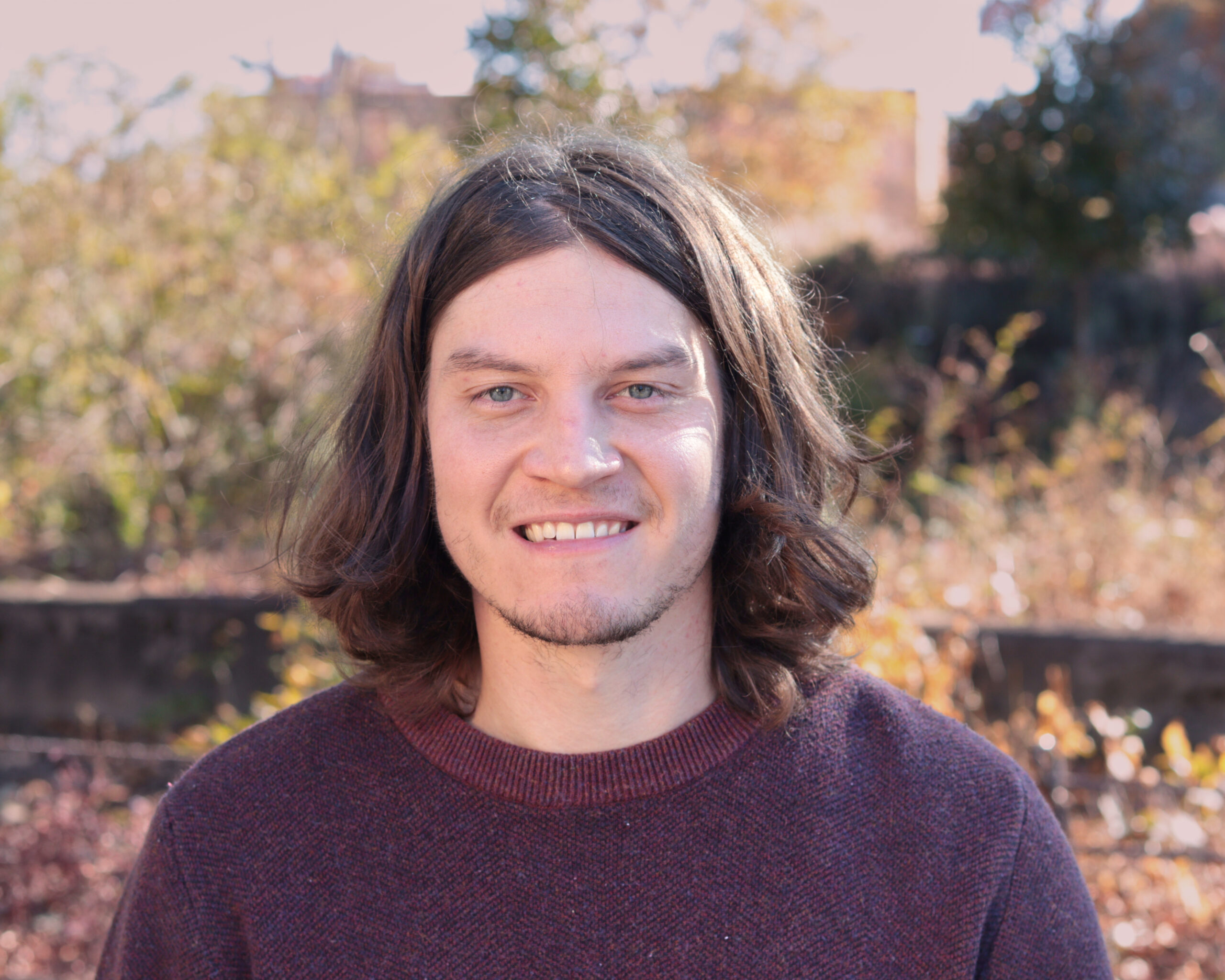 Collin Clayton began his career with Trees Atlanta in January 2024 as a youth educator. He now facilitates both youth and adult programming with creativity and enthusiasm in his role as Education Senior Lead. Collin supports metro Atlanta residents in making their properties and neighborhoods greener, healthier, and more sustainable through his work on the City Forest Certification program.


