Partnering and Growing Together: One Million Trees Initiative Year 5 Progress Report
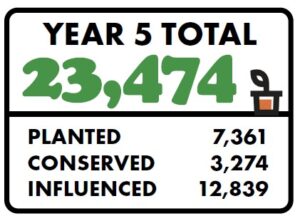
As we celebrate Trees Atlanta’s 40th anniversary throughout 2025, we also mark the halfway point of the One Million Trees Initiative (OMTI). The initiative launched five years ago to leverage the collective strength of cities across metro Atlanta to protect and expand the region’s tree canopy. Since the founding of Trees Atlanta in 1985, our work has been rooted in partnership and collaboration to advance shared goals. Each year, the importance of partnership continues to grow.
This Year 5 report reinforces a central message: every partner, regardless of how long they’ve been involved, can take meaningful action to protect and grow their tree canopy.
The count of trees reported from our Metro Partners and Nonprofit Partners for Year 5 and OMTI Total to Date are:
| OMTI Total Year 5: 23,474 trees | OMTI Total to Date: 169,859 trees | |
| Planted: 7,361 | Planted: 41,975 | |
| Conserved: 3,274 | Conserved: 88,423 | |
| Influenced: 12,839 | Influenced: 39,461 |
Scroll down to read the report below or download a PDF of the Year 5 Progress Report.
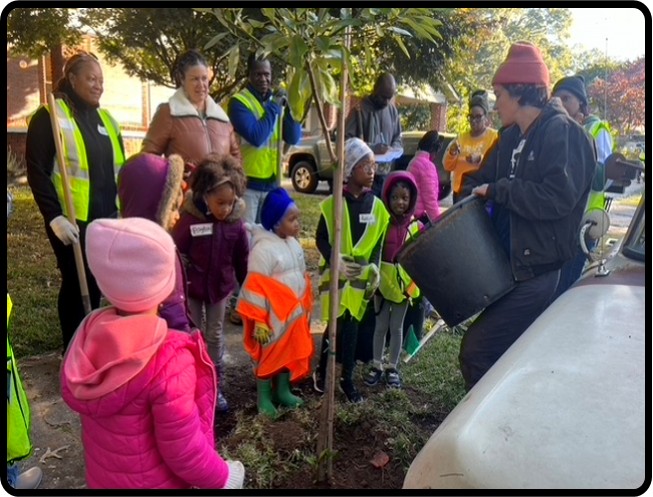
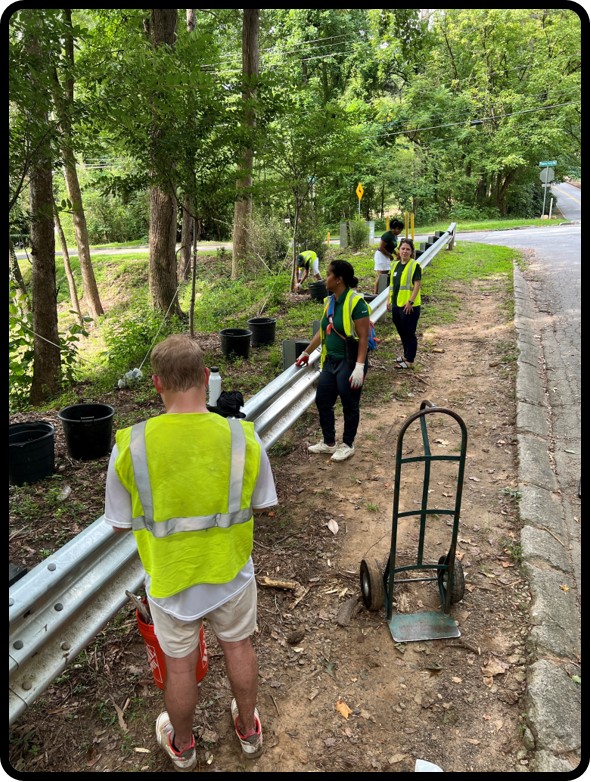
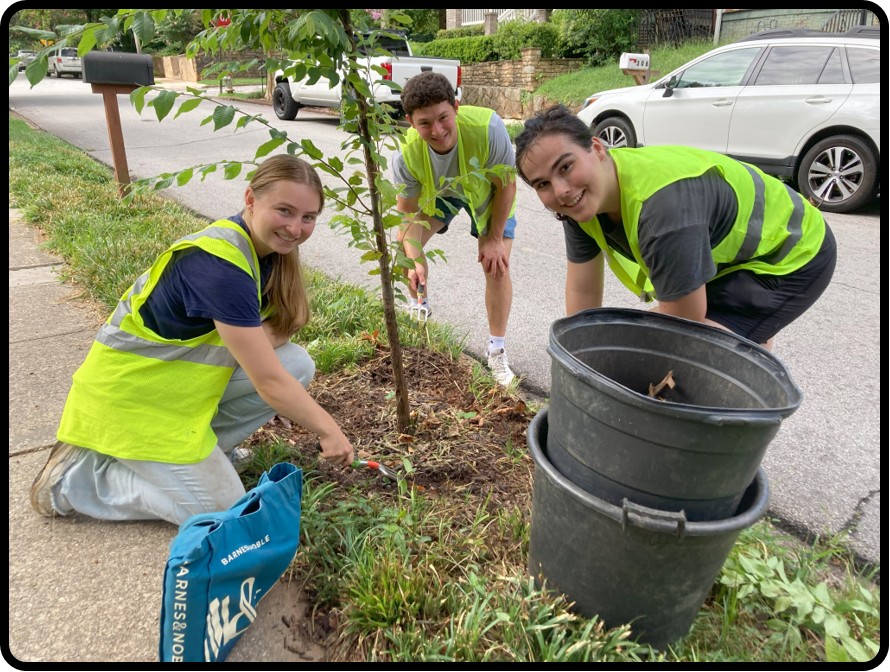
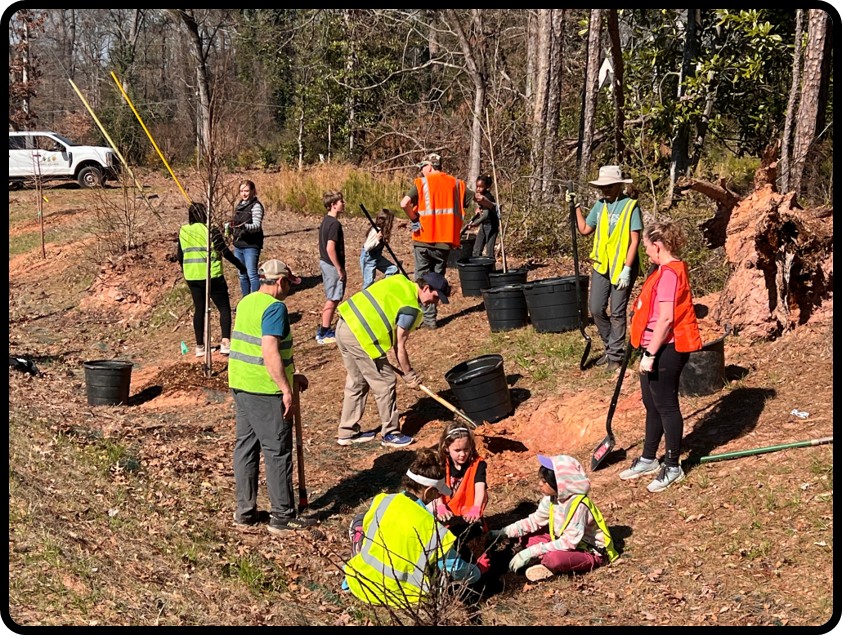
Images (L-R): East Point tree planting in Jefferson Park Trees Atlanta 2024 OMTI; Tree care project with employees of Aspen Insurance on Powers Ferry Road in Sandy Springs, August 2024; City of Decatur tree case in Adair Park, July 2025; Lavista Road community tree planting, DeKalb County, January 2025.
Highlights from Year 5
- The Front Yard Tree program continues to grow. Eight OMTI Metro Partners funded 724 yard trees for their residents in 2024. Due to the available space, residential yards offer the opportunity to add overstory trees which are otherwise being lost in urban and suburban areas. Three new cities will launch Front Yard Tree programs in Fall 2025.
- Decatur, Dunwoody, and South Fulton conserved forested parcels to increase available public greenspace and conserve trees this year.
- Trees Atlanta is working to add more trees in Downtown Atlanta by cutting concrete from sidewalks, and in certain cases, adding soil cells to increase available soil volume. Trees add cooling shade and create a protective barrier between pedestrians and passing vehicles while beautifying streets.

 Trees Atlanta has been collaborating with the City of Decatur for 30 years, and our partnership grows more dynamic with each passing project, as demonstrated through our work at Legacy Park. Located in the heart of Decatur, Legacy Park was formerly the site of the United Methodist Children’s Home, which operated for over 140 years. In 2017, the city purchased the 77-acre property, dominated by invasive plants, with the intent to restore its natural beauty and historic character, preserve the existing trees, and transform it into a vibrant public space. In 2021, we entered a five-year agreement with Decatur to lead invasive plant removal, volunteer engagement, and tree planting at the site. Invasive species threaten forest health by crowding out native plants, reducing biodiversity, and weakening the ecosystem’s ability to recover and thrive. Our work at Legacy Park has focused on restoring the natural landscape, ensuring the park’s extensive greenspace can support native wildlife and long-term sustainability. We completed our fifth year in Legacy Park with the help of more than 2,000 service hours from volunteers, including monthly projects led by Trees Atlanta certified volunteer Forest Stewards.
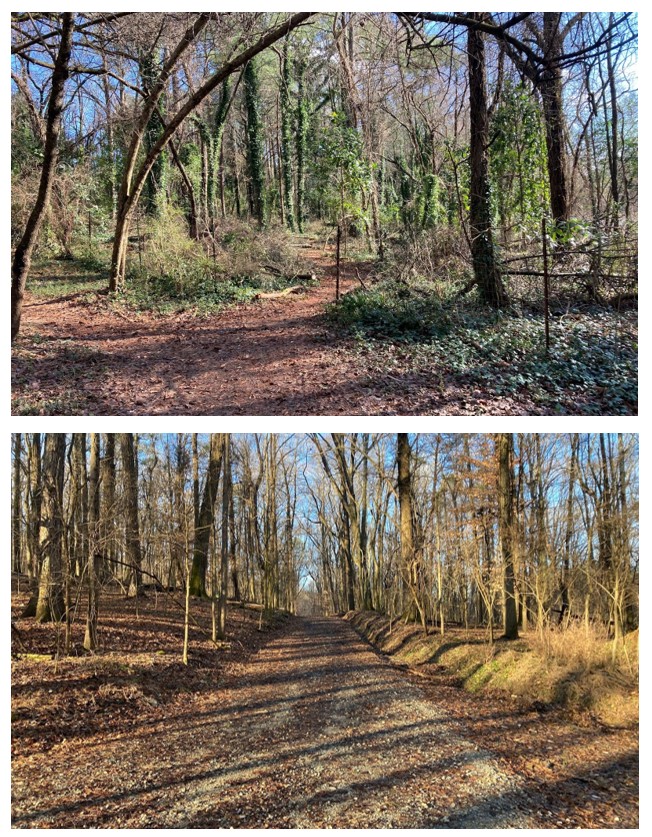
Images: Legacy Park, City of Decatur. Top – Park section before Trees Atlanta invasive plant removal; Bottom – after Trees Atlanta invasive plant removal
 Trees Atlanta and the City of South Fulton launched our work together in 2023 to support its vision for urban beautification and long-term environmental sustainability. Following the development of a citywide master plan in collaboration with the Atlanta Regional Commission, South Fulton leadership adopted a tree protection ordinance to help protect trees and a Tree Bank to provide funds for trees lost to age, disease or development.
With the tree fund in place, the City turned to Trees Atlanta as a partner to put those resources to use. The result was a four-year agreement to plant 1,000 trees across South Fulton. Beyond planting, the city is also leveraging its Tree Bank to acquire forested parcels of land for future passive parks and expanded city greenspace, further demonstrating a commitment to preserving the urban canopy. City leaders are providing critical operational support, including expedited project review to help accelerate implementation. In early 2025, we planted over 100 trees in public rights-of-way, and with plans to plant an additional 300 this upcoming season, we’re well on our way to the City’s 1,000-tree goal. Together we’re creating greener corridors and enhancing public spaces in one of metro Atlanta’s largest cities, as measured by land mass.
When the City of Norcross set out to transform Pinnacle Park into a vibrant greenspace that could serve both ecological and community needs, it was clear the task would require collaboration. Nestled in East Norcross and previously designated as a stormwater retention site, this 12-acre property was teeming with overgrowth, dilapidated infrastructure and invasive species. City officials had a long-term vision for improved connectivity, mobility and access to greenspaces for its residents. In 2019, the city began a restoration initiative of Pinnacle Park, gradually shaping it into a community anchor. Our collaboration began in 2022, thanks to the generosity of a corporate partner. The donor provided funding to plant 29 trees at the Park and the City agreed to care for the trees – sowing the first seeds of partnership.
In mid-2024, Pinnacle Park was formally protected against development and officially designated as Gwinnett County’s first arboretum, a milestone that reflects the city’s commitment to environmental education and preservation. Building on this momentum, the City contracted our Forest Restoration team to map the location and density of invasive plant species within designated zones to create an invasive removal management plan. In 2025, we began invasive removal services in Pinnacle Park and environmental remediation is underway. Our mission to protect and expand Atlanta’s urban forest aligned naturally with Norcross’s vision, and our collaboration illustrates how even a newly formed partnership can play a pivotal role in bringing a city’s long-term goals to life.
Our longest-standing partnership began 40 years ago with a planting of 46 trees along Carnegie Way in Downtown Atlanta. Today, our partnership continues with an innovative effort to bring more trees to the most developed part of the city, Downtown Atlanta. In cities like Atlanta, trees compete with sidewalks, buildings, and underground infrastructure for space, often limiting their access to soil and water. In 2020, Central Atlanta Progress (CAP) commissioned a Downtown Tree Planting Master Plan to dramatically improve downtown’s canopy by planting 8,000 trees over the coming decade.
Managed by Trees Atlanta’s Downtown Planting team, this effort expands what’s possible in urban planting, helping to return trees to heavily developed areas where green space is limited. We are cutting concrete, building custom tree wells, and installing soil cell systems that support root health below paved surfaces. This puts trees in previously “unplantable” spaces without damaging surrounding infrastructure. In 2024, we cut and removed 5,714 square feet of concrete along Ted Turner Drive SW and planted 30 trees and groundcover in the median. This work requires more specialized care and greater investment which we have been able to accelerate with federal grant funding. We anticipate planting at least 300 more trees downtown this season!
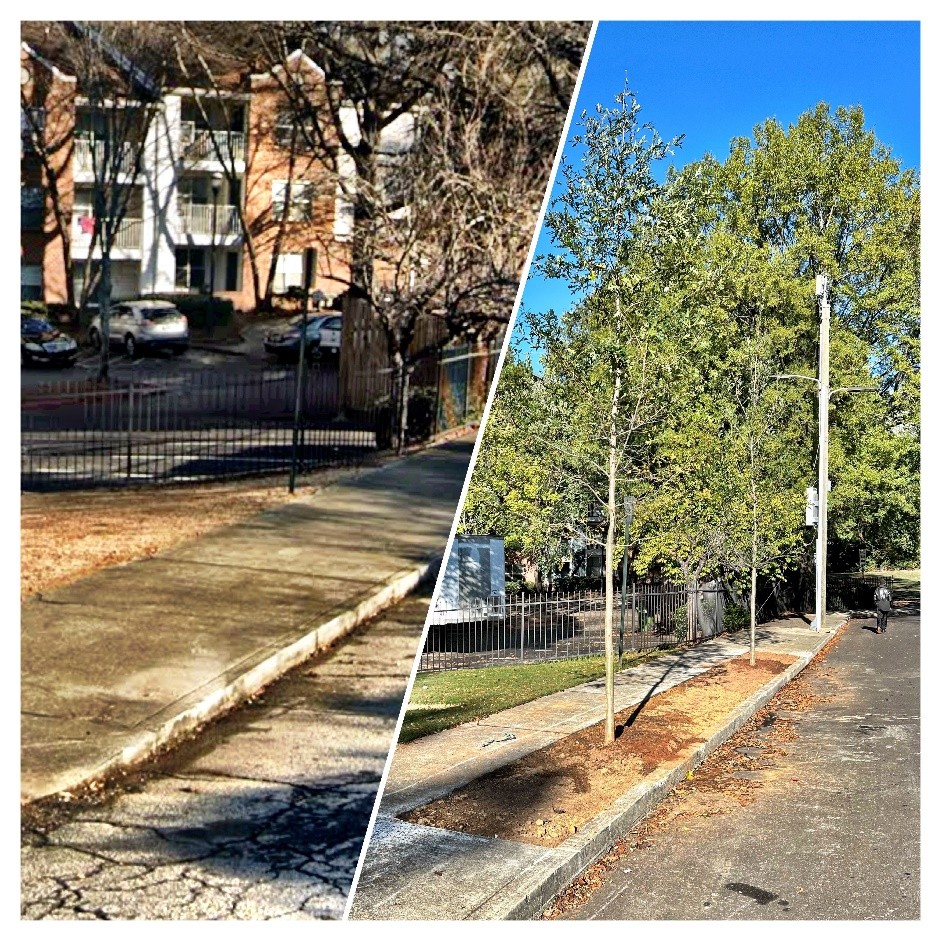
Image: Chapel Street, City of Atlanta – Before and After; Photo courtesy of Chris Hrubesh
Conclusions and a Look Forward
The greater Atlanta region remains one of America’s fastest growing metro areas for numerous reasons. That growth, however, continues to put significant pressure on the tree canopy, one of Atlanta’s most valuable natural assets.
While development often brings tree loss, the One Million Trees Initiative partners have spent the past five years making steady progress investing in canopy preservation and restoration and adopting policies with a long-term view. Whether or not your city currently partners with Trees Atlanta, we encourage each municipality to use all the tools available to preserve and grow your canopy.
As the One Million Trees Initiative strives toward its ambitious goal of one million trees planted or preserved by 2030, it has already achieved something just as important: it has fostered deeper dialogue and stronger collaboration between Trees Atlanta and the OMTI partners. We hope cities will be inspired by the work being done in other jurisdictions and will share your best practices.
We encourage you to look to your peers for inspiration and to reach out to us if you’re looking for support, connections, ideas, or technical assistance. Our team is ready to share our expertise, connect you with resources, and help bring your city’s vision for its canopy to life. Start with the contacts listed here, and we’ll connect you to the right people and tools to move your work forward.

For more information about the One Million Tree Initiative, please visit our program webpage: www.treesatlanta.org/onemilliontrees
Posted on September 12, 2025