Growing a Sustainable Future at the Trees Atlanta Kendeda TreeHouse
 Fulfilling our mission to improve and protect the urban forest also means embedding conservation into the way we operate our organization.
The Trees Atlanta Kendeda TreeHouse models sustainable redevelopment and demonstrates approaches that can inspire other developments and communities to adopt sustainability practices that reduce energy burdens and support healthier urban ecosystems.
Brownfield Remediation | Water Management | Native Landscape | Energy Efficiency | Solar Energy | Bird Safety | Reclaimed Materials | Experiential Spaces | Home for Conservation | Tree Nursery | Design Awards
Building Forward
In 2023, Trees Atlanta opened its new headquarters, a 22,000 square foot facility that houses its administrative offices, program spaces, and operations center. The Trees Atlanta Kendeda TreeHouse sits on a 3-acre property adjacent to the Atlanta Beltline, where the neighborhoods of Oakland City and Adair Park meet.
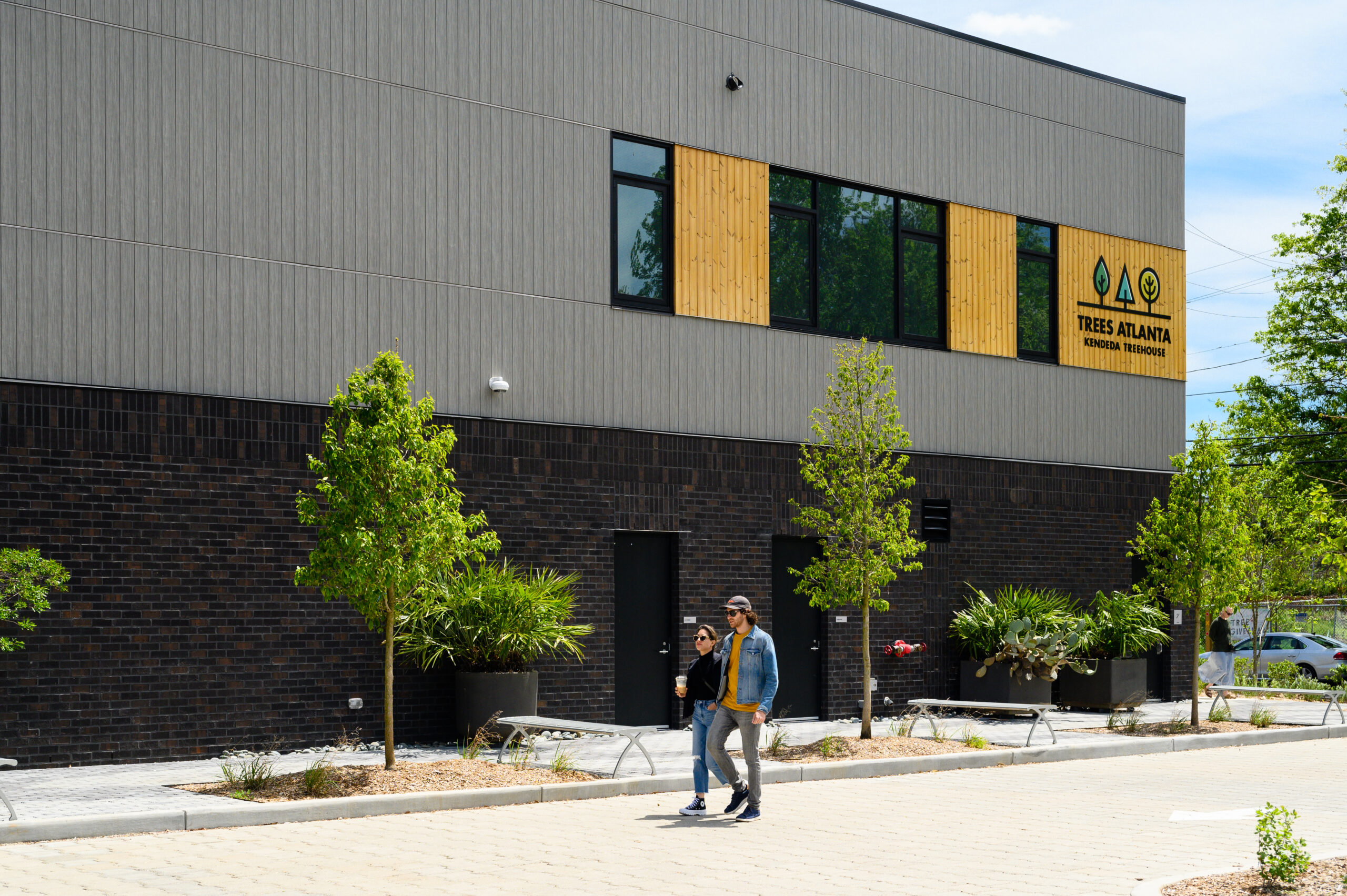 Located at 825 Warner Street SW, the site has a long industrial history dating back nearly a century. Over the years, it has been used for manufacturing structural and ornamental steel, trading wholesale produce and meats, baking, and housing artists’ studios. This distressed property was ultimately chosen for its high potential to be transformed into a home for Trees Atlanta, improve the environmental conditions, and to serve the needs of its surrounding neighborhoods.
We’re proud to showcase how Trees Atlanta is positioned to operate sustainably for decades to come. The Kendeda TreeHouse is both a community resource and living proof that our city can grow in thoughtful, sustainable ways.
We invite you to visit the Trees Atlanta Kendeda TreeHouse during our Forward Forty Community Open House on Saturday, September 13, 2025, from 12 – 3 pm. Guests will have the opportunity to explore the sustainability features of our campus, and enjoy an afternoon of music, food, and family-friendly activities. Tours of the campus will be led by staff, including a walk through our newly established native tree nursery.
Save the date by signing up for a reminder email and receive more details about Forward Forty.
Restoring an Urban Brownfield
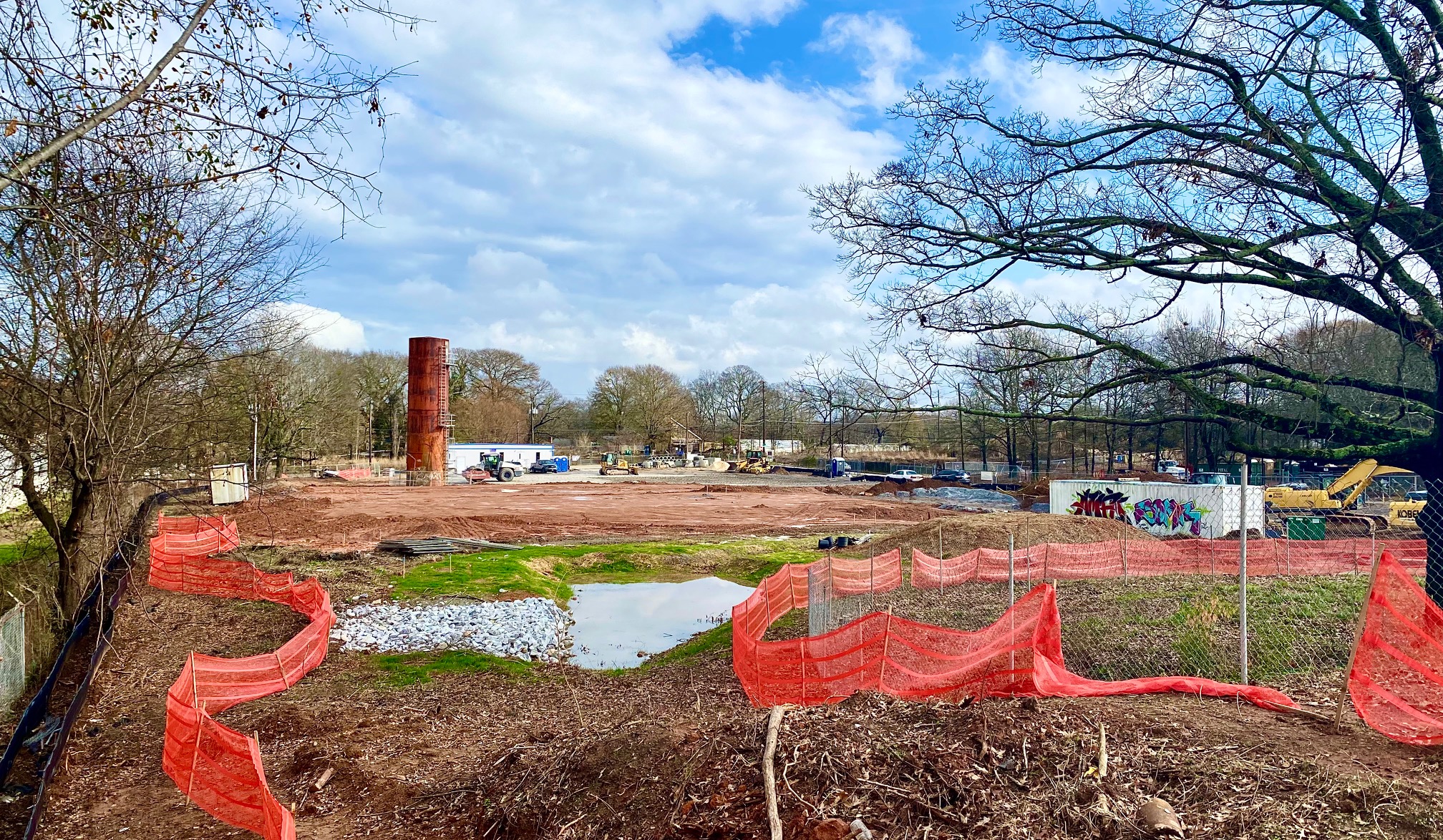
The 3-acre industrial site was previously covered almost entirely by a commercial structure, impervious surfaces, or contaminated soils. After the removal of the existing building and parking lot, extensive soil remediation was required due to high levels of lead. This work was made possible with funding from Invest Atlanta and the City of Atlanta’s Brownfield Revolving Loan Fund (BRLF) Program.
Redeveloping this grayfield site significantly improved its long-term land use. Today, half of the campus has been restored to open space and planted landscapes composed entirely of native species. These native plants provide many benefits, including ongoing soil improvement and a substantial reduction in stormwater runoff beyond the property boundaries.
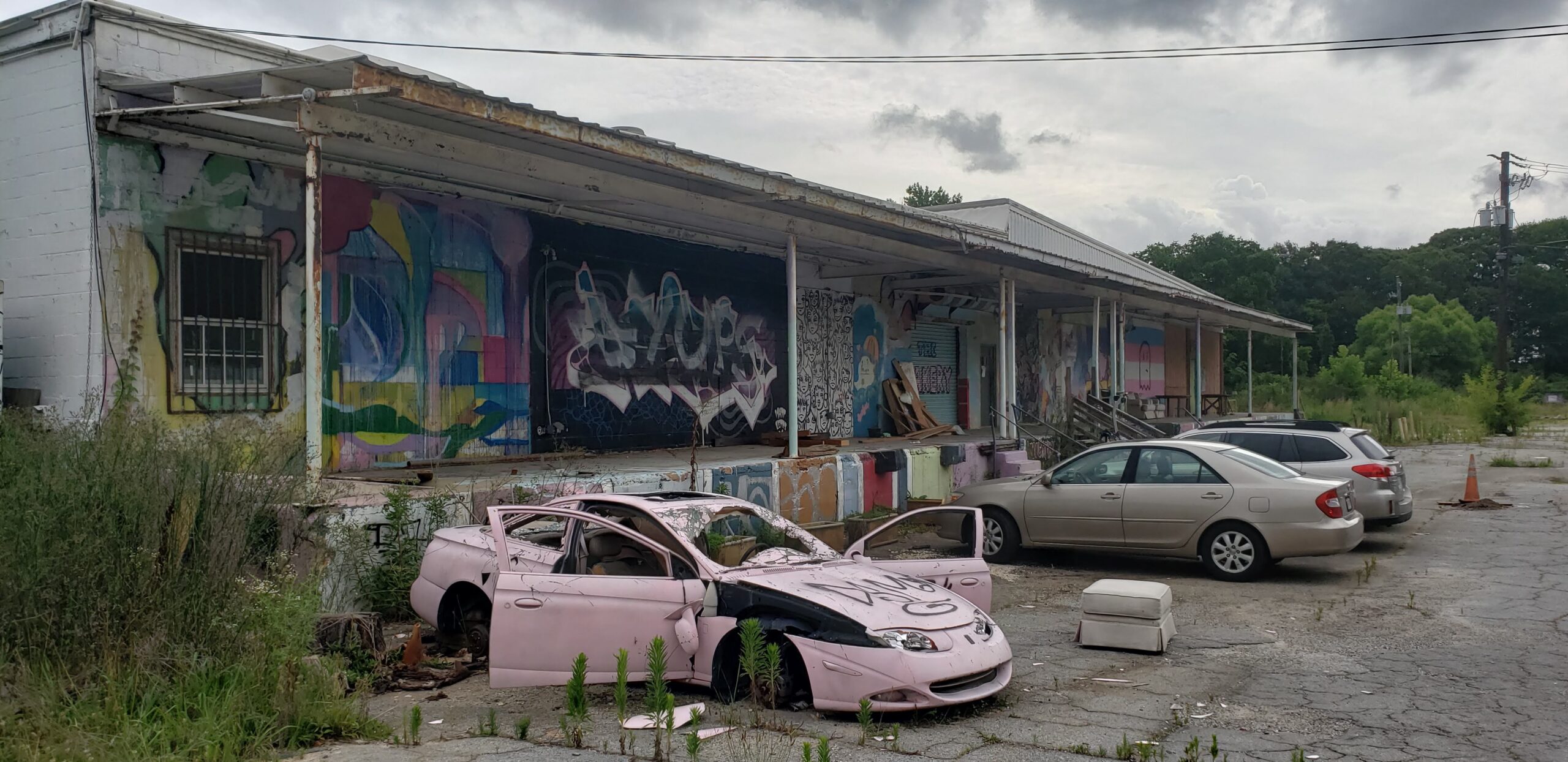
Images: Land grading at Warner Street, December 12, 2021, photo by John Becker; Cars abandoned outside Warner Street site before construction, June 19, 2021.
Water Management
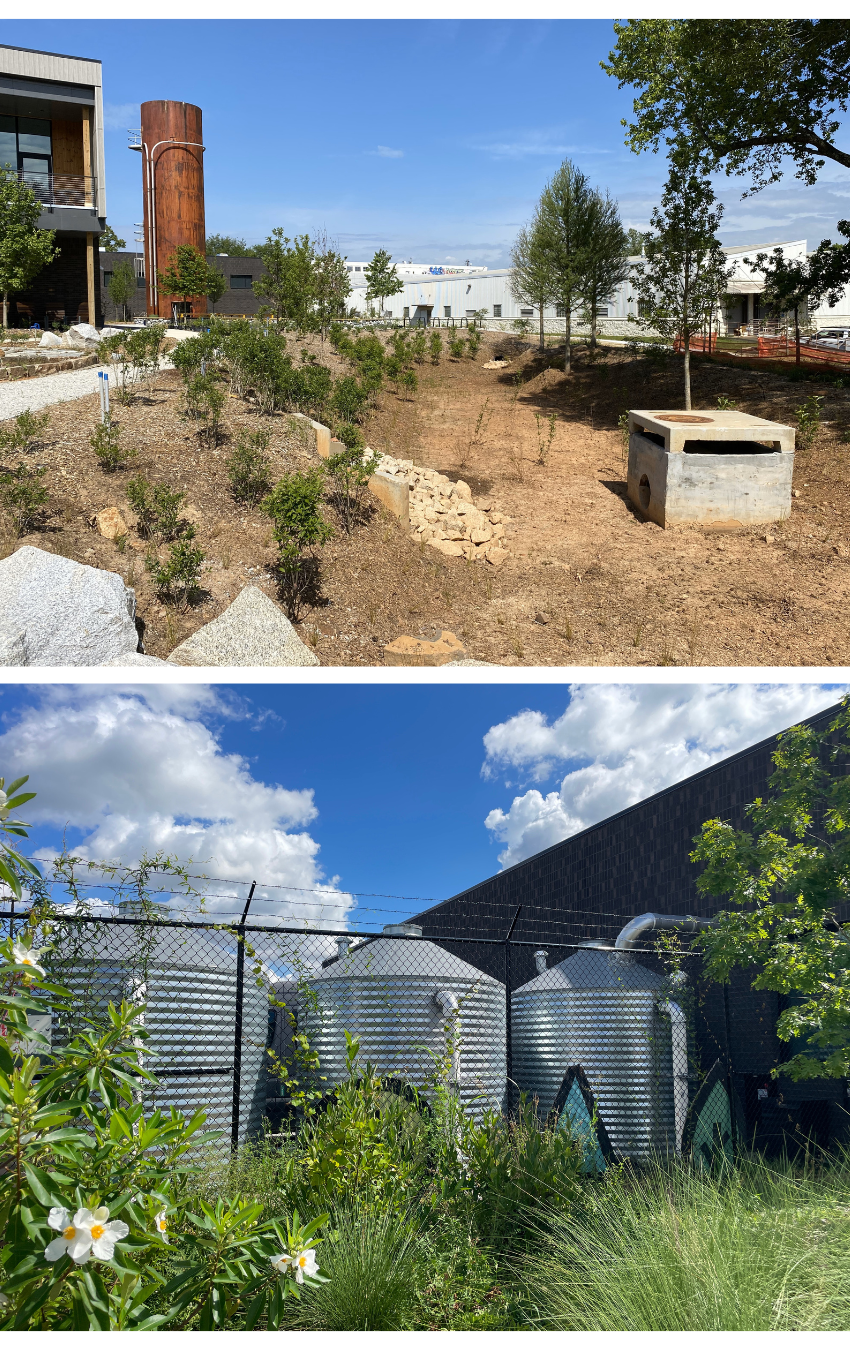
A core principle of the site design is to retain all stormwater onsite. The most significant impact comes from converting 50% of the site to pervious surfaces—primarily planted areas dense with trees and perennials. Hardscaped areas use permeable pavers and gravel in parking zones, driveways, and walkways wherever possible.
Bioretention basins are strategically placed in areas of high stormwater flow. Large stones, culverts, and plants help slow and filter rainwater, reducing stress on city storm drains and preventing stream erosion. These basins are planted with species that thrive in wet conditions, adding ecological diversity to the landscape.
Three 3,000-gallon cisterns collect rainwater from rooftops, capturing an estimated 300,000 to 400,000 gallons of rainfall annually. This water is reused to irrigate trees both on and off campus.
With these systems in place, 100% of stormwater is retained onsite.
Photos: Bioretention with Silo at Trees Atlanta HQ, 2023; Trees Atlanta Kendeda TreeHouse 3,000-gallon cisterns, 2025.
Landscape & Ecology
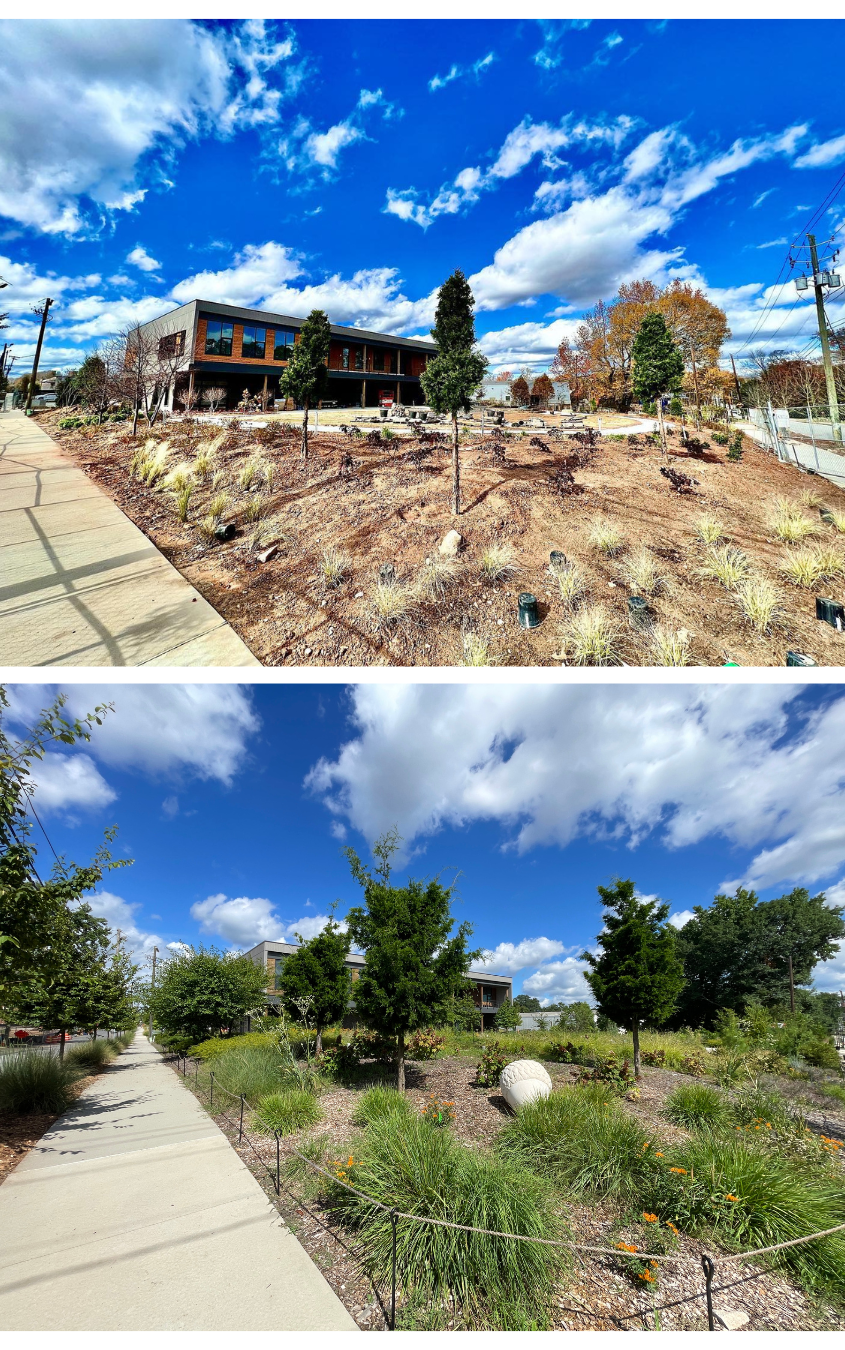 In true Trees Atlanta fashion, the landscape at the Kendeda TreeHouse is planted entirely with native species. The campus landscape design includes 235 trees (75 species and cultivars), nearly 1,000 shrubs, and over 2,700 perennials.
All were newly planted with the exception of four mature trees that were preserved at the edges of the property, including a southern red oak estimated to be more than 150 years old.
As the landscape matures, canopy coverage is expected to increase from 5% before construction to up to 70%. The mix of species reflects Georgia’s ecological diversity. Wildlife habitat, shade, and the cooling effect of native trees all support a resilient urban ecosystem, while creating a visual and mental respite.
Images: Trees Atlanta Kendeda TreeHouse landscape as it nears its initial installation of plants and trees, November 27, 2022, photo by John Becker; Trees Atlanta Kendeda TreeHouse landscape as it grows and becomes more established, July 25, 2025.
Energy Efficiency & Daylighting
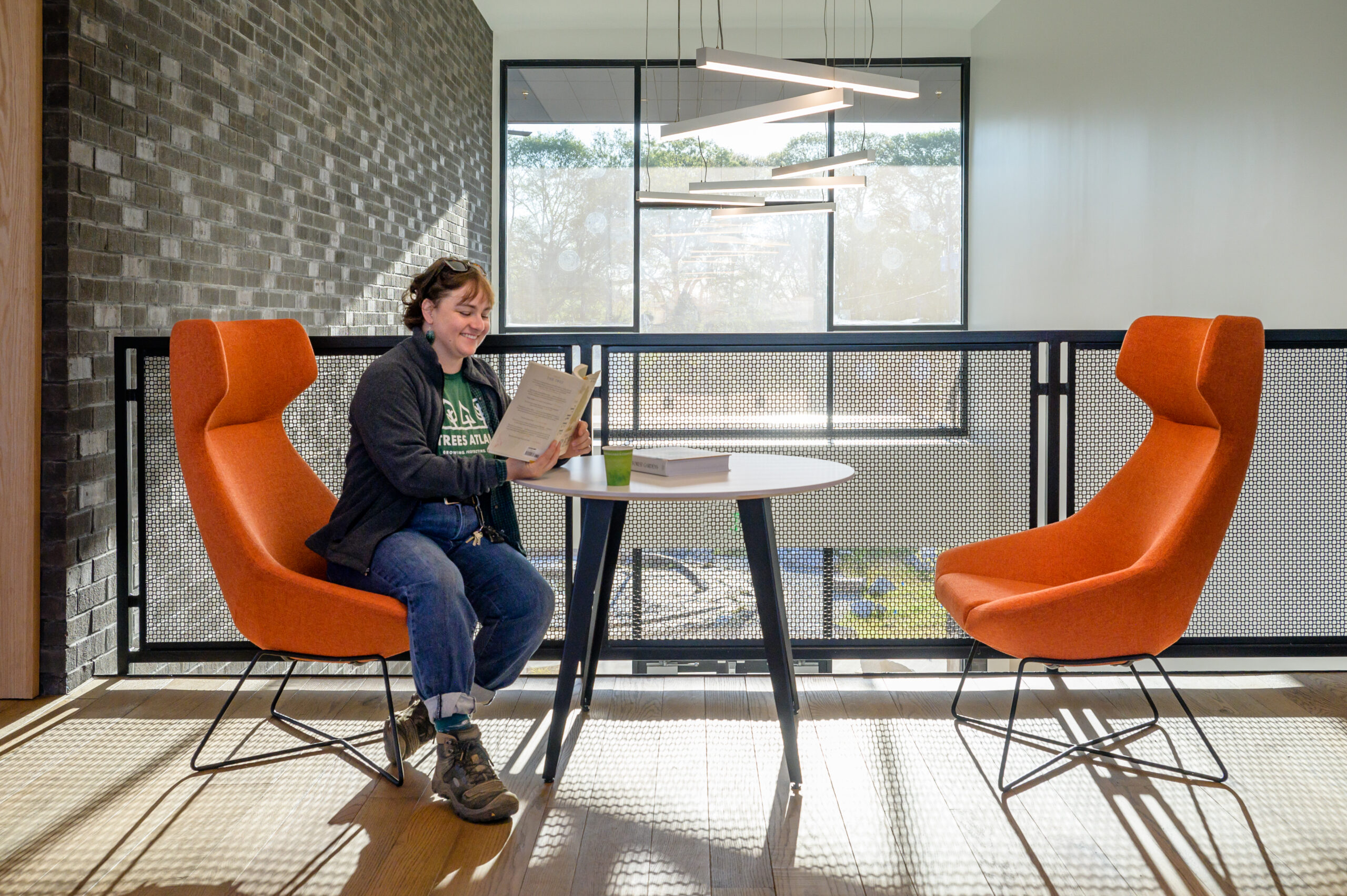
The Kendeda TreeHouse buildings feature a high-performance envelope with energy-saving features throughout. Skylights and openable windows provide ample daylight and natural ventilation. High-efficiency LED lighting with motion sensors reduces electricity use, and ceiling fans minimize reliance on HVAC systems.
All HVAC units are zoned by area and use high-efficiency electric systems, which will become greener as the regional power grid moves away from fossil fuels. Additionally, the roofs are made of a high-reflectivity white material that helps passively lower indoor temperatures and reduce the building’s contribution to the urban heat island effect.
Image: Upstairs landing at Kendeda TreeHouse Ribbon Cutting, 2023.
Solar Energy
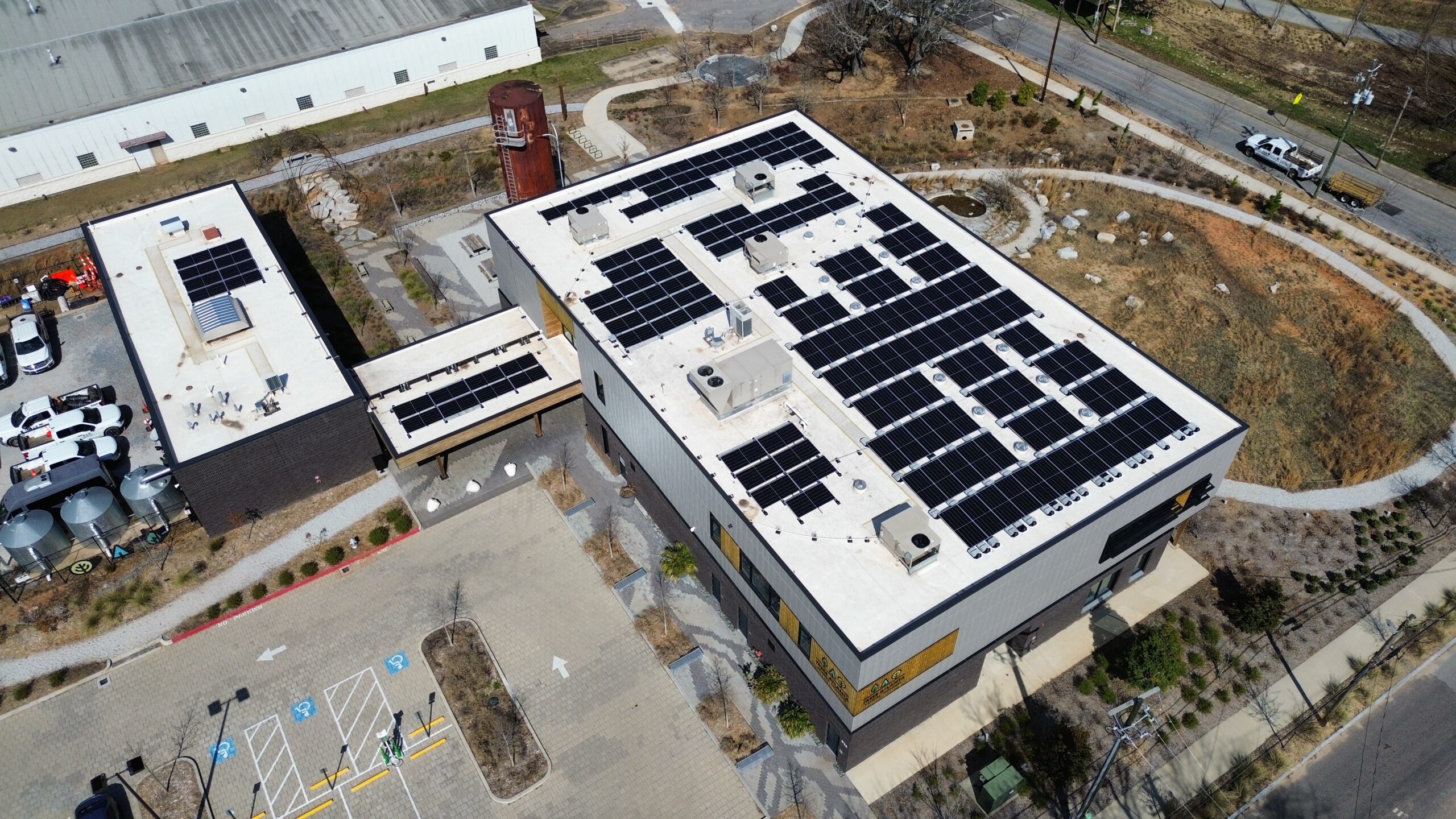
In March 2025, Trees Atlanta began capturing solar power from a 140-panel, 87kW solar array installed across the rooftops of the Kendeda TreeHouse. The system is projected to generate 118,500 kWh of electricity in its first year, meeting approximately 38% of the building’s annual energy needs.
Over 25 years, the installation will offset an estimated 1,850 tons of CO2 emissions—equivalent to planting 27,887 trees or avoiding 4.2 million car miles. First-year net savings are projected at $2,457.
Images: Trees Atlanta rooftop solar project drone angle, 2025, photo by Sunpath Solar.
Wildlife & Bird Safety
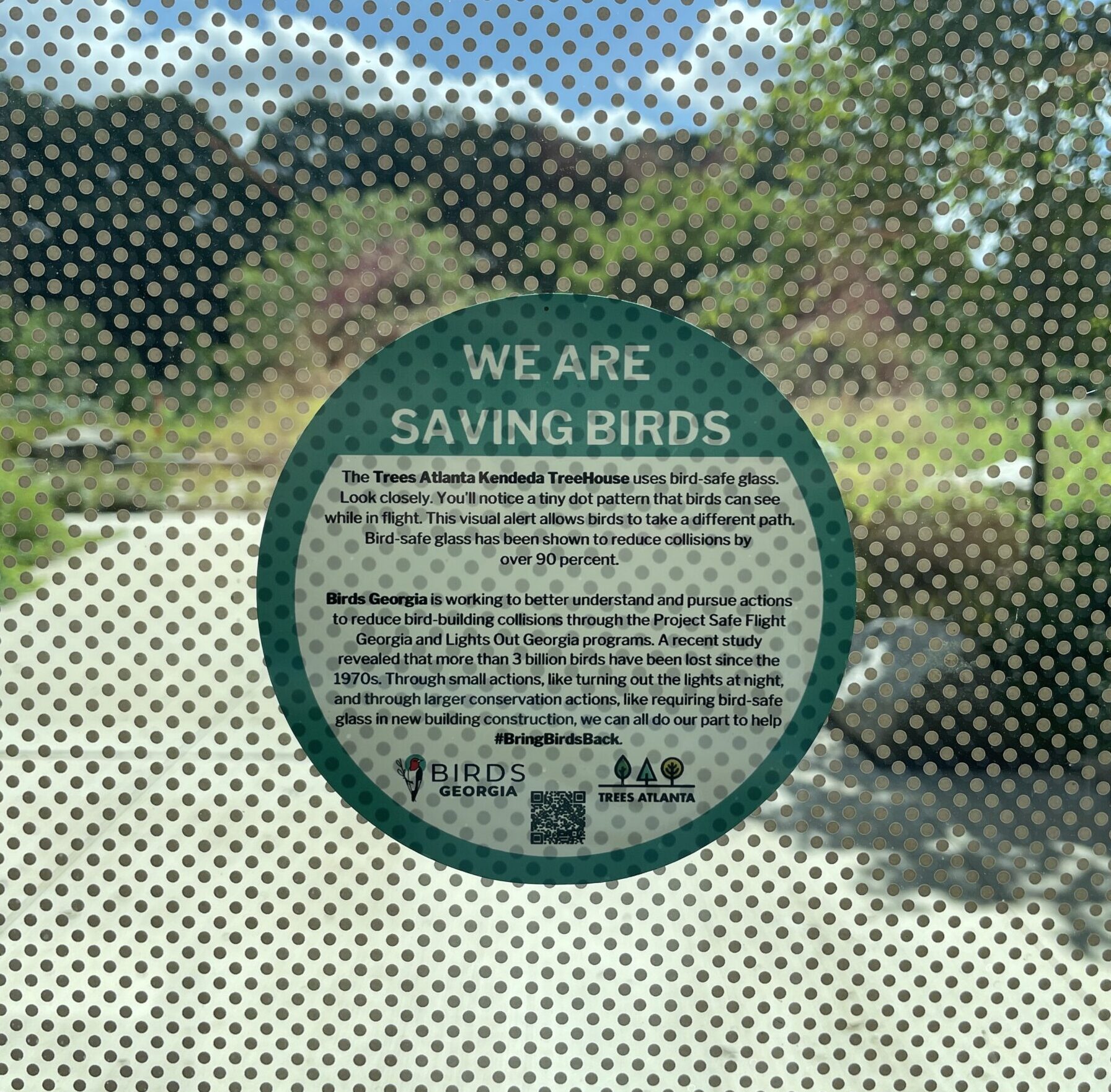
Large windows are a key feature of the building’s biophilic design, maximizing natural light and offering wide views of the surrounding green space. To reduce the risk of bird collisions, all windows are embedded with bird-safe glazing, which can reduce bird strikes by over 90%.
The surrounding planted areas and diverse native species help create a rich habitat that provides food and shelter for birds, pollinators, and other native wildlife. The landscape is maintained by hand, with no use of pesticides and only minimal, targeted herbicide application, as needed.
Image: We Are Saving Birds sign on a window with bird-safe glazing dots.
Reclaimed Land & Materials
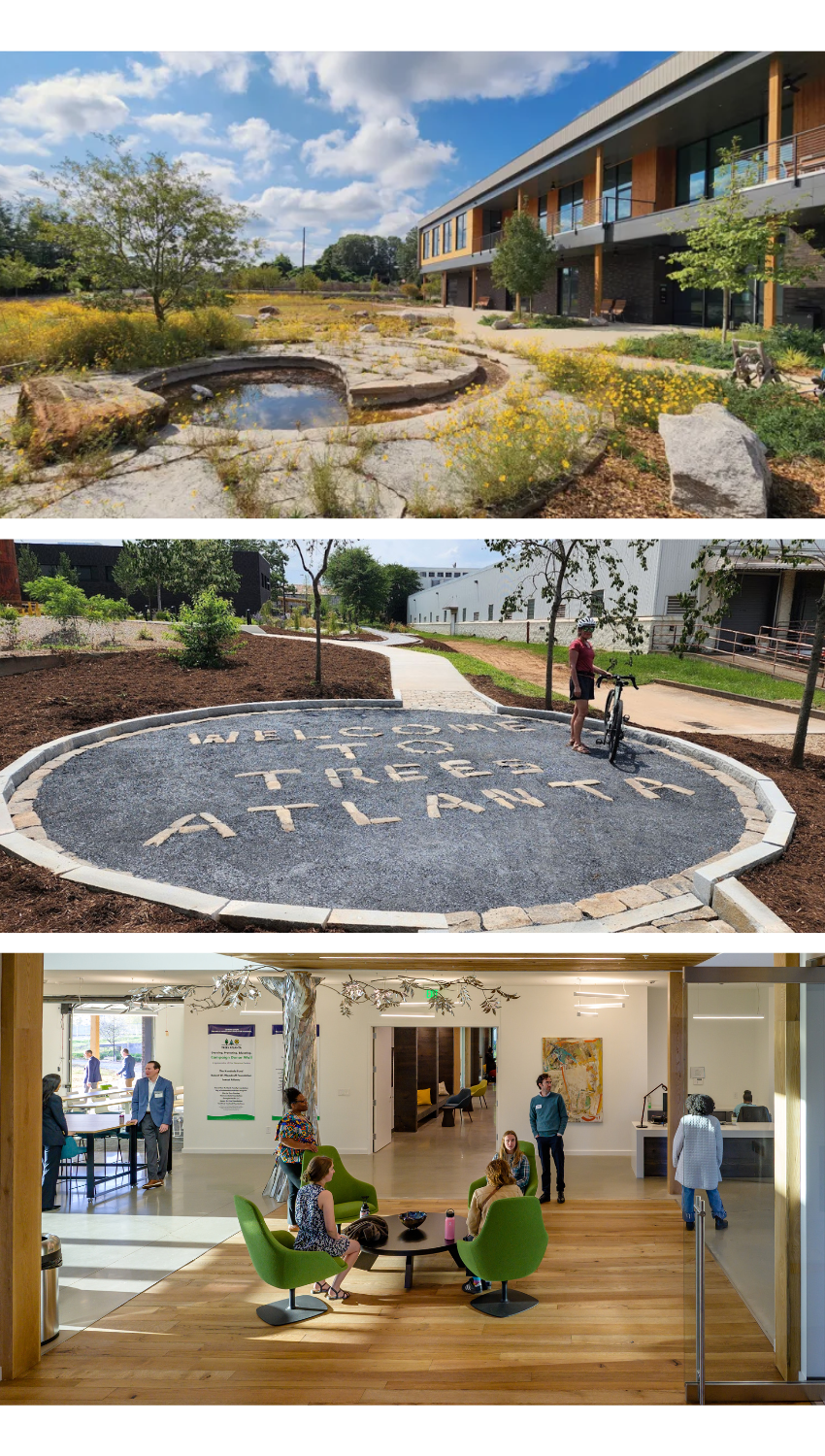
Interior finishes include wood reclaimed from urban trees felled at a local development project, flooring with high recycled content, and regionally produced bricks from Macon, GA. The structure of the Kendeda TreeHouse is entirely built of wood. By using wood, we sequestered nearly 650,000 pounds of CO2. Further reduction of environmental impact was achieved by reducing the transport and disposal of concrete from the existing parking lot and building slab of the former building. The concrete was crushed on-site and used for base in the new Kendeda TreeHouse construction.
Outdoor spaces feature rustic benches made from salvaged wood and a granite outcrop hardscape installation relocated from the Atlanta History Center. Designed by Darrel Morrison, the outcrop honors Georgia’s unique geology and native plants—already hosting dragonfly nymphs in springtime pools. The stones that form the welcoming circle in the Ethnobotany Garden are time-worn cobblestones salvaged by the Lifecycle Building Center. The tall corten steel grain silo was preserved from the bakery that once operated on this site, creating an iconic silhouette. Wayfinding posts and path borders reuse old rail tracks removed from the Beltline.
Images: The granite outcrop garden, designed by Darrel Morrison FASLA, was rebuilt from original materials from Atlanta History Center, photo by Matt Cherry, ASLA, Lord Aeck Sargent; Persimmon Circle and Welcome Message at the Beltline side entrance to the Kendeda TreeHouse campus; Building entrance area during the Kendeda TreeHouse official ribbon cutting ceremony, 2023.
Experiential Spaces
The Kendeda TreeHouse is more than just an office—it’s a community hub with flexible indoor education spaces and outdoor areas open to the public. Its design reflects biophilic architecture, connecting people with nature in proximity, visually, and emotionally.
Outdoor classrooms, nature trails, and demonstration gardens support environmental education. The Canopy Classroom, shaded by a 150-year-old southern red oak, provides space for lessons and play. Reforested trails, wildlife habitats, and stormwater features serve as interactive teaching tools to inspire stewardship.
Airy, light-filled interior spaces feature flexible options for work and meetings, and nature-themed artwork throughout—including the floor-to-ceiling tree sculpture by Atlanta artist David Landis and a donor wall made from five native hardwoods. Art extends into the landscape, like The Acorner—giant concrete acorns doubling as protective bollards.
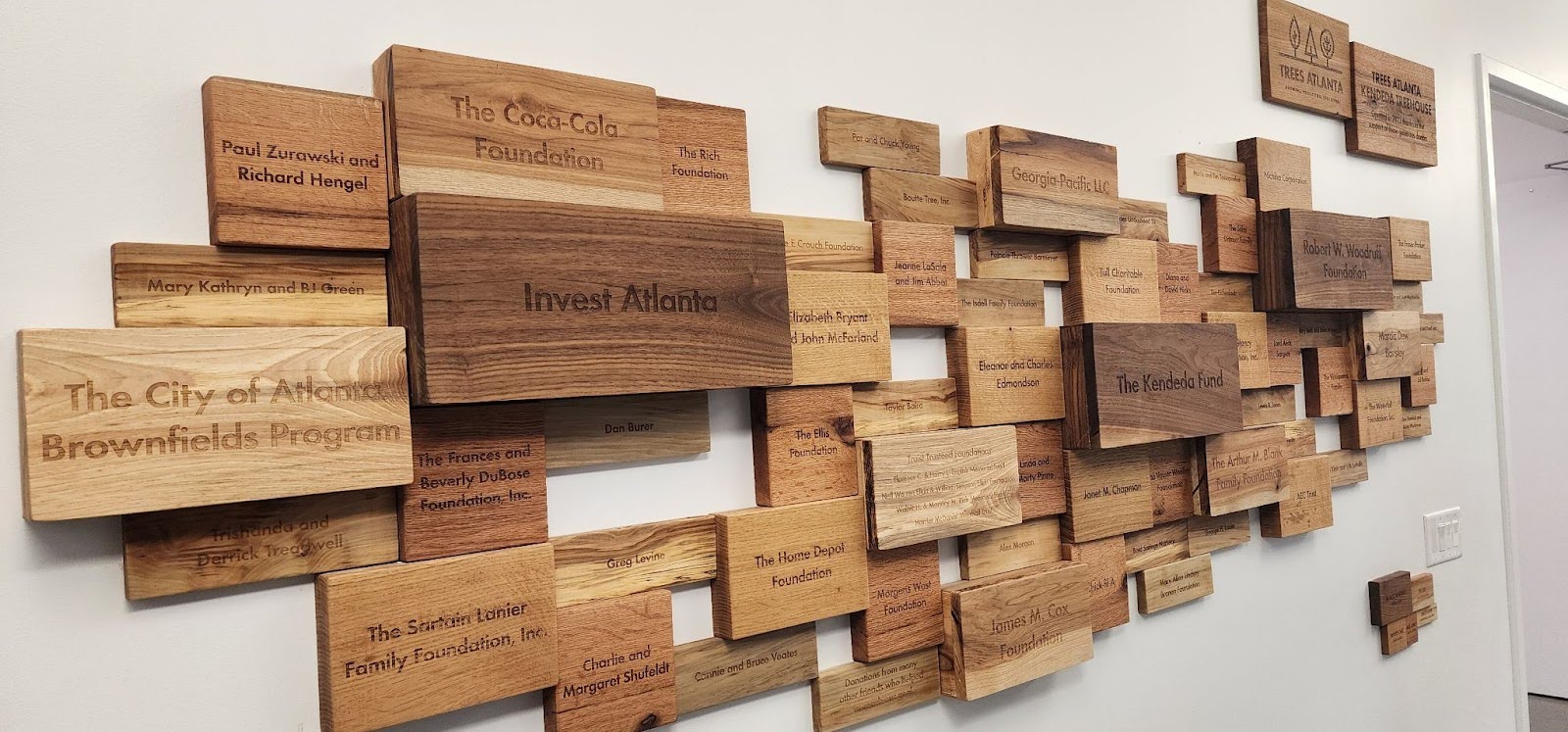
Image: Donor wall at the Trees Atlanta Kendeda TreeHouse. The five species of native hardwoods used are from reclaimed urban trees: black walnut (Julans nigra), pecan (Carya illinoinenisis), white oak (Quercus alba), red oak (Quercus rubra), and sweetgum (Liquidambar styraciflua).
A Home for Conservation
Trees Atlanta shares the Kendeda TreeHouse with Birds Georgia and The Conservation Fund. Local nonprofits can reserve the Community Room for free during business hours, while other spaces are available to rent—generating income reinvested into building operations.
Classrooms host educational programs and community presentations, and the campus serves as a gathering place for volunteers, students, and neighbors. Wi-Fi extends outdoors, inviting work and meetings surrounded by nature.
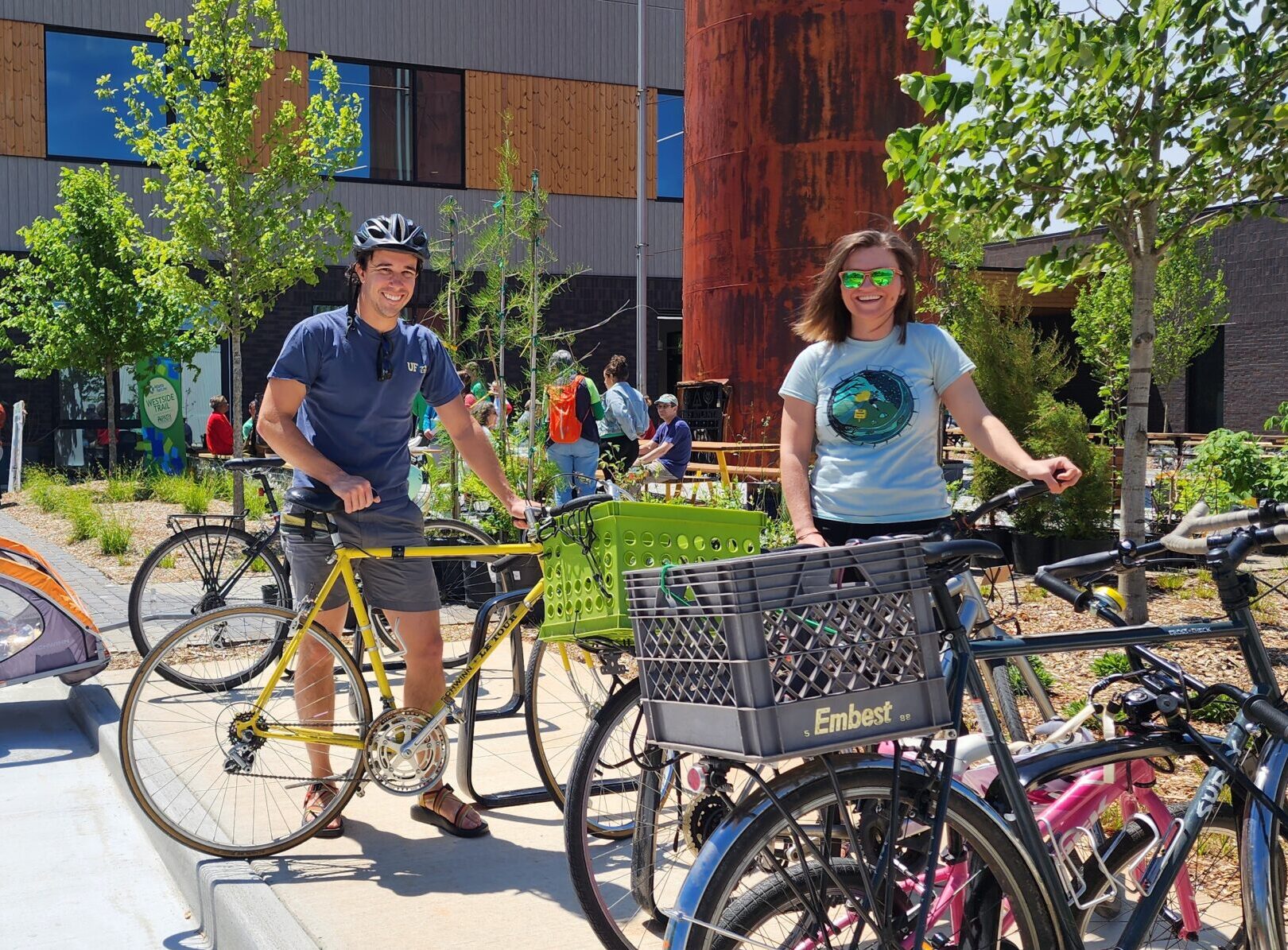
Sustainable practices are embedded throughout: compost, recycling, and landfill stations; filtered water faucets; and a ban on single-use plastics. The parking area was intentionlly kept as small as possible, balancing function and prioritzing alternative commute options. Two EV charging stations, a bike rack, and Beltline access make green commuting easy for visitors and employees alike. Two electric trucks now support our Beltline Arboretum work as we continue to replacing our working fleet with cleaner vehicles and tools when possible.
Image: Parking bikes at the bike racks during the Community Open House, 2023.
Growing Into the Future: The Nursery
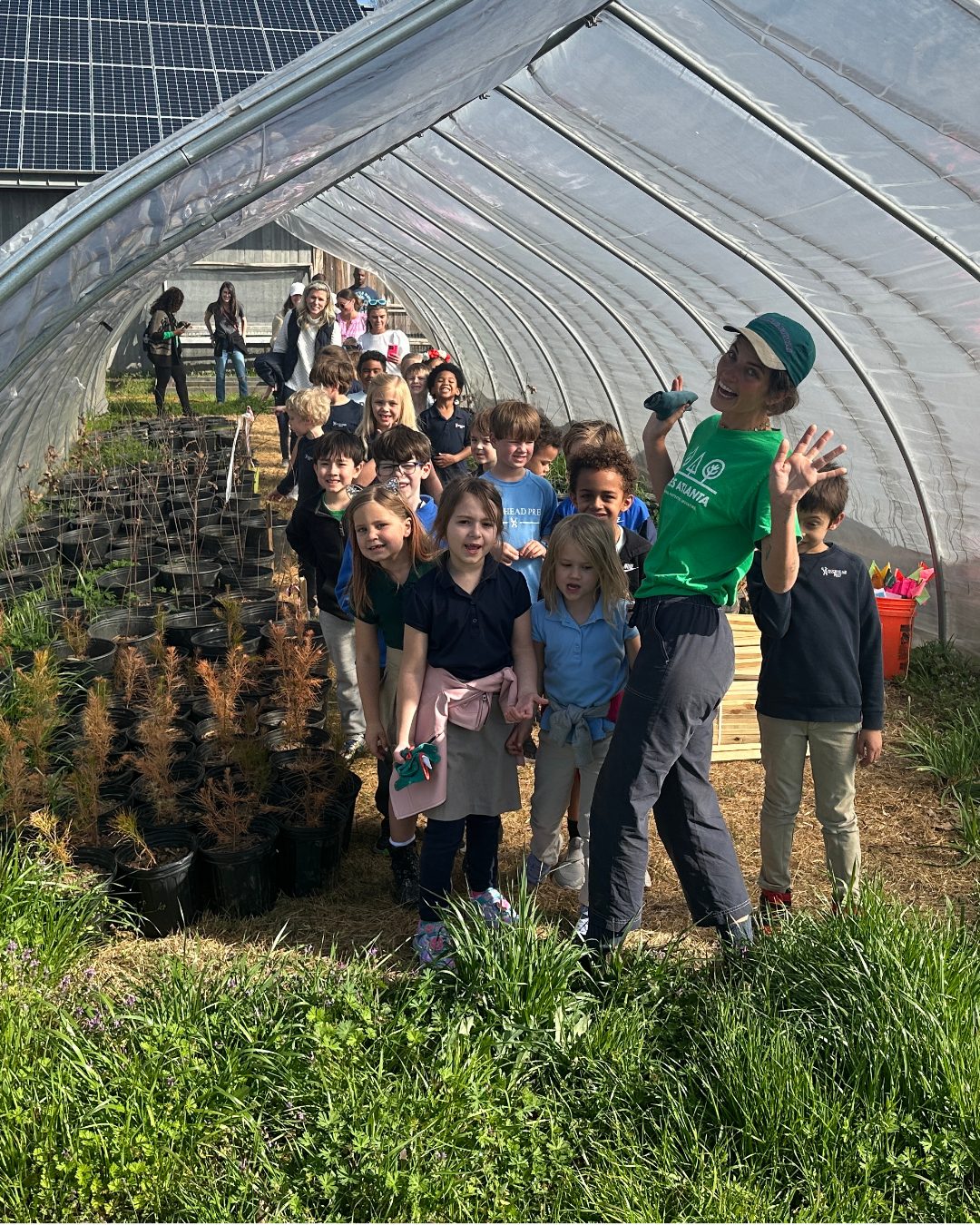
In 2025, Trees Atlanta began building its first on-site native tree nursery, located across the street on Allene Avenue. The nursery grows trees from seed or propagation to supply genetically diverse species for planting projects, giveaways, and education. It also expands our workforce development opportunities for Youth Tree Team and UFOR participants.
The nursery engages the community through volunteer activities, features its own solar array and irrigation well, and highlights our commitment to climate resilience, biodiversity, and green workforce development.
Image: Cate Hughes, Tree Nursery Manager, leading a school program through a hoop house, 2025.
Award-Winning Design
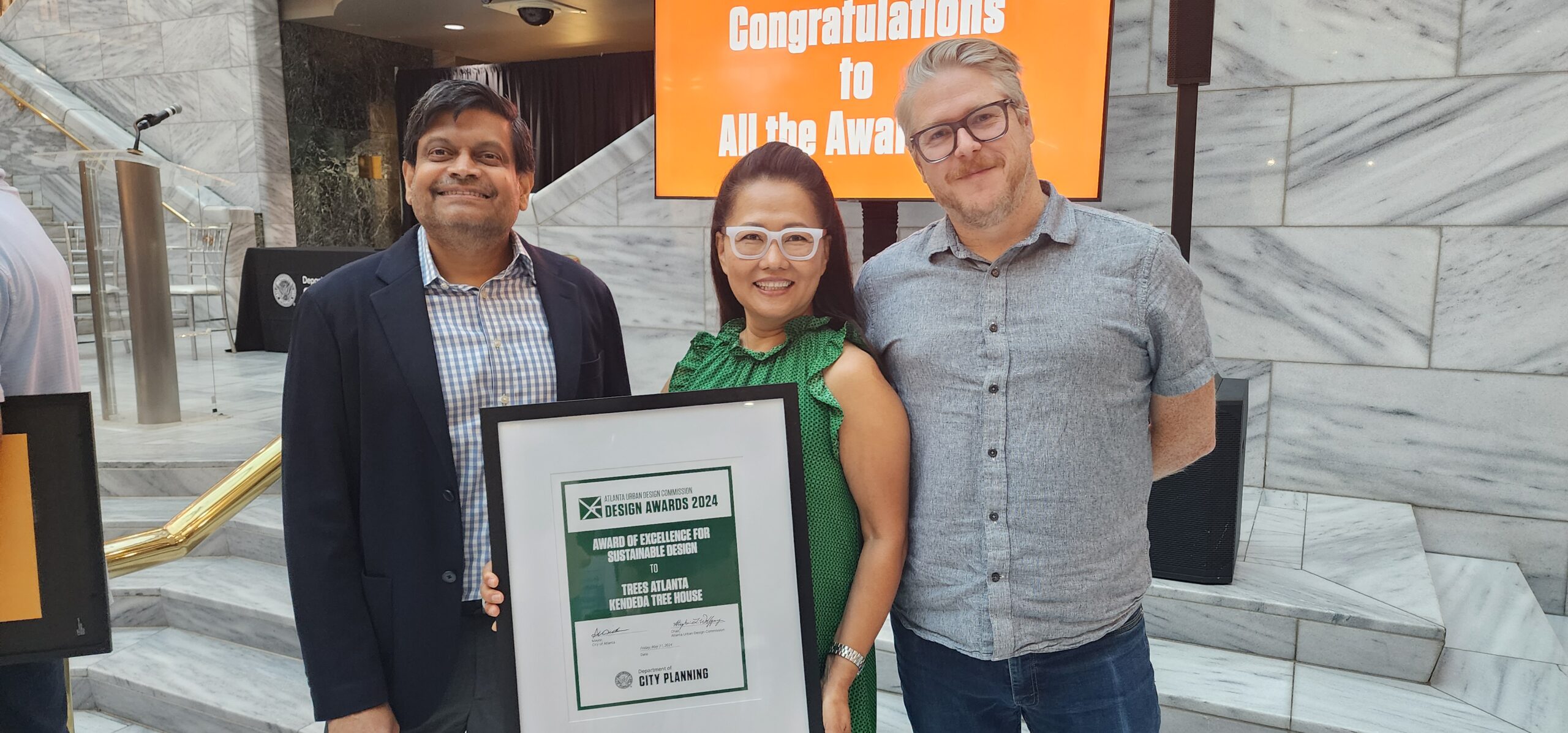 The Kendeda TreeHouse has received numerous honors for sustainable design, including awards from the City of Atlanta Urban Design Commission, American Society of Landscape Architects (ASLA) Georgia Chapter, Atlanta Magazine’s Georgia Design Awards, and Excellence in Mission Advancement from Urban Land Institute (ULI) Atlanta. It will also be featured in a CBS design-focused television program. These awards celebrate the building’s biophilic design, green infrastructure, and energy efficiency—showcasing how sustainability can result in great design.
Image: City of Atlanta City Planning Urban Design Award accepted by Lord Aeck Sargent, Rajiv Wanasundera (left) and Matt Cherry (right), with Trees Atlanta, Judy Yi (center), June 11, 2024.
All images on this post are credited to Trees Atlanta unless noted specifically on the image note.
Posted on: August 1, 2025; updated 8/11/25


