2026 Tree Champions: Connecting People to Trees
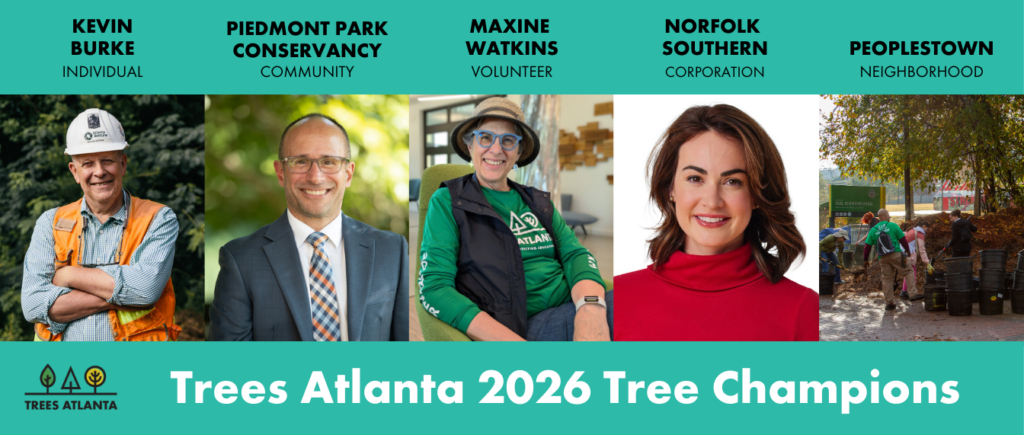
(L-R above) Individual: Kevin Burke | Community: Piedmont Park Conservancy | Volunteer: Maxine Watkins | Corporate: Norfolk Southern | Neighborhood: Peoplestown
This year’s Tree Champions help connect people to trees: through leadership, generosity, volunteerism, advocacy, and long-term commitment to our local community. They create spaces and opportuntities for others to be curious, to learn, and to be part of a meaningtul effort. Trees in cities rely on decisions and actions of people, and trees provide many benefits in the communities where they grow.
Root Ball 2026 places a spotlight on one of our most important community projects, the Atlanta Beltline Arobretum. This uniquely Atlanta linear arboretum literally connects people to trees. Like the arboretum itself, the efforts of our Tree Champions strengthens our city and ensures that Atlanta’s canopy continues to flourish.
Trees Atlanta 2026 Tree Champions
Individual: Kevin Burke
Community: Piedmont Park Conservancy
Volunteer: Maxine Watkins
Corporate: Norfolk Southern
Neighborhood: Peoplestown
Please read more about each of our 2026 Tree Champions below.

Congratulate the Trees Atlanta 2026 Tree Champions at Root Ball
Join us at our annual fundraiser and support another successful year of planting, conserving, and educating in metro Atlanta.
The support of organizations and individuals (like you!) made it possible for Trees Atlanta to organize 11,628 volunteers, plant over 9,000 trees, work in 450 acres of forested spaces, and educate 21,710 individuals last year! Help us celebrate the importance of connecting our communities to trees by attending Root Ball 2026: Thursday, May 14, 2026 at The Foundry at Puritan Mill. Purchase tickets or donate
Kevin Burke
Trees Atlanta 2026 Tree Champion – Individual
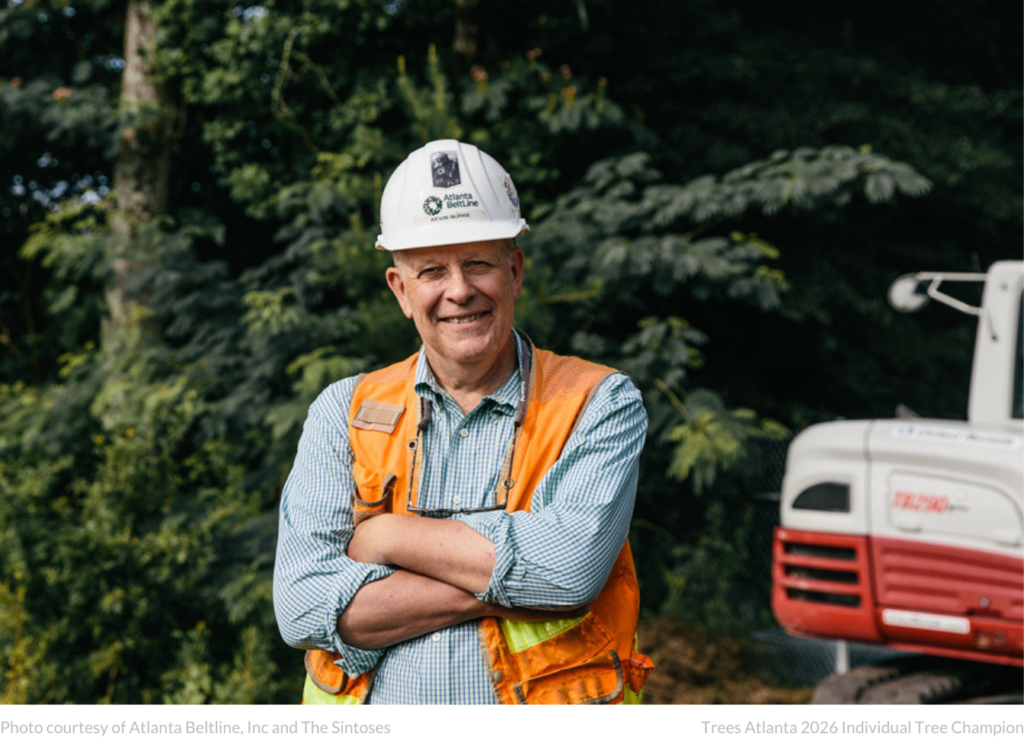
Kevin Burke has been indispensable to the success of the Atlanta Beltline Arboretum and Trees Atlanta’s partnership with Atlanta Beltline. The Beltline Arboretum is thriving with native and adapted species of trees, shrubs, and grasses – an ecological corridor with pollinators and wildlife in the core of the city. The thoughtful design and implementation of the greenspaces that follow every mile of the Beltline trail is a quiet but significant factor why over 2 million visitors a year appreciate this uniquely Atlanta experience. Since joining Atlanta Beltline 17 years ago, Kevin has been a champion for the arboretum to be designed for ecology and restoration for an industry-contaminated railway corridor. The arboretum currently follows 12.44 miles of the Beltline, making it the world’s longest linear arboretum. Once completed, the Beltline Arboretum will follow all 22 miles of the Beltline main trails.
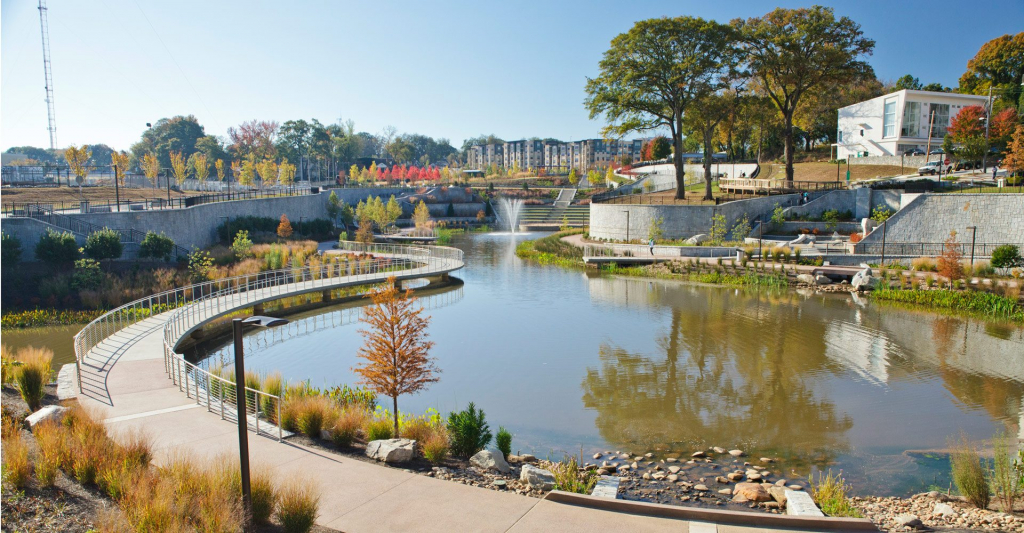
Kevin is the Director of Design at Atlanta Beltline, and he and his team have helped to co-create a linear arboretum that is beautiful, functional, and educational. The tree-filled spaces along the Beltline trail compose a free, gateless public botanical garden that is the Atlanta Beltline Arboretum. He is also involved in other landscape and green infrastructure projects on the Beltline, including the Old Fourth Ward Park and other city parks connected to the trail.
After working on another famous urban project in Boston, known as “The Big Dig,” Kevin joined the Beltline team when the arboretum was still in its infancy. He is a landscape architect and is only the second design director in Atlanta Beltline’s history. For Kevin, “without question” the Beltline is a legacy milestone in his career, as he declares, “I’m happy as [heck] I had this opportunity.” The ever-evolving design of natural spaces of the Beltline reflects Kevin’s preference toward organic solutions, natural systems, and land management to address stormwater issues, and away from typical park landscaping with annuals and mowed turf. Kevin is also a teacher, mentor and motivating enthusiast for the Trees Atlanta Beltline Arboretum team. As the Beltline celebrates its 20th year, Kevin appreciates the many people who were and are part of its history, “The success of this project can be traced back to the people who worked on it in the beginning, along with Trees Atlanta.”
Trees Atlanta’s vision to create an arboretum for the city that celebrates Georgia’s native species while highlighting the beauty and functionality of species, hybrids, cultivars from around the world benefited from Kevin’s overall design management. He encouraged an approach that more is more when it comes to planting trees, increasing biodiversity in plant selections, adding more trees, and experimenting with selections and designs that use the arboretum as a place to test ideas. For Kevin, developing the Beltline offered new opportunities, including remediating contaminated soil, which isn’t typically covered in landscape architecture programs. Kevin knows there is no fixed template for success. “You have to experiment and try things,” he says.
Kevin may be a garden maximalist–meaning, he likes to plant densely and diversely, as nature does. When told this, he smiles and agrees. Trees Atlanta shares that philosophy which might explain why the partnership has been so fruitful. Kevin believes this collaboration was “inevitable.” Although the arboretum was not part of the original Beltline concept, he cannot imagine the Beltline trails without the trees and meadows that frame them. He credits Trees Atlanta’s deep knowledge of trees and plants and ability to be flexible and responsive to changing circumstances as essential to the arboretum’s success. Trees Atlanta credits Kevin’s big vision, collaborative spirit, focus on solutions, and commitment to natural systems that makes the partnership productive.
Piedmont Park Conservancy
Trees Atlanta 2026 Tree Champion – Community
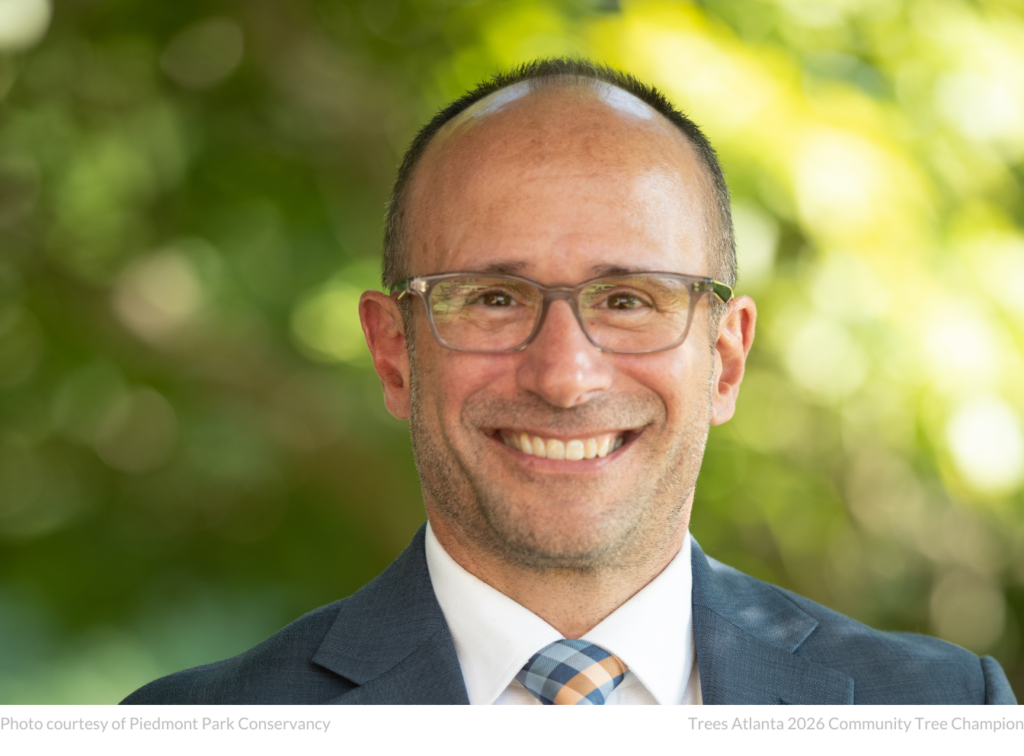
Piedmont Park Conservancy was founded in 1989, not long after Trees Atlanta’s start in 1985. “Piedmont Park is where Atlanta convenes,” according to Doug Widener, CEO of Piedmont Park Conservancy. “The stories of our lives are written here”.
Many Trees Atlanta milestones and collaborative efforts happened at Piedmont Park: we began planting trees in the park with volunteers in 1995, our first annual tree sale happened at the Dogwood Festival in 2000, the first Root Ball was hosted at Magnolia Hall in 2014, and our Growing With Pride tree planting project will be at the park for the fourth year in 2026. A very special white oak – the 100,000th tree planted by Trees Atlanta – is located in Piedmont Park, as well as more than 500 trees that our organizations and volunteers have planted together. The Conservancy also shares operational space at the park making it more efficient for Trees Atlanta to continue its work nearby in the Atlanta Beltline Arboretum. This collaboration has been so successful that the Conservancy developed a long-term plan to continue this partnership with Trees Atlanta and the Atlanta Beltline to cohabitate in their new maintenance facilities, a benefit for all. Widener tells us, “You can accomplish more working together. Long term partnerships take a minute, and sometimes it may seem you can go faster alone, but you will go farther together by not duplicating efforts. Partnerships are the way you do better”.
In 2025, the Conservancy hosted eight students in the Trees Atlanta Youth Tree Team (YTT), a seven-week paid summer job program that allows high school students to explore green jobs through hands-on experience and working alongside professionals. As the YTT program grew, Trees Atlanta began collaborating with local partners like Piedmont Park Conservancy. Doug explained that joining an existing program allowed the Conservancy to extend their capacity and offer a youth development and training program without starting from scratch. In Doug’s mind, the YTT students that worked at Piedmont Park “gave so much to us. We had a wonderful summer and are so proud of what they did. I think our staff benefited as much as the young people.”
The Conservancy has recently created a new Comprehensive Plan for the park, and Trees Atlanta is considered foundational to the implementation of these plans. An inventory of the 3,500 trees in the park has been completed, and hundreds of trees have been identified for pruning, additional prescriptive care, and succession planning as part of the “Seeds for the Future” initiative involving the City of Atlanta’s Department of Parks and Recreation and Trees Atlanta. The plan also envisions restoration and better care of natural areas, such as Lake Clara Meer and the Six Springs wetlands, and more extensive work on the Clear Creek corridor. This program is about planning for the next generation of trees and people, a plan that extends the long partnership between the Piedmont Park Conservancy and Trees Atlanta.
Maxine Watkins
Trees Atlanta 2026 Tree Champion – Volunteer
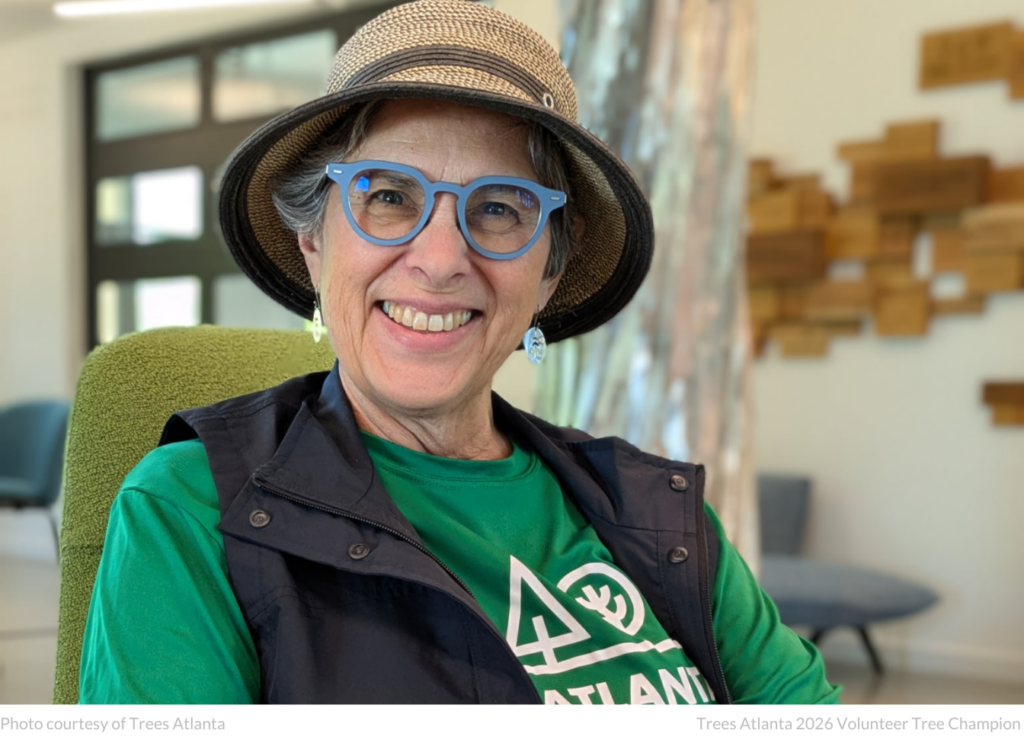
Maxine Watkins’ relationship with Trees Atlanta has many touch points. She’s volunteered in almost every role available. Not only that, both she and her son, Blake, worked at Trees Atlanta, and her husband, Kent, also currently volunteers alongside her. According to Max, it’s been easy to keep connected and committed to the organization for so long because Trees Atlanta fits the way she likes to volunteer. She’s always learning, and the volunteer opportunities fit around her and Kent’s active life, which includes a lot of travel.
When Max retired about ten years ago, she trained to become a Certified Docent and became one of the first docents to lead tours in the Atlanta Beltline Arboretum. Max has created and led a variety of tours on many sections of the arboretum – some early in the construction era when groups walked through overgrown dirt paths as she spoke of what would come in the future. “Max’s desire to create tours in new areas has been so helpful, and this allows us to engage many different communities in the mission of Trees Atlanta” said Rebecca Gilbert, Director of Education. Max’s newest tour is along the Southwest Trail of the Beltline, including the Tiny Forest and a stop at the Trees Atlanta Kendeda TreeHouse and tree nursery.
Her husband, Kent, also became a Certified Docent, and now they lead tours together, including creating new tree tours in Chastain Park and the Chattahoochee River National Recreation Area. Kent brings knowledge of folklore, medicinal uses, and great stories from his time in Scouts. Max brings in the history and tales of the Beltline and surrounding neighborhoods. They check each other on tree ID, and by working as a team they learn from each other. She calls this cross pollination, and jokingly (but earnestly) tells us that she was a bit competitive this year. She completed her 40-for-40 volunteer hours challenge and earned a coveted 40th anniversary bucket hat. Kent was close but didn’t quite make it.
“Trees Atlanta makes me feel alive and keeps me young,” Max believes. Her advice for new volunteers is to explore the many ways they can volunteer. “You don’t have to be able to lift a big tree. Find the opportunity that works for you.” Max is continually inspiring new volunteers. In fact, two guests who took one of her tours signed up to become docents themselves. It’s just like Max – making more connections and growing the Trees Atlanta family.
Norfolk Southern
Trees Atlanta 2026 Tree Champion – Corporate
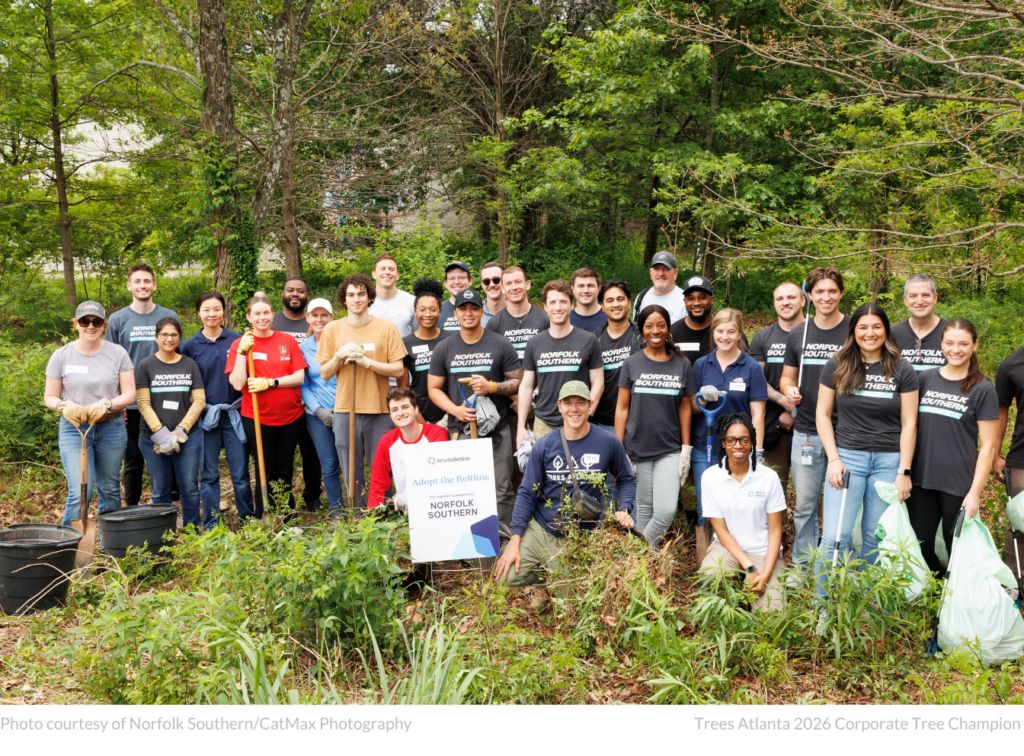
Norfolk Southern has been an engaged corporate partner supporting all areas of Trees Atlanta programming. Of the company’s more than 19,000 nationwide team members, the company has a significant presence in Atlanta, where its headquarters is located. Norfolk Southern employees regularly participate in planting, restoration, and tree care projects, including work in Proctor Creek, Piedmont Park, Inman Park, and the Atlanta Beltline Arboretum Westside Trail. Starting in 2017, the company was one of the first corporate sponsors for Youth Tree Team, our workforce development program for high school students. Their early and continued financial support has been an important factor in the program’s expansion and success. The Norfolk Southern Foundation has been a corporate sponsor for Root Ball for the past three years.
Kristin Wong, Director of the Norfolk Southern Foundation & Community Impact, explained that they choose to work with non-profit partners based on alignment with company values. Youth Tree Team is especially well-aligned with Norfolk Southern’s priority for sustainability and workforce development. Kristin emphasized the importance of teaching young people to be good environmental stewards. They seek organizations, like Trees Atlanta, that share deep roots in the community and resonate with their employees. Kristin said, “Trees Atlanta understands Atlanta neighborhoods and makes a lasting impact.” Norfolk Southern volunteers express pride in the work they do in the communities where they live. Employees say they appreciate working with Trees Atlanta because they can see the outcomes of their efforts right away and the organization makes it easy to be a part of its mission to improve our city’s tree canopy.
Norfolk Southern has made a significant commitment to reducing emissions and restoring nature and biodiversity. Rail in general has strong environmental benefits with shipping by rail versus truck reducing emissions by 75% on average. In 2007, the company named the industry’s first sustainability officer, and they work closely with community groups on a variety of environmental projects in the communities they serve. In addition to local efforts with Trees Atlanta, Norfolk Southern has teamed up with GreenTrees, a reforestation and carbon capture company, to plant six million trees on 10,000 acres in the Mississippi Alluvial Valley, the nation’s largest watershed and a vital wildlife habitat.
“Atlanta is our home, and it’s important for us to protect one of the city’s most important natural resources,” said Josh Raglin, Norfolk Southern Chief Sustainability Officer. “The iconic tree canopy is vital for the future vibrancy of the city and its residents.” Supporting Atlanta’s urban forest is a natural fit, given the company’s focus on nature-based sustainability solutions.
Peoplestown
Trees Atlanta 2026 Tree Champion – Neighborhood
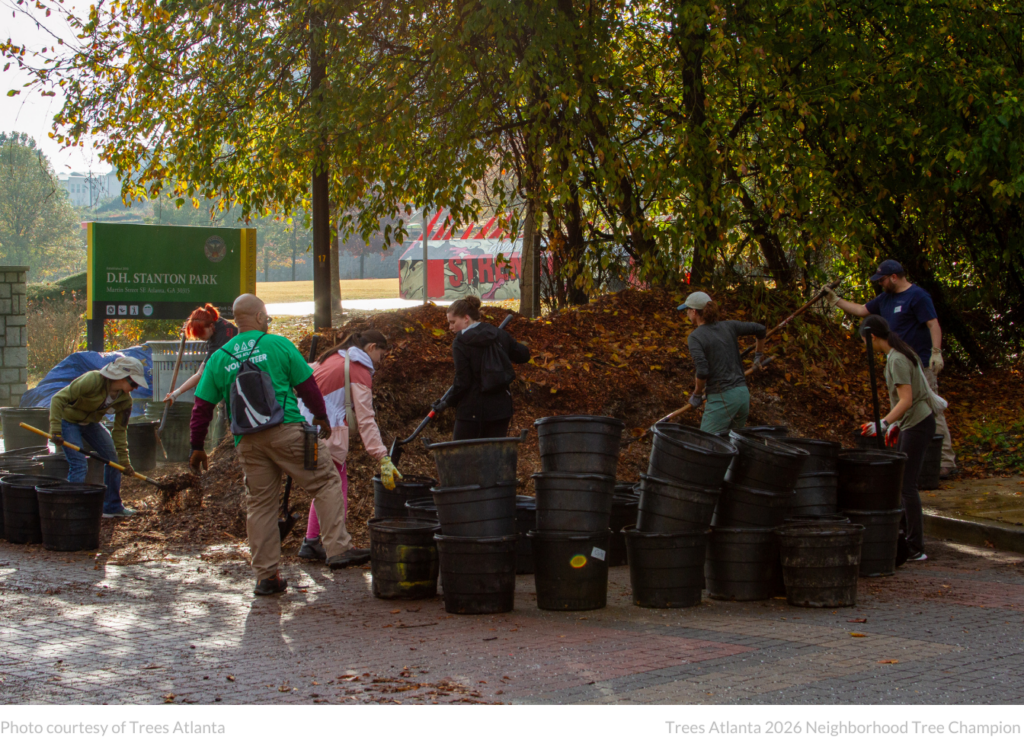
The historically Black neighborhood of Peoplestown in Atlanta is undergoing notable changes and growth. As the community evolves and welcomes new residents, they are deeply engaged and committed to preserving the neighborhood’s character and supporting legacy families. Peoplestown’s neighborhood motto, “Preserving our past. Planning our future.” reflects how the community honors its history while developing a vibrant and inclusive future. This vision aligns with Trees Atlanta’s mission to steward existing trees and plant the next generation of trees. This shared natural resource can sustain people, wildlife, and the broader ecosystem of a rapidly changing city.
Like many neighborhoods close to Downtown, much of the land in Peoplestown is covered by built structures and roads and is low in tree cover. With 27.4% tree canopy cover as measured in the latest city canopy assessment (2018), it ranks among the lowest in the city. Residents are increasingly aware of the role trees play in mitigating the neighborhood’s chronic flooding issues and cooling heat islands. Residents actively welcomed Trees Atlanta to plant more trees in their neighborhood. They advocated to protect existing trees. Their collective effort led to a 2.4% increase in tree canopy cover. Peoplestown is one of only a very few neighborhoods in Atlanta that has increased its tree canopy from 2008 to 2018, while the city canopy as a whole has decreased by 1.4%.
Trees Atlanta with volunteers and neighbors have planted more than 750 trees in Peoplestown. Many are decades old and thriving, including 50 trees planted in Four Corners Park in places that experience chronic flooding. Trees were selected that tolerate wet conditions and draw up water. The improved environment boosted the success of the park’s community garden. More trees were added to D.H. Stanton Park, Barack and Michelle Obama Academy, and throughout the streets of the neighborhood. The neighbors are collaborating on other watershed improvements to further improve stormwater issues in the neighborhood, and more plantable areas will be created by Trees Atlanta that will remove concrete to create new tree wells on sidewalks along Ridge Avenue near large new developments.
Matt Rinker, President of the Peoplestown Neighborhood Association (PNA), describes the community as “eco‑conscious.” PNA works closely with another neighbor-led group, Peoplestown Revitalization Corporation (PRC), and neighborhood meetings are well-attended with active community stewards. PNA Land Use & Zoning Review Committee, under the leadership of Donald Shockey, evaluates all proposed developments, tracks tree removals, and ensures appropriate replanting. PNA Vice President Tiona Johnson, worked with EPA to identify heat‑vulnerable areas in need of new plantings to strategically provide relief on hot roads with high pedestrian traffic. They also seek out and activate other programs to benefit the neighborhood: many neighbors participate in the Trees Atlanta Yard Tree Program, help long‑time homeowners access the Anti‑Displacement Tax Relief Fund, and host an annual reunion for former residents who still consider Peoplestown home. Peoplestown is genuinely a place that works together and takes care of its people.
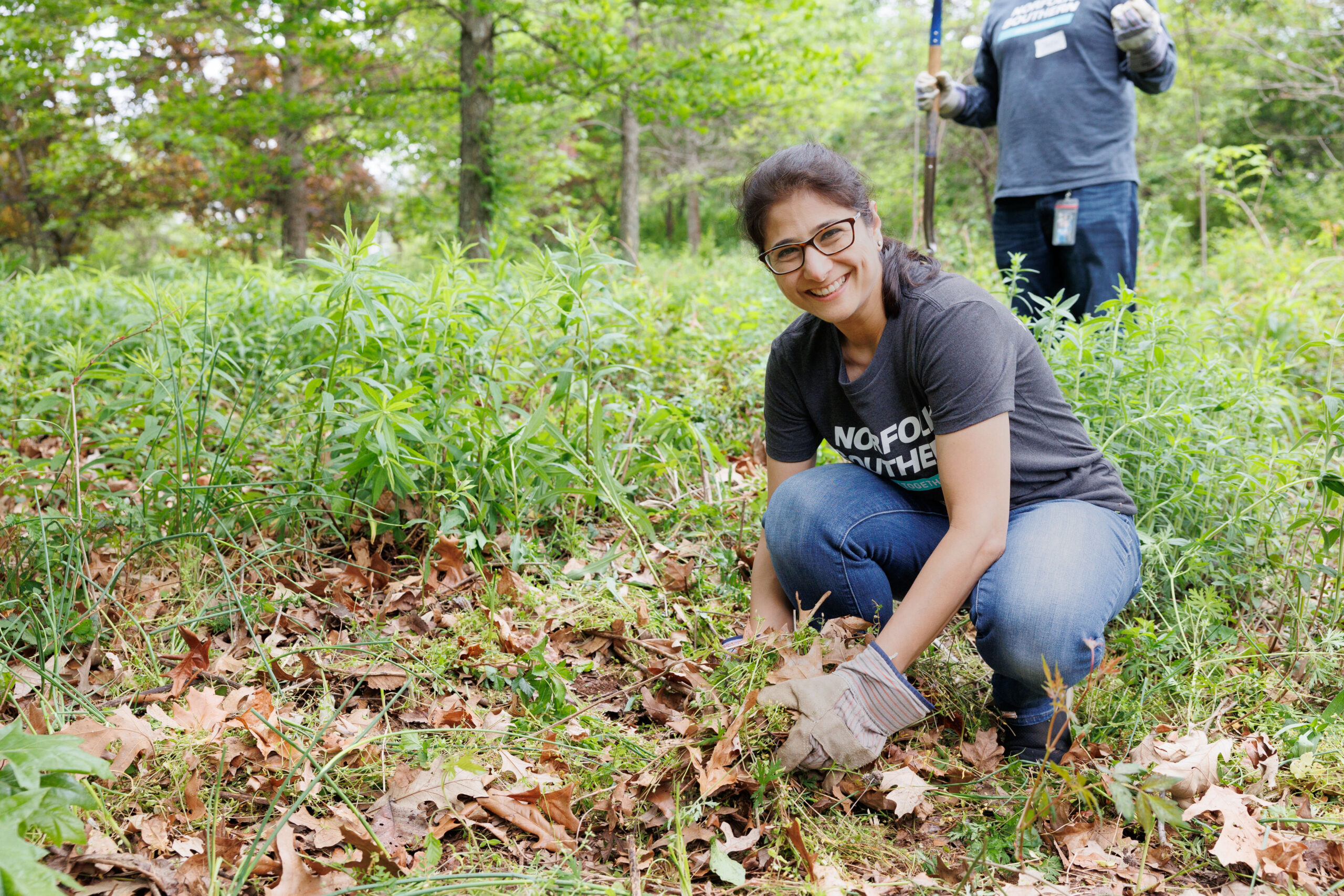
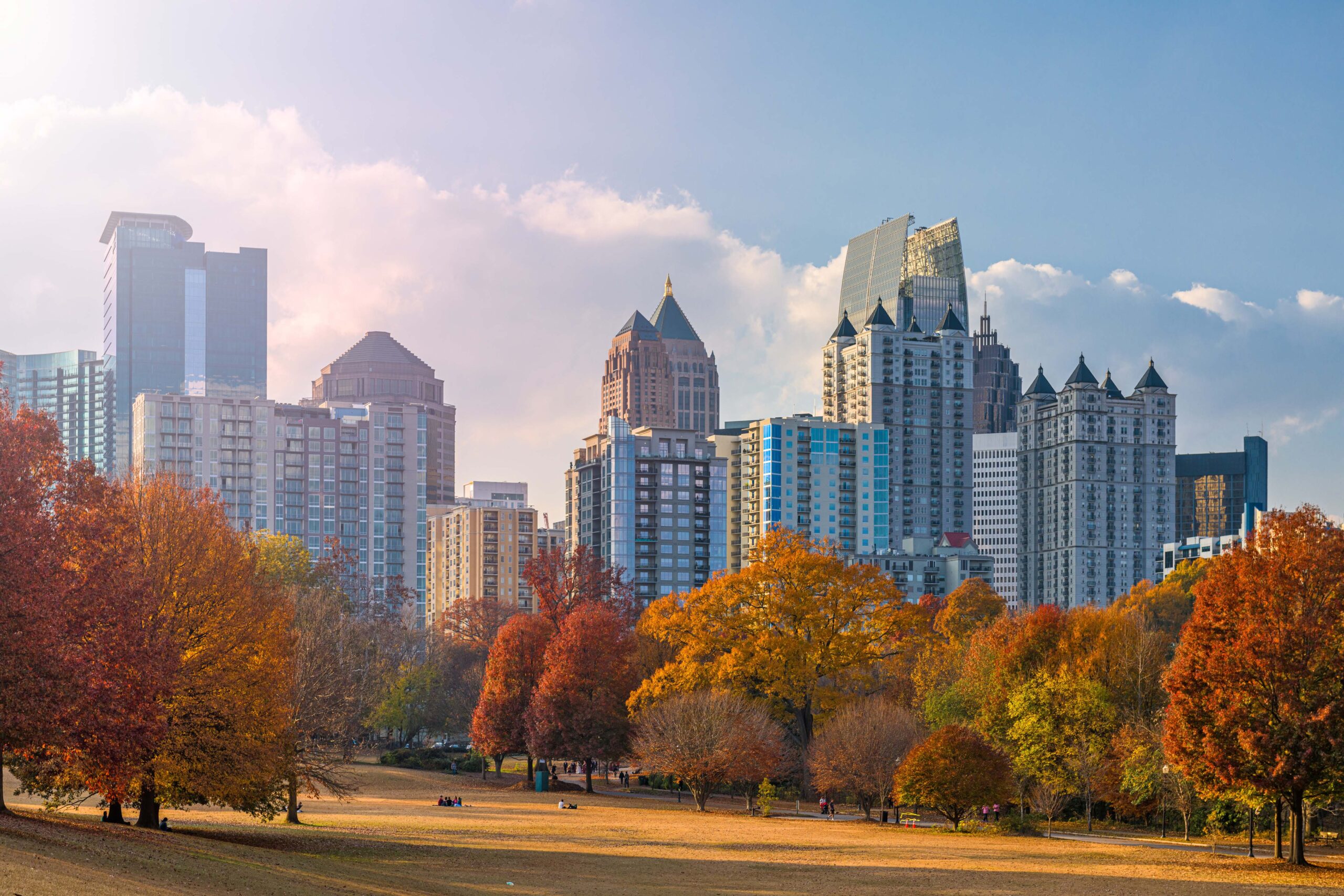
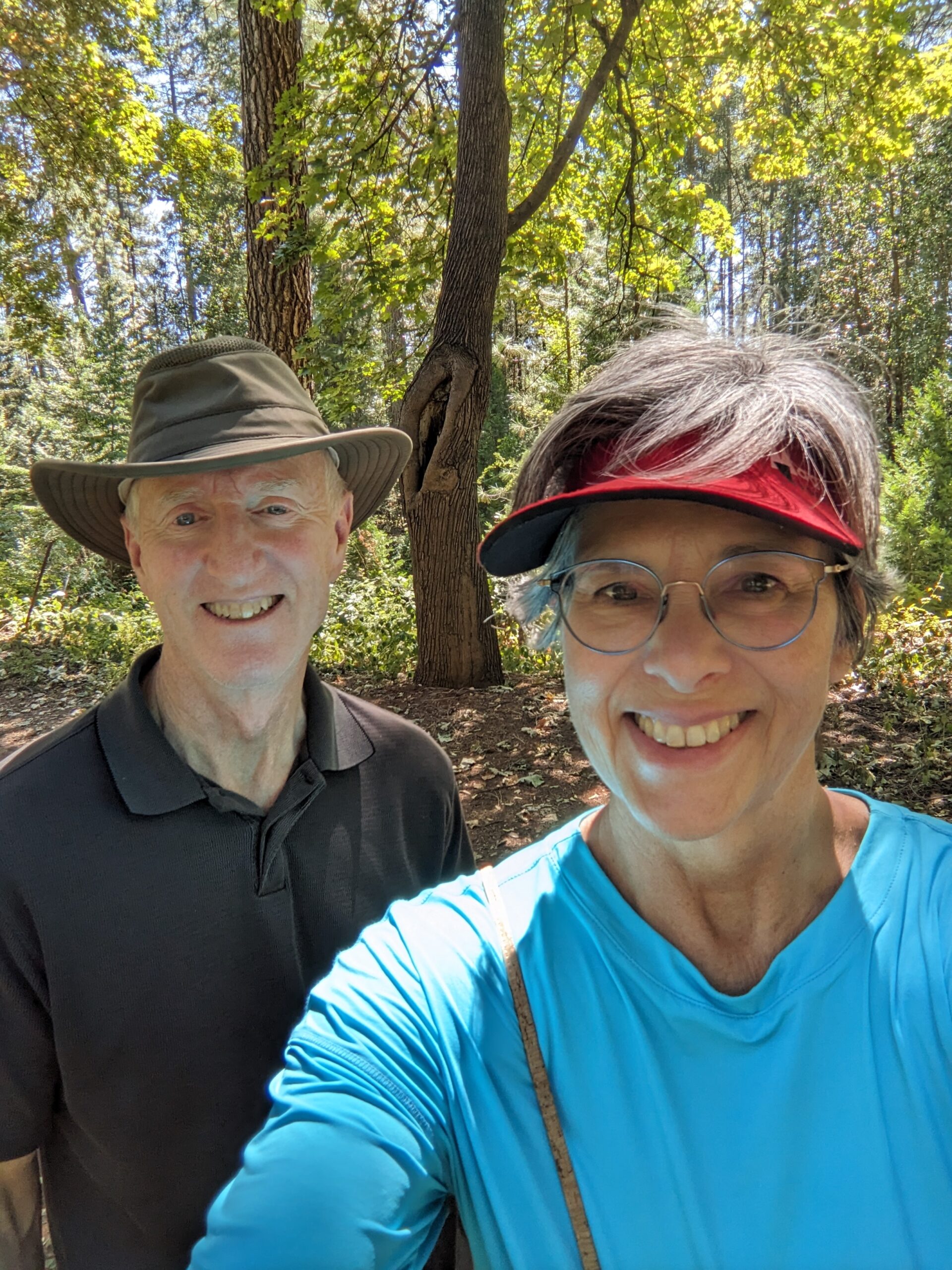
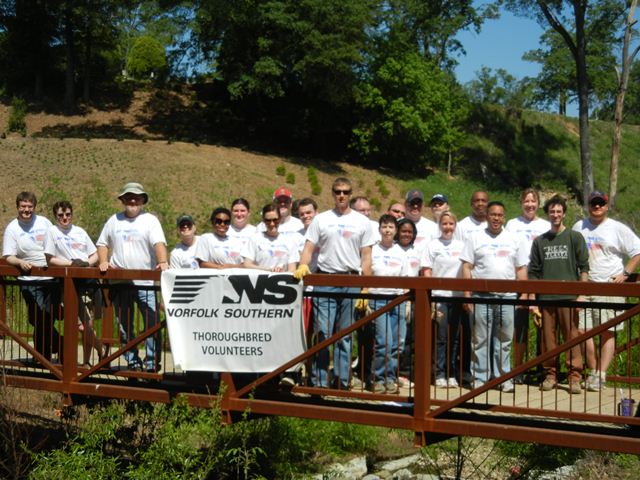
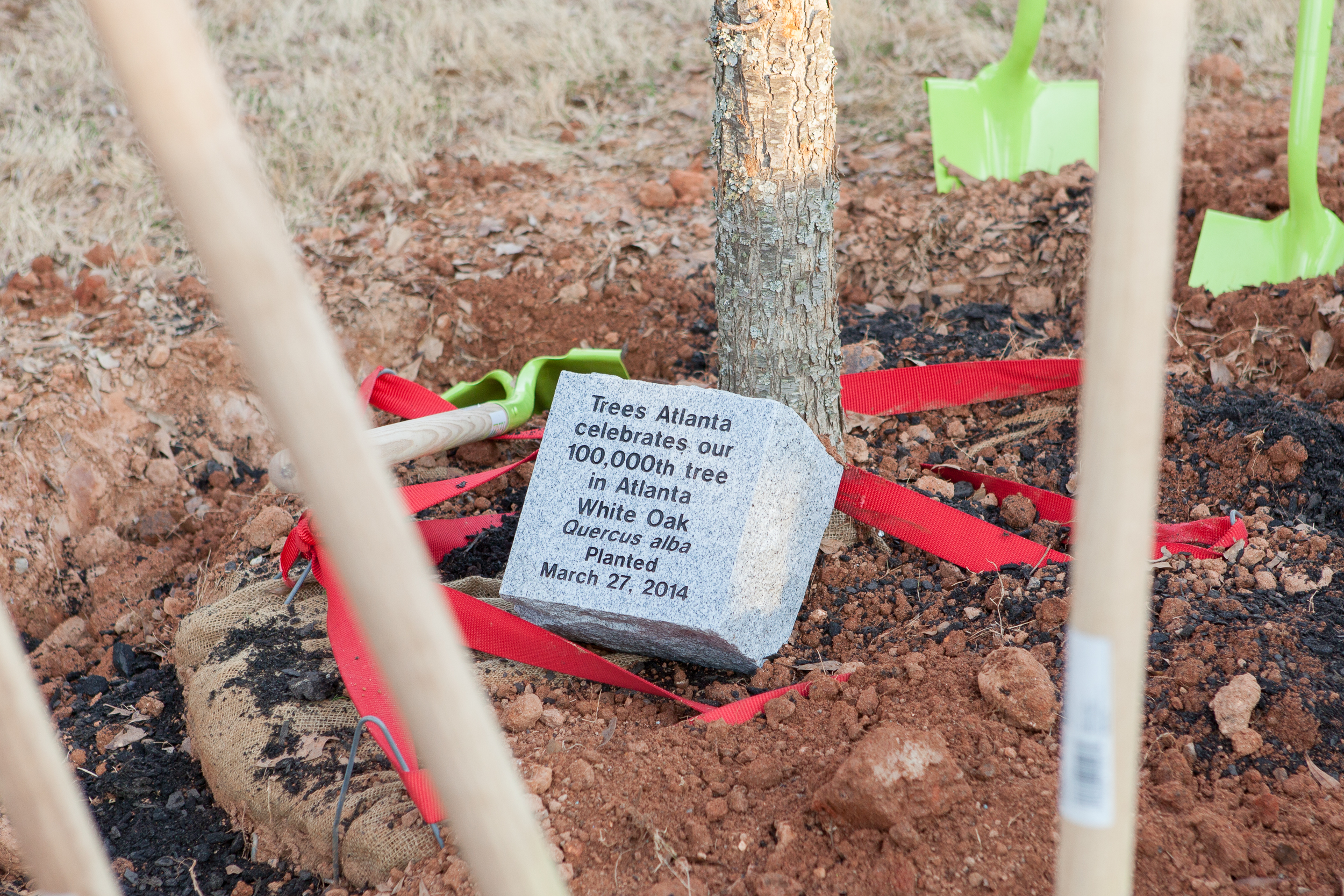
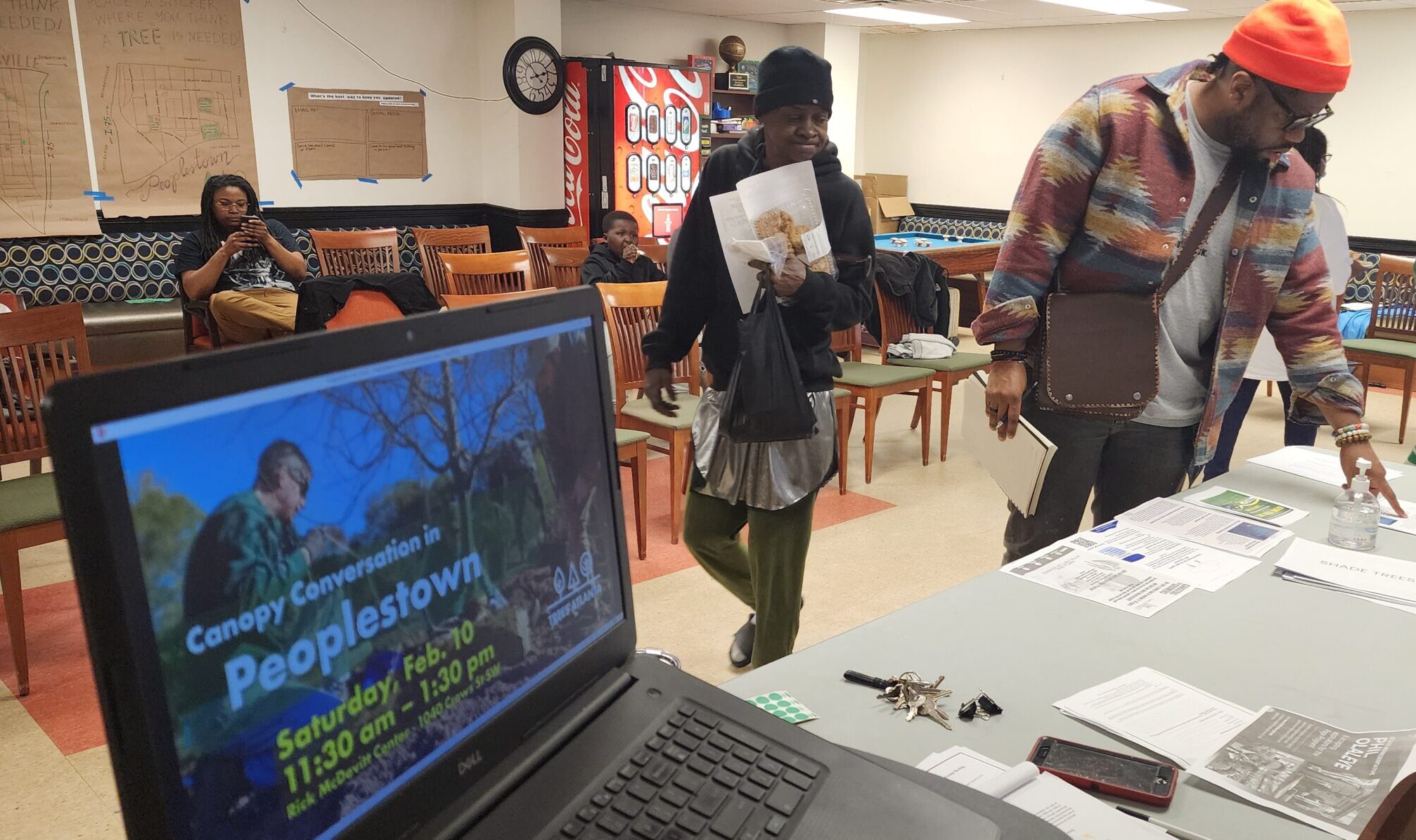
Photos (L-R): Norfolk Southern Earth Day volunteer event, 2025. Credit CatMax Photography; Piedmont Park with fall colors. Credit Piedmont Park Conservancy; Max and Kent Watkins in the urban forest, Credit Max Watkins; Norfolk Southern volunteering with Trees Atlanta, 2012. Credit Trees Atlanta; Root Ball planting of 100,000th tree in Piedmont Park, 2014. Credit Trees Atlanta; Community Engagement Meeting in Peoplestown neighborhood, 2024. Credit Trees Atlanta; Historic Old Fourth Ward Park, November 2011. Credit Christopher T. Martin and Atlanta Beltline, Inc.

Sign up for our monthly email newsletter to keep up with Trees Atlanta news and updates, along with upcoming volunteer, education, and community events.
Published: March 4, 2026


